1. How Infrared Thermal Imagers Work?
To understand the capabilities of infrared thermal imagers, it’s essential to first grasp their working principles.
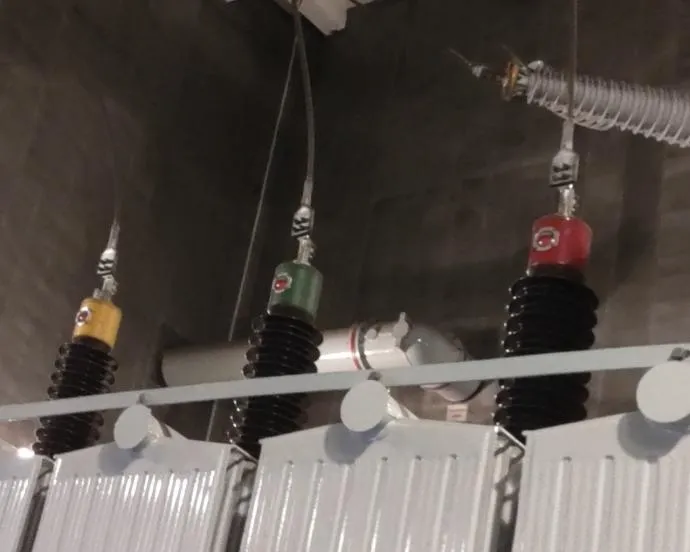
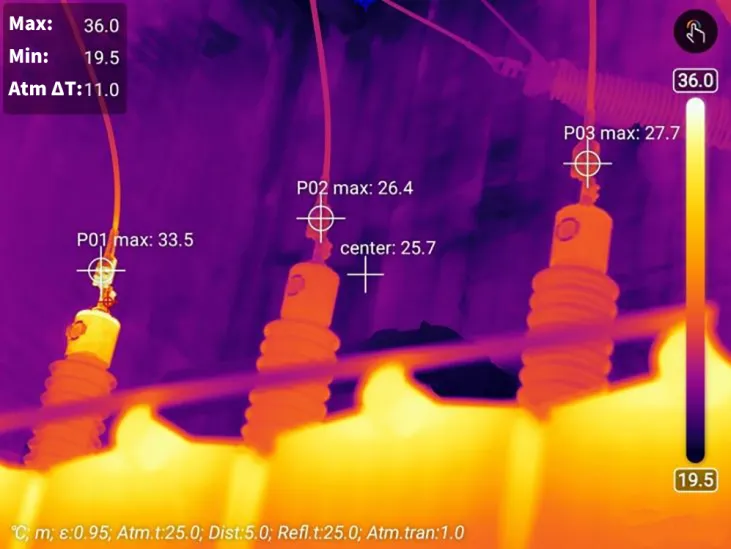
Any object above absolute zero emits infrared radiation. The fundamental principle behind infrared thermal imagers is to focus the infrared radiation emitted by an object onto an infrared detector using a lens. This infrared detector then converts the incoming infrared radiation into electrical signals. These signals undergo various image algorithm processing to output image and video streams, along with the target temperature data. In simpler terms, an infrared thermal imager transforms the invisible infrared energy emitted by an object into a visible thermal image, where different colors on the image represent different temperatures of the object being measured.
Therefore, an infrared thermal imager acts more like a “translator” of infrared energy, converting invisible infrared energy into a visible thermal image, rather than possessing a “seeing-through” eye that can penetrate objects. What it “sees through” is the presence of heat, not the internal structure of objects. For a broader explanation of the imaging process, see how thermal cameras work.

2. Can Thermal Imaging Cameras See Through Walls?
The answer is no. Wall materials such as brick, concrete, wood, and drywall block infrared radiation. Thermal cameras can only detect the temperature of the wall’s surface and cannot obtain information about what’s inside.
Although infrared thermal imagers cannot see through walls, if there are temperature differences within the wall (such as due to water leaks or missing insulation), heat will conduct to the surface, creating temperature variations. Thermal imagers can capture these temperature differences, thereby indirectly detecting wall defects and pinpointing problem areas.
3. What Can Thermal Imaging Not See Through?
The following substances exhibit high absorption or reflectivity in the infrared spectrum, blocking the transmission of infrared radiation and preventing infrared thermal imagers from “seeing through” them:
1) Most Glass
Generally, ordinary glass is almost entirely opaque to long-wave infrared radiation. Therefore, conventional thermal imagers cannot see through regular glass to observe objects behind it. However, certain specialized types of glass possess good transmissivity to specific infrared wavelengths, depending on the glass type, thickness, and the operating waveband of the infrared thermal imager. For example, while ordinary glass is almost completely opaque in the long-wave infrared range, it has higher transmittance in the short-wave infrared range. Objects behind such glass can be observed using short-wave infrared thermal imagers. Consequently, in practical applications, it’s crucial to select the appropriate thermal imager configuration based on specific needs and to consider the influence of the glass material and any surface treatments.
2) Metals
Infrared thermal imagers cannot see through metal objects. However, they can indirectly analyze internal structures or defects by detecting the temperature distribution on the metal’s surface. It’s important to note that smooth or polished metal surfaces highly reflect infrared radiation from the surroundings. Directly measuring the temperature of such surfaces can lead to inaccurate readings due to the reflected heat. In contrast, oxidized metals (like rusted surfaces) or metals coated with matte materials are easier to measure accurately.
3) Wood
Wood strongly absorbs and blocks infrared radiation, particularly in the far-infrared spectrum. Consequently, infrared radiation struggles to penetrate wood. However, under specific conditions, anomalies in the temperature distribution on the wood’s surface can be detected to indirectly infer thermal abnormalities or structural issues within the wood. For example, internal voids, cracks, insect infestations, or damp areas within the wood can affect its heat transfer properties, leading to unusual temperature changes on the surface.
4) Paper
While infrared thermal imagers cannot directly see through paper, if the paper is very thin and the temperature of an object behind it is conducted to the paper’s surface, the thermal imager can indirectly display the object behind. For example, when a hand is placed on the back of a sheet of A4 printer paper, the thermal imager can show the temperature distribution on the paper’s surface resulting from the hand’s heat being conducted through it, rather than directly detecting the hand’s temperature.
5) Most Plastics
Thick plastics or those with additives that block infrared radiation will hinder the penetration of infrared radiation, preventing thermal imagers from seeing through them. However, certain thin plastic materials (such as polyethylene film) exhibit some degree of transparency to infrared radiation, especially in the mid-wave infrared and near-infrared bands, allowing thermal imagers to detect heat sources behind them. Therefore, whether an infrared thermal imager can see through plastic depends on the type and thickness of the plastic, as well as the imager’s operating waveband.
6) Clothing
Whether infrared thermal imagers can see through clothes is a common concern. Infrared thermal imagers cannot directly penetrate clothing and reveal human body details like X-rays. However, in certain situations, they might show the outline of a person under their clothes. For example, some lightweight materials or those with higher infrared transmittance may allow some infrared radiation to pass through, enabling the thermal imager to display the heat distribution patterns underneath the clothing under specific conditions, creating a “see-through” effect.
However, this is not true “seeing-through” in the literal sense. Instead, it occurs because different clothing materials have varying abilities to absorb and block infrared radiation, leading to differences in surface temperature distribution that are captured by the thermal imager.
7) Human Tissue
Infrared thermal imagers cannot directly “see through” the internal structures of the human body. However, they can indirectly indicate health issues by detecting changes in body surface temperature. Medical infrared thermal imagers primarily work by detecting abnormal surface temperatures that reflect physiological changes such as metabolism, blood circulation, or inflammation. This is an indirect method of detection and does not constitute true “seeing-through.” It cannot display the anatomical structure of internal organs or deep pathological changes.
It’s important to note that while infrared thermal imagers cannot directly see through the materials mentioned above, this does not mean they cannot provide information about what is inside or behind them. If a temperature difference exists within an object, heat may conduct to the surface, and the infrared thermal imager can indirectly detect conditions hidden beneath the surface by capturing these subtle temperature variations. For example, missing insulation within a wall can cause abnormal surface temperatures, and infrared thermal imagers can be used to detect such issues.
4. What Can a Thermal Imaging Camera See Through?
Certain substances exhibit higher transmittance in specific infrared wavebands, allowing infrared thermal imagers to “see through” them in these ranges:
1) Smoke and Fog
Infrared thermal imagers can penetrate smoke and fog under certain conditions, primarily due to their ability to detect long-wave infrared radiation. Compared to visible light, long-wave infrared has a stronger diffraction capability, enabling it to bypass the tiny particles in smoke and fog, reducing the effects of scattering and absorption. This allows for the imaging of obscured objects. Consequently, infrared thermal imagers are widely used in firefighting, search and rescue, security, and other fields to detect heat sources and identify targets in low-visibility environments.


2) Darkness
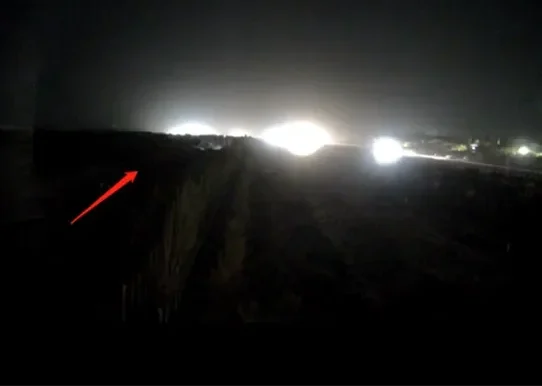
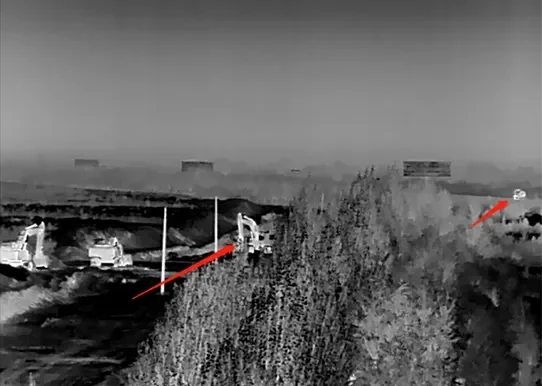
One of the most significant advantages of infrared thermal imagers is their ability to produce clear images in environments without any light. Their imaging principle relies on detecting the infrared radiation (heat radiation) emitted by objects themselves, rather than depending on external light sources for illumination. Therefore, even in completely dark environments, as long as there is a temperature difference between a target and its surroundings, an infrared thermal imager can “see” it. This makes infrared thermal imagers invaluable in applications such as nighttime monitoring, search and rescue operations, and military reconnaissance.
3) Thin Plastic Films
Thin plastic materials such as cling film and plastic bags, when sufficiently thin, allow infrared radiation to pass through them, enabling thermal imagers to detect heat sources behind them.


4) Certain Types of Glass
Different types of glass have varying degrees of transparency to infrared radiation. Whether an infrared thermal imager can see through glass to observe objects behind it primarily depends on the type and thickness of the glass, as well as the waveband selection of the infrared thermal imager being used. Certain glass materials exhibit good transmittance in specific infrared wavebands, allowing infrared thermal imagers to “see through” them. Examples include:
- Quartz Glass: Has high transmittance in the short-wave infrared band. If it’s necessary to observe objects behind quartz glass, a short-wave infrared thermal imager should be selected.
- Germanium Glass: Exhibits good transmittance in the mid-wave and long-wave infrared bands and is commonly used as window material for infrared thermal imagers.
- Chalcogenide Glass: Possesses excellent infrared transmission properties, performing particularly well in the mid-wave and long-wave infrared bands. Consequently, chalcogenide glass is often used to manufacture lenses, windows, and other optical components for infrared thermal imagers.


It is important to note that the ability of an infrared thermal imager to see through objects is limited by its operating waveband and the infrared transmittance of the object. In practical applications, the appropriate infrared thermal imager and materials should be selected based on specific needs to achieve the best imaging results.
5. Typical Application of Infrared Thermal Imagers
Having understood the “seeing-through” capabilities of infrared thermal imagers for different materials, let’s further explore their practical applications.
1) Security and Protection
Unlike traditional visible light cameras, infrared thermal imagers detect the infrared radiation emitted by objects themselves. This eliminates the need for external light sources, enabling them to produce clear images in low-visibility environments such as complete darkness, smoke, and smog. Consequently, they are widely used in nighttime patrols, border protection, and the monitoring of critical infrastructure. This allows for the timely detection of suspicious individuals or abnormal situations in complex environments, enhancing security and prevention capabilities.

2) Firefighting and Rescue
Before a fire breaks out, objects may exhibit abnormal temperature increases. Infrared thermal imagers can sensitively capture these temperature changes, allowing for the early detection of hidden fires or the initial stages of a fire, thus preventing its spread. In active fire scenes, thick smoke often leads to extremely low visibility. Infrared thermal imagers can penetrate this smoke to quickly locate trapped individuals, providing crucial support for firefighters in their rescue efforts.


3) Industrial Inspection and Maintenance
In industrial applications, abnormal heating of equipment is often a precursor to failure. Infrared thermal imagers, based on the principle of non-contact temperature measurement, can monitor the temperature distribution on the surface of equipment in real time, quickly identifying areas of abnormal heat and preventing potential malfunctions. For example, in power systems, they are used to detect overheating issues in transformers and switchgear. In mechanical equipment, they monitor temperature changes in components such as bearings and motors, allowing for the timely detection of friction or wear problems, ensuring the safe operation of machinery.
4) Building Inspection
By detecting the temperature distribution on building surfaces, infrared thermal imagers can identify areas of heat loss and assess a building’s insulation performance and energy efficiency. They can be used to detect thermal bridges in walls, roofs, doors, and windows, revealing areas with poor insulation or inadequate airtightness. This information can guide building energy retrofits and improve energy utilization efficiency.
Infrared thermal imagers are valuable for building defect detection, helping to identify and diagnose potential thermal leaks, energy losses, and hidden structural issues. By examining temperature differences on surfaces such as walls, roofs, windows, and doors, areas with poor insulation or improper sealing can be identified early.


5) Scientific Research
Infrared thermal imagers can capture the temperature distribution on the surface of objects in real time, providing high-resolution thermal images suitable for monitoring dynamic processes and detecting minute temperature differences. Their non-contact measurement method ensures experimental safety and data accuracy, making them widely used in scientific research scenarios such as materials science research, electronic engineering testing, high-speed dynamic process analysis, and biomedical research. They assist researchers in conducting in-depth experimental analysis and data acquisition, thereby advancing scientific progress.


6. Conclusion
Having gained a thorough understanding of the working principles and practical capabilities of infrared thermal imagers, let’s revisit our initial question: “Can thermal imagers see through walls?” The answer is: not directly. Infrared thermal imagers are not “X-ray eyes” in the science fiction sense; they cannot see through walls to reveal the structures behind them. However, their true strengths lie in:
- Their ability to precisely capture the temperature distribution on the surface of objects.
- Their capacity to indirectly reveal internal defects by detecting abnormal temperatures on the object’s surface.
- Their unparalleled ability to penetrate specific media like smoke and fog, where visible light is ineffective.
Therefore, infrared thermal imagers have a wide range of applications in numerous fields, including building inspection, electrical work, industry, security, and firefighting and rescue. Understanding their working principles and the infrared transmittance of materials helps in utilizing this technology more effectively.
If you aim to leverage thermal imagers for precise identification of hidden issues in building inspections, achieve non-destructive early warnings in equipment maintenance, or enhance detection efficiency and accuracy in other specialized applications, choosing a high-performance, stable, and reliable thermal imager is crucial. Raythink offers a comprehensive product line of professional thermal imagers designed for various industries and application scenarios, featuring high sensitivity, high resolution, and user-friendly operation, enabling you to easily capture and interpret critical thermal information. Feel free to click to explore our products or contact us for more detailed product information!