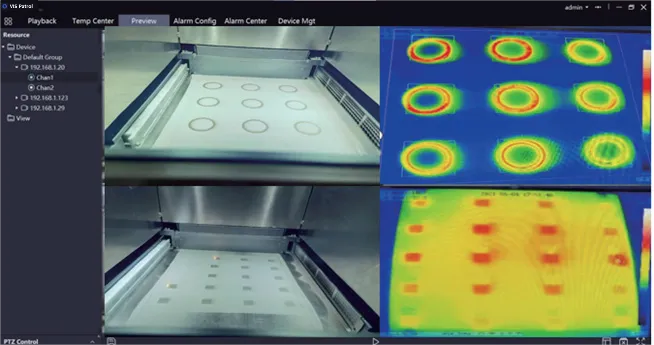
As infrared detector technology continues to advance, high resolution thermal cameras achieve significantly higher measurement accuracy and wider application scope, becoming a critical contributor to intelligent upgrading across various industries. Increased pixel counts directly augment image information content, enabling high resolution thermal imaging cameras to present thermal data with unprecedented clarity and precision—from detecting minute component defects to monitoring large-scale production processes.
This guide systematically explores the definitions, technical characteristics, product solutions, and real-world applications of high resolution thermal imagers to help users develop a comprehensive understanding and select the most suitable thermal imaging solution for their specific requirements.
1. Understanding High Resolution Thermal Camera
1) Definition
A high resolution thermal camera (also referred to as a high resolution thermal imaging camera or high resolution thermal imager) is a thermal imaging device equipped with a high-pixel-density infrared detector that captures rich infrared radiation information from target objects and generates sharper thermal images. Generally, thermal imagers with infrared resolutions of 640×512 pixels or higher (such as 1280×1024) are classified as high resolution thermal cameras (note: there is no unified industry standard for high resolution; this classification aligns with market common cognition and precision application requirements).
High resolution thermal cameras have significantly more pixels, encode greater temperature information content, and deliver higher image detail density. For example, a 640×512 infrared resolution contains approximately 328,000 pixels, providing multiples of the image detail compared to the lower 256×192 resolution option (approximately 49,000 pixels).

2) High Resolution vs. High Definition
For thermal imagers, resolution refers to the pixel count in the image, while high definition (HD) describes superior overall image quality, which is influenced by resolution but also shaped by multiple factors including thermal sensitivity (NETD), optical system quality, and signal processing capabilities:
- Lower NETD values enable the camera to distinguish smaller temperature differences, generating clearer images with reduced noise.
- Optical system design affects the volume of infrared radiation entering the focal plane; superior optical design enhances signal strength.
- Image processing algorithms optimize raw data, enhancing contrast, reducing noise, and improving overall clarity.
Typically, high resolution thermal imagers paired with low NETD, quality optical design, and advanced image algorithms achieve high-definition or ultra-high-definition image quality. In essence, high definition represents the quality objective, while high resolution is the key technical parameter enabling that objective.
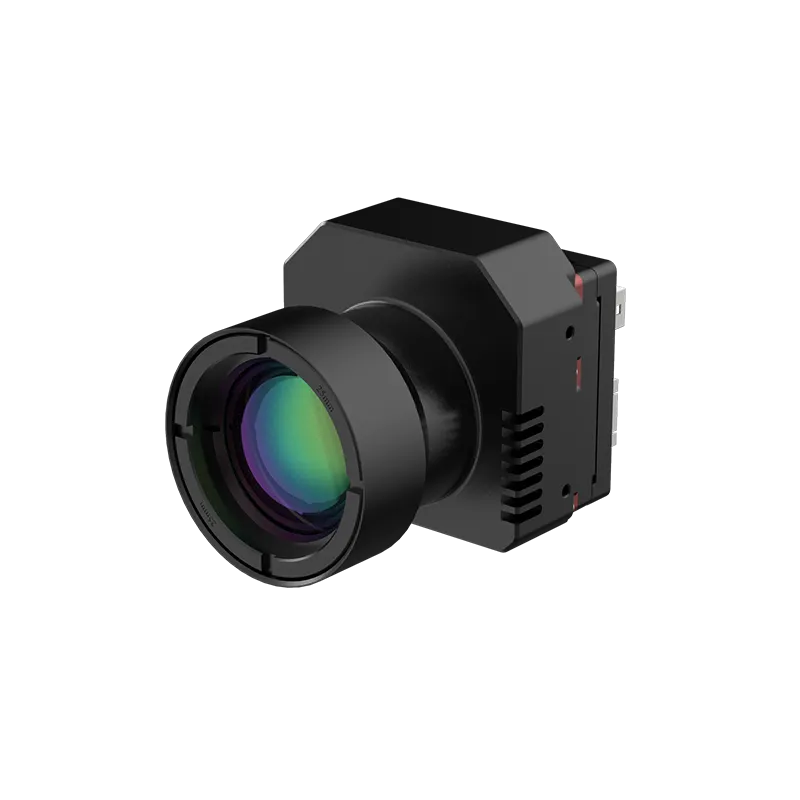
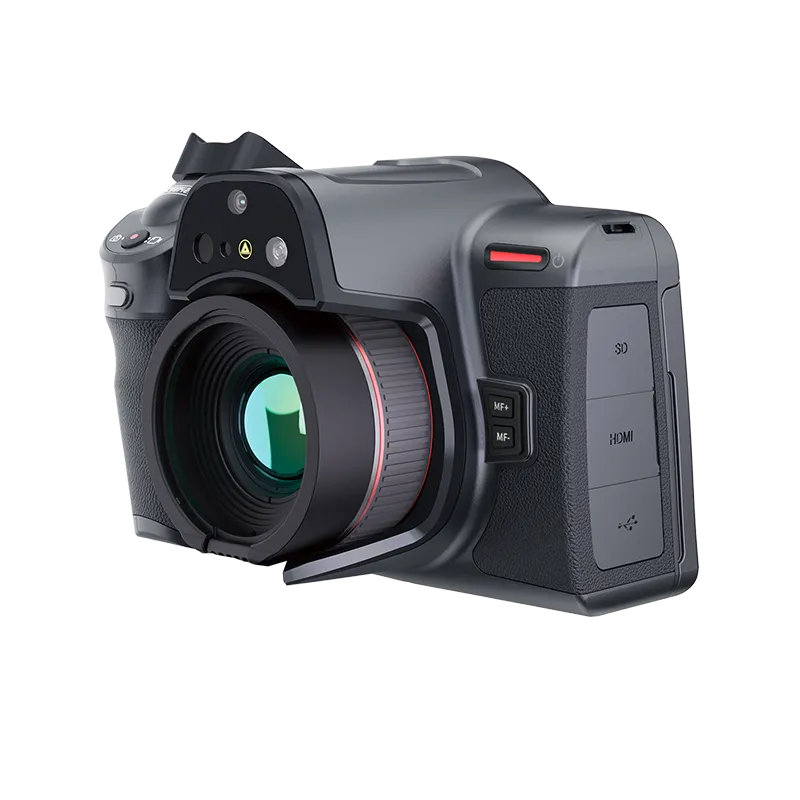
2. Raythink High Res & HD Thermal Camera Solutions



3. Features and Advantages of High Resolution Thermal Camera
1) Higher Pixel Density Enabling Detection of Minute Defects
The fundamental advantage of high resolution thermal cameras lies in their exceptional detail capture capability. When infrared resolution increases from 384×288 to 640×512, image pixel count increases by more than 100%. This means the observation area per pixel decreases proportionally, thereby enabling detection of more subtle temperature anomalies.
Consequently, high res thermal cameras (such as 640×512) empower engineers to identify microdefects that conventional thermal imagers with lower resolution cannot detect. The higher 1280×1024 resolution further allows approximately double the horizontal and vertical information density compared to a 640×512 model within the same field of view, making microdefect detection reliably possible. This proves critically important for applications like product quality assurance, non-destructive testing, and failure prevention.


2) Lower NETD Enhancing Temperature Measurement Accuracy & Detail Rendering
Thermal sensitivity (NETD, Noise Equivalent Temperature Difference) represents the smallest temperature differential a thermal camera can detect, expressed in millikelvins (mK). High resolution thermal imagers typically feature lower NETD values, which premium models achieve a thermal sensitivity as low as 25mK (i.e., 0.025°C).
This enables identification of extremely minute temperature variations even in scenarios featuring low thermal contrast, which is essential for industrial equipment failure prediction, electrical maintenance diagnostics, and medical imaging applications. Lower NETD values also mitigate image “noise” artifacts, eliminating grainy imaging appearance and fuzzy details, thus providing thermal images that appear smoother and more professional.
3) Precise Thermal Mapping & Temperature Distribution Analysis Capabilities
With each pixel corresponding to an independent temperature measurement value, the combination of high resolution and low NETD in a high res thermal camera makes precise thermal mapping possible. The higher resolution allows the placement of significantly more temperature measurement points, lines, and areas within the field of view, enabling users to capture temperature variations across different zones and perform detailed analysis respectively.
Additionally, high pixel density facilitates more flexible post-processing analysis: users can perform digital zooms on original high resolution images without clarity loss, facilitating detailed temperature gradient analysis, trend comparison, and report generation. This capability is particularly crucial in applications such as scientific research diagnostics, product development and quality inspection, and precision equipment maintenance.


4) Support for Diverse Lens Configurations & Variable Magnification
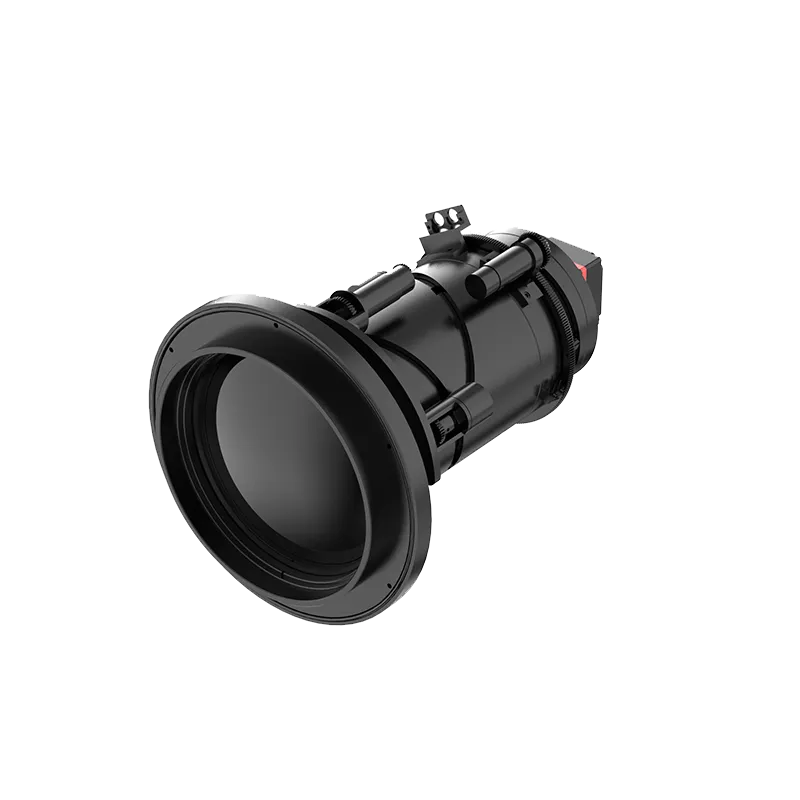
High resolution thermal imaging cameras typically employ advanced optical design and signal processing capabilities, accommodating a wider range of lens configurations and zoom solutions. Users can flexibly swap between various lenses, including macro, wide-angle, standard, and telephoto options, based on application requirements; simply inserting the lens enables automatic recognition. This enables a single thermal imager to handle diverse tasks ranging from close-proximity microscopic inspection to extended-distance monitoring.
The inherent resolution advantages, combined with intelligent image stabilization and multi-level digital zoom (such as 1×–10× or 1×–15× continuous zoom), enable high resolution thermal imagers to maintain maximum image clarity and temperature measurement accuracy even during zoom operations. This further enhances their versatility, allowing a single unit to cover a broader range of application scenarios, reducing the user’s total cost of ownership.
4. High Resolution Thermal Imaging Camera Application Cases
1) Product Development & Testing Applications: Tire Testing as an Example
Tire performance characteristics significantly influence automotive performance across dimensions, including power delivery, safety, and driving stability. The temperature of the tire surface represents an exceptionally sensitive parameter, which determines tire traction characteristics and influences tire pressure, providing direct indication of tire operational status.
Raythink Solution: Deploy the AT61 Motorized Focusing Thermal Camera (640×512 infrared resolution) to provide real-time temperature monitoring throughout tire development, testing and production phases. The intuitive, straightforward, and comprehensive nature of infrared thermal imaging makes this technology an ideal thermal analysis tool for R&D personnel.
High-resolution thermal imagers deliver HD visual capability for both static and dynamic temperature monitoring throughout product development and testing, with real-time temperature status transmission supporting back-end system integration.


2) Manufacturing Process Control Applications: Continuous Casting Process as an Example
The continuous casting process encompasses transferring steel-filled ladles to turntables; after table rotation positions the flow, pouring molten steel into tundishes, which distribute steel through SEN ports (nozzles) into individual molds (crystallizers). Molds shape and rapidly solidify the strand while withdrawal and oscillation mechanisms extract the solidified strand; following cooling and electromagnetic stirring, cutting equipment sections the slab to specified dimensions. Traditionally, experienced operators used to gauge temperature through observation of the slab color.
Raythink Solution: Deploy the TN460U Ultra-high Temperature Thermal Camera at the fan segment for temperature monitoring, generating real-time temperature curves to provide data-driven support for operator decisions.
High resolution thermal imaging cameras deliver more precise temperature monitoring with broader monitoring range and larger coverage area. The temperature data export capability with storage intervals (minimum 0.1s) further contributes to precise process control and enhanced safety assurance across diverse manufacturing operations.


3) Product Quality Inspection Applications: Fiber Laser Factory Acceptance Testing as an Example
Optical fiber lasers require comprehensive factory acceptance testing (FAT) prior to shipment to customers. Each product unit must undergo power-on validation testing, with thermal monitoring to verify that all component temperatures remain within specified thresholds at maximum output power; defective units are identified and returned to the production line. Traditional approaches demand manual data recording and data entry into back-end systems, thus time-consuming and labor-intensive.
Raythink Solution: Deploy the AT61 Motorized Focusing Thermal Camera for clear imaging with direct integration to factory inspection databases through camera interface protocols. Alternatively, install the TN460 Fixed-mount Thermal Camera (640×512 infrared resolution) at the inspection station with PLC-controlled robotic movement ensuring complete coverage of all laser units under test.
High resolution thermal imagers simultaneously deliver real-time temperature measurement and back-end temperature recording, automatically generate inspection reports, and enable fully automated factory acceptance temperature testing.

4) Intelligent Routine Inspection: Applicable Across Diverse Industrial & Security Scenarios
Industrial equipment failures manifest diversely but typically exhibit thermal signatures such as excessive heat (hot spots). Security concerns, including region intrusion and tripwire violations, can be promptly identified through recognition of body-heat anomalies and target temperature differentials. Consequently, real-time temperature monitoring of target objects and areas has become an effective monitoring approach spanning diverse industrial and security scenarios.
Raythink Solution: Deploy fixed-mount thermal cameras in critical areas to establish comprehensive thermal monitoring coverage, promptly identifying temperature anomalies and alerting maintenance personnel for corrective action. Integrate PTZ thermal cameras such as the 640×512 resolution PC264T1 Dual-Spectrum PTZ Camera as needed for all-weather continuous temperature monitoring with multiple preset points enabling effective security patrol assistance. For areas precluding comprehensive fixed-position installation, deploy handheld thermal cameras for periodic manual inspection to rapidly assess equipment status, visually identify thermal anomalies, and support timely preventive maintenance interventions.
High resolution thermal imagers deliver superior thermal imaging performance enabling efficient inspection across diverse scenarios, with crystal-clear temperature measurement and imaging.

5) Empowering Other Advanced Industries: 3D Printing, Surgical Procedure, and More
3D Printing Applications: The non-contact temperature measurement of the thermal camera boosts the 3D printing industry. 3D printing uses adhesive materials such as powder metal or plastic to construct objects by printing layer by layer in 3 dimensions, a process largely determined by the printing temperature. Therefore, the printing temperature must remain within strict parameters, neither too low nor too high. Raythink’s TN460 Fixed-mount Thermal Camera effectively addresses the challenge, enabling real-time temperature monitoring with synchronized thermal image data capture.

Surgical Applications: HD thermal imagers can function as medical auxiliary instruments providing precise imaging for neurosurgical craniotomy procedures (not intended for direct clinical diagnosis). For example, confirming the patency of anastomosis following direct vascular reconstruction represents the critical success factor in cerebral revascularization surgery. Current literature has proven the feasibility and clinical advantages of infrared thermal imaging for confirming anastomosis patency in moyamoya disease surgery. Raythink’s 1280×1024 high resolution thermal cameras offer an established solution.


5. Conclusion
High resolution thermal cameras have achieved wide adoption across industrial monitoring, product inspection, and scientific research applications thanks to superior pixel density, enhanced thermal sensitivity, precise temperature mapping capability, and broad scenario applicability. Leveraging high-performance uncooled VOx detectors, sophisticated image processing algorithms, and flexible hardware configurations, Raythink delivers professional high-resolution, high-definition infrared thermal imaging solutions to global users addressing diverse real-world application scenarios. Contact the Raythink technical team to get professional product selection guidance and customized solution support tailored to your specific application requirements.