As electric vehicles (EVs), energy storage systems (ESS), consumer electronics, and industrial equipment continue to expand rapidly, lithium-ion batteries have become a key power source thanks to their high energy density and long service life. However, growing adoption also brings increasing safety concerns — especially thermal runaway.
During operation, lithium-ion batteries can experience abnormal heat buildup caused by mechanical impacts such as crushing, puncture, vibration, or collision, as well as electrical abuse including overcharging, over-discharging, and short circuits. In some cases, internal cell defects may also trigger excessive temperature rise. If the heat cannot be dissipated in time, the battery may enter thermal runaway, potentially resulting in fire or explosion.
Compared with traditional contact temperature measurement methods, infrared thermal cameras provide a non-contact, real-time, and visual way to monitor battery temperature. They can quickly identify abnormal hotspots and early signs of overheating, helping improve battery safety, reduce risks, and enable more reliable thermal management.
1. The Need for Infrared Thermal Monitoring in Lithium-ion Battery Safety
1) High Thermal Runaway Risk and Severe Accident Consequences
Thermal runaway leading to fire and explosion ranks among the most severe risks of lithium battery packs throughout production, testing, transportation and daily operation. Short circuits, overheating, structural damage and irregular charge-discharge cycles can trigger sharp internal temperature spikes. Combined with flammable and combustible electrolyte leakage under high heat, severe fire accidents are highly likely to occur. Infrared thermal imaging systems provide 24/7 real-time temperature monitoring. They help identify abnormal heat areas at an early stage and issue alerts before risks escalate, helping reduce potential safety hazards.
2) Temperature Determines Battery Performance and Service Life
Temperature is a core factor affecting lithium-ion battery performance. High temperatures accelerate aging and shorten cycle life; uneven temperature reduces cell consistency; low temperatures decrease charge-discharge efficiency and driving range. For new energy vehicles and energy storage systems, temperature control directly impacts endurance, stability and safety. Continuous temperature monitoring is therefore essential in key processes.
3) Strict Temperature Control in Battery Production
Lithium-ion battery production covers core processes including coating, winding, formation, capacity sorting and PACK assembly. Local temperature anomalies such as faulty welding, abnormal heating during formation and overheated equipment may affect product consistency and production yield, and may even trigger line halts and safety hazards. Infrared thermal cameras enable real-time on-site process monitoring to spot hotspots promptly, effectively boosting production efficiency and product quality.
4) Temperature Detection as a Core Indicator for Safety Testing
Temperature remains a key safety evaluation indicator in external short circuit tests, overcharge tests, nail penetration tests, extrusion tests and cyclic charge-discharge tests. Infrared thermal imaging technology not only captures real-time temperature variation trends, but also fully records the heat diffusion process. It assists R&D teams analyze thermal runway mechanisms and provides data support for battery safety optimization. Strengthening temperature performance testing has hence become a vital measure to guarantee lithium-ion battery product safety.

2. Infrared thermal monitoring for an electrolyte storage room
1) Production Process Monitoring
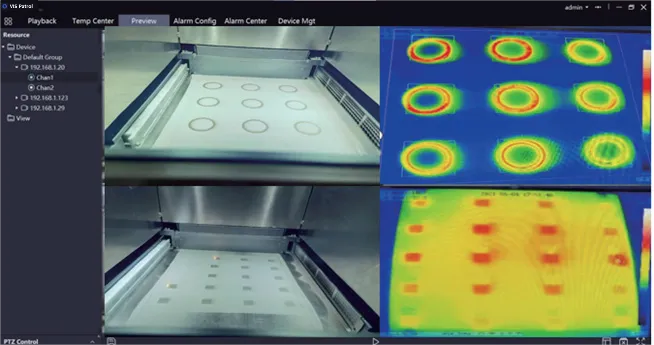
In cell manufacturing, module assembly and PACK production, infrared thermal cameras monitor equipment and battery temperature distribution in real time, quickly detect abnormalities (such as local overheating, poor soldering and poor contact) to improve production consistency and yield.
2) Warehousing Safety Monitoring
During lithium-ion battery warehousing, abnormal ambient temperature, uneven stack heat dissipation or single battery overheating may cause thermal runaway. Infrared systems provide 24/7 monitoring and automatic alarms for safe warehousing.
3) Test Room Temperature Monitoring
In safety tests such as nail penetration, overcharge, short circuit and extrusion, infrared thermal cameras record real-time temperature curves, helping researchers analyze heat diffusion and thermal runaway for battery safety design.
4) Battery Cell Temperature Monitoring
In charge-discharge and cycle life tests, infrared thermal imaging accurately monitors single cell surface temperature, detecting internal short circuits, abnormal tab heating and uneven temperature differences.
5) Energy Storage Station Safety Monitoring
Large energy storage stations face severe risks from thermal runaway. Infrared systems support all-time monitoring of cabinets, battery clusters and key equipment for early warning and remote management.

3. Raythink Product Recommendations

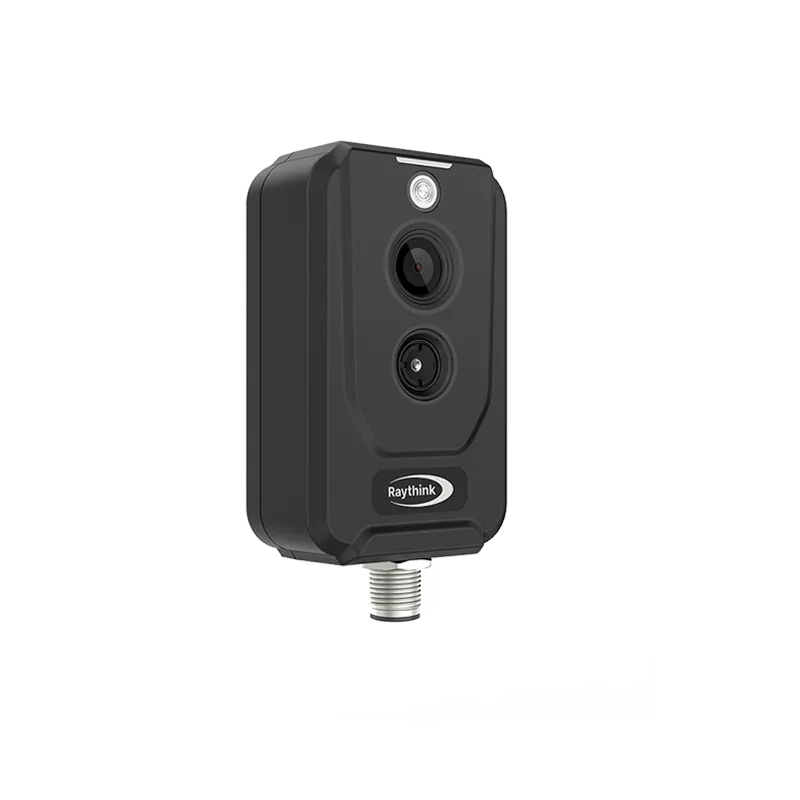
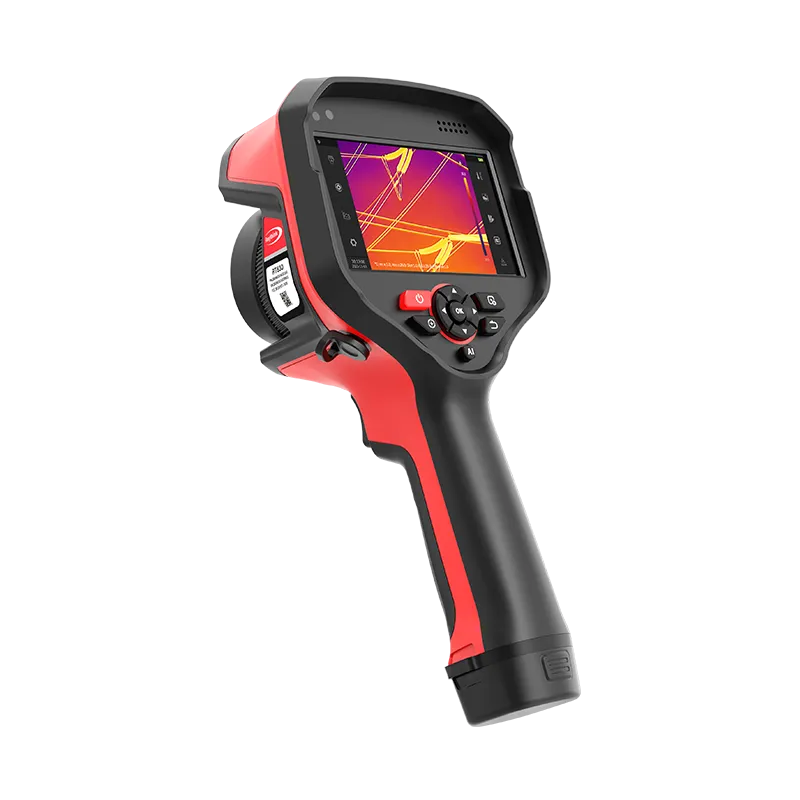
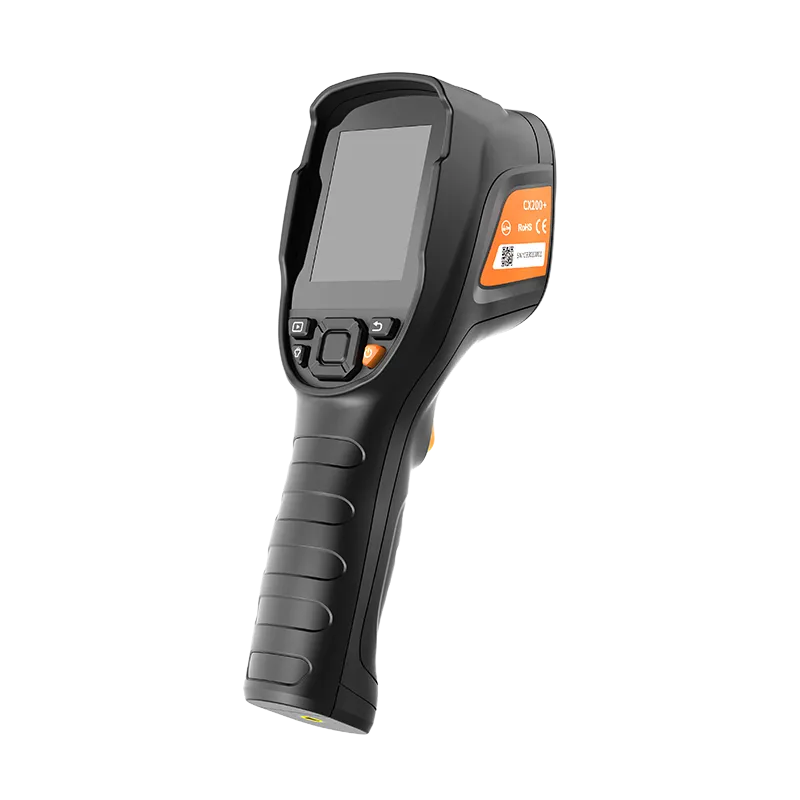
With the booming new energy industry, lithium-ion battery safety has attracted growing attention. Thermal runaway early warning and temperature monitoring have become essential throughout the entire lifecycle of lithium-ion batteries, covering production, storage, transportation, testing and application. As a professional infrared thermal imaging camera manufacturer, Raythink provides high-performance and reliable thermal imaging solutions for new energy, battery manufacturing, energy storage safety and industrial monitoring applications. If you have demands for lithium-ion battery thermal monitoring, energy storage safety inspection and industrial temperature measurement, feel free to contact us.