As critical logistics and trade hubs, ports operate around the clock in open and complex operating environments. This makes reliable monitoring essential for site-boundary monitoring, fire risk awareness, and operational safety.
Traditional visible-light cameras can be limited by darkness, rain, fog, glare, and low-visibility conditions. In comparison, thermal security cameras use infrared thermal imaging to detect heat signatures and support more consistent monitoring in challenging outdoor environments.
By combining thermal imaging, visible-light imaging, and intelligent analysis, dual-spectrum monitoring helps ports improve early warning, wide-area visibility, and on-site response across terminals, yards, warehouses, and key operation areas.
1. Core Features of Dual-Spectrum Security Monitoring
Dual-spectrum security monitoring integrates infrared thermal imaging and visible-light imaging, with core features tailored to the unique demands of port environments:
1)All-weather stable imaging
Infrared thermal imaging operates independently of visible light and helps improve target detection in darkness, glare, light smoke, haze, and low-light environments. For ports that require continuous area monitoring, a thermal imaging security camera can provide stronger visibility than visible-light-only systems in many challenging outdoor conditions.
2)Complementary dual-spectrum fusion mechanism
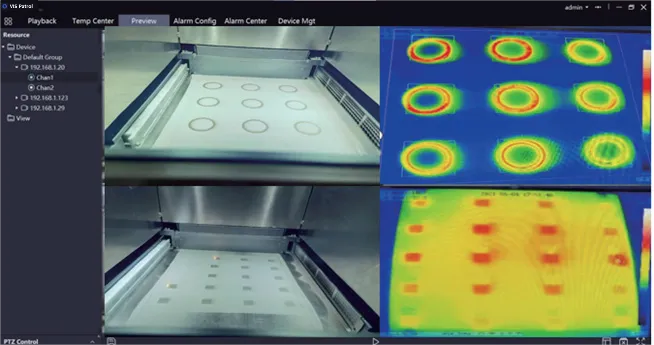
The system is equipped with both thermal imaging and visible-light lenses. Thermal imaging provides temperature-based visibility, while visible light supplements color and scene details. The two imaging modes work together to provide a more complete view of the scene, balancing detection efficiency and image detail.
3)AI-assisted event awareness
Supported by intelligent algorithms, the system can assist with object and heat-source detection, activity analysis, event alerts, and operational review. This helps improve earlier risk awareness and faster on-site response.
4)Design for complex industrial environments
Suitable models can be selected with rugged housings, corrosion-resistant design, and flexible installation options to support deployment in humid and high-salt port environments.


2. Advantages of Dual-Spectrum Security Monitoring for Ports
Leveraging infrared thermal imaging technology, dual-spectrum security monitoring brings practical value to port operations by improving visibility, risk awareness, and response efficiency in complex environments:
1)Reduces blind spots with wide-area and long-range thermal monitoring
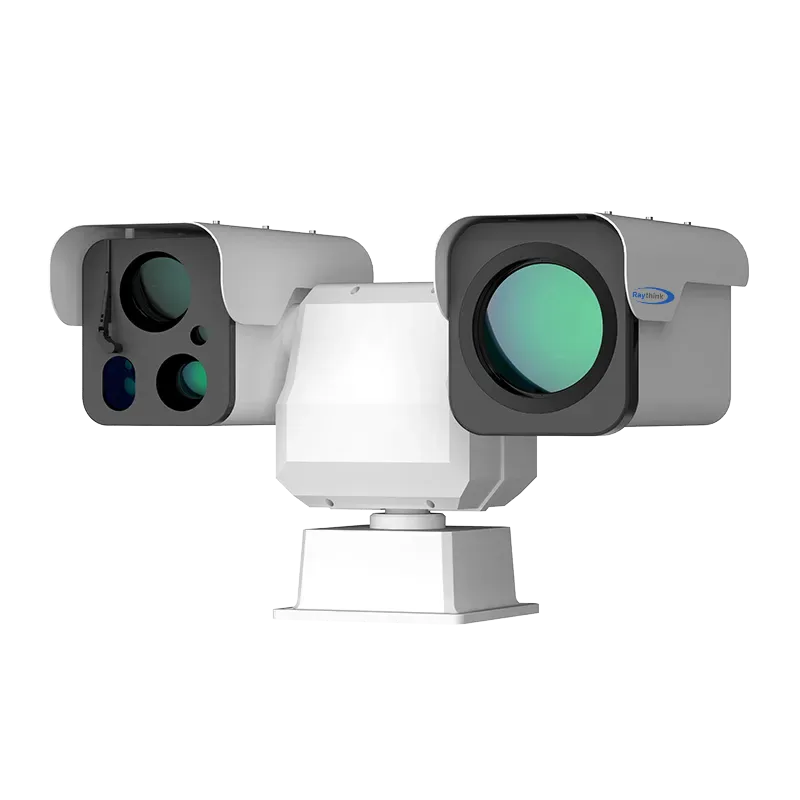
For large port environments such as yards, terminals, roadways, storage zones, and restricted areas, visible-light-only cameras may leave blind spots under darkness, glare, or low-visibility conditions. Raythink infrared panoramic cameras support 360° IR monitoring for wide-area coverage, while thermal PTZ cameras help operators monitor long distances, follow preset patrol routes, and focus on key areas when abnormal events are detected. Together, these thermal security camera solutions help ports improve coverage continuity and reduce environment-related monitoring gaps.
2)Improves wide-area inspection efficiency and reduces labor costs
The system supports real-time wide-area monitoring and intelligent heat-source detection, with stable imaging even during continuous rotation. Preset patrol routes enable automatic scanning of key areas and scheduled inspection of critical operation zones, greatly reducing manual inspection workload and on-site safety risks.
3)Enables temperature sensing and early hazard warning
The temperature-sensing capability of infrared thermal imaging identifies potential hazards in advance such as equipment overheating, pipeline leaks and early-stage fires. Supported by dual verification from visible-light imagery and temperature data, it quickly locates fire sources, assesses fire scope, and realizes early detection and rapid response to hazards.
4)Improves site-boundary awareness and controlled-area management
Integrated with AI behavior analysis algorithms, the system alerts operators to unexpected access, prolonged presence in unsafe zones, and other abnormal activities around key operational areas. Thermal imaging also improves visibility in low-light or partially obscured areas, supporting more effective operational safety management.
3. Main Application Scenarios of Dual-Spectrum Security Monitoring in Ports
Dual-spectrum security monitoring has been widely implemented across significant port scenarios, supporting end-to-end safety management:
1)High-Value Area Protection
For port site boundaries, storage areas, controlled operation zones, and other key working areas, thermal imaging helps detect unusual heat signatures and movement under low-visibility conditions. Combined with AI-enabled event alerts, it supports earlier awareness and improves operational risk management.
2)Fire and Hazard Prevention
Infrared thermal imaging can help improve visibility in light smoke and low-visibility conditions, supporting earlier awareness of abnormal heat patterns or potential fire risks. When integrated with site monitoring systems, it can help operators locate possible risk areas more efficiently and support faster on-site response.
3)On-Site Personnel Safety Compliance
Powered by AI algorithms, the system supports safety-rule checks where permitted by site policies and local regulations, such as personal protective equipment reminders, unsafe smoking near equipment, prolonged presence in hazardous operation zones, and access to controlled areas.
4)Equipment and Pipeline Leak Detection
For pipelines, tanks, and equipment areas, thermal monitoring can help identify abnormal temperature patterns that may indicate overheating, leakage-related thermal changes, or early-stage safety risks. In ports involving oil, gas, petrochemical storage, or utility facilities, Raythink OGI fixed cameras can be used as a dedicated option for continuous gas leak detection and monitoring.
5)All-Weather Wide-Area Operational Monitoring
It delivers continuous monitoring for open areas including port yards, roadways and terminals, enabling visual operation management under fog, rain and nighttime conditions to maintain safe and orderly logistics activity.

4. Raythink product recommendations
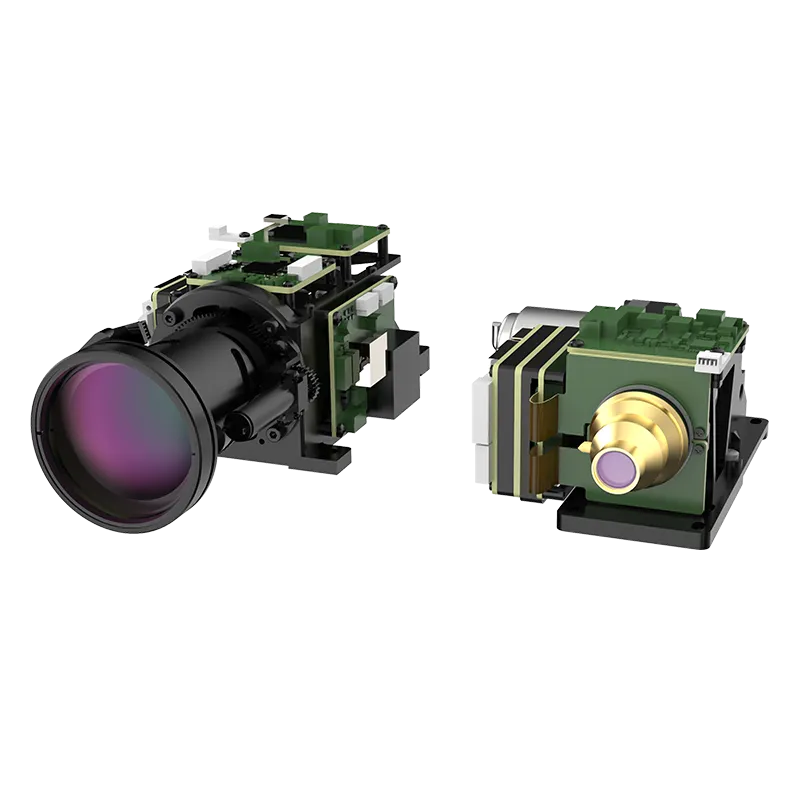
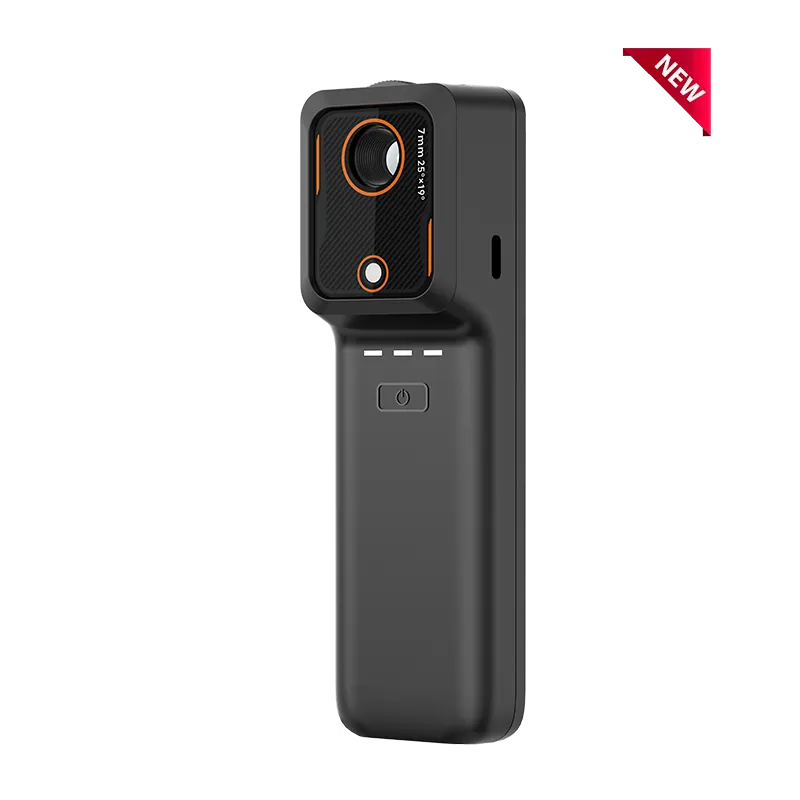
For site-boundary monitoring, wide-area observation, and controlled-area safety management in port environments, Raythink offers different types of security thermal imaging cameras for different deployment needs.


Dual-spectrum security technology, integrating infrared thermal imaging and visible light imaging, has become an essential component in smart port construction. Its capabilities in all-weather sensing, temperature-based early warning, intelligent analysis, and strong environmental adaptability help address common visibility, early warning, and operational coordination challenges in port environments, supporting the transformation of port operation management from post-event review to earlier risk awareness, more efficient safety management, and broader operational visibility. Please feel free to contact Raythink for detailed consultation and technical support on dual-spectrum security monitoring.