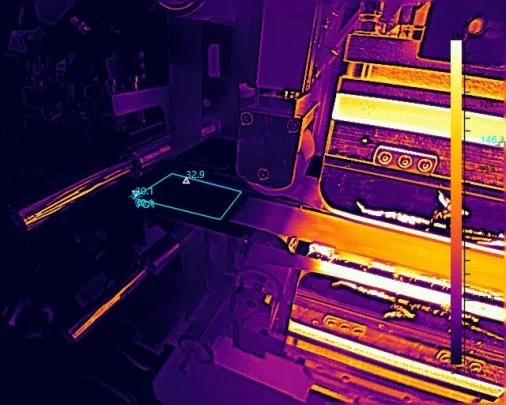
In public perception, thermal imaging cameras can capture images in complete darkness, even penetrate smoke, and clearly display the temperature distribution of a target. However, in real-world applications, the results may vary significantly even when using the same device: under certain conditions the camera can accurately detect a target, while in others it may produce temperature deviations or even misjudgments. This is not due to a lack of performance, but rather the combined influence of complex environments, atmospheric conditions, surface properties of the object, and device settings—meaning that thermal cameras cannot always “see clearly” or “measure accurately.”
Understanding these factors is essential to answering the question “how accurate is thermal imaging”. It not only helps avoid misinterpretation or incorrect temperature readings but also ensures that thermal cameras can deliver their intended performance. This article explains the working principles, key factors affecting accuracy, and provides practical tips to improve thermal imaging results.
1. Working Principle of Thermal Imaging Cameras
Any object above absolute zero emits infrared radiation. The working principle of a thermal imaging camera is to capture this infrared radiation through a lens, focus it onto an infrared detector, and then convert the incoming radiation into electrical signals. These signals are processed by imaging algorithms to produce video streams and temperature data of the target.
In simple terms, a thermal imaging camera is essentially a “temperature camera.” It translates invisible infrared radiation into a visible thermal image, where different colors or brightness levels represent varying temperature regions, making the heat distribution easy to understand.
Understanding this principle is fundamental when asking how accurate is thermal imaging, since the accuracy of temperature readings depends on how reliably the emitted infrared radiation is captured and processed.
2. Key Factors Affecting the Accuracy of Thermal Imaging
Thermal imaging technology is based on the infrared radiation emitted by a target object. Through a multi-stage process—including radiation transmission in the atmosphere, detector reception, photoelectric conversion, digital processing, and image optimization—the thermal distribution of the target is visualized.
This process involves several critical steps: radiation generation, transmission, and reception. The accuracy of detection is restricted by multiple factors, and any variation in these conditions may reduce image quality or measurement precision.
Therefore, when evaluating how accurate is thermal imaging, it is essential to recognize that results depend on a combination of factors. In the following sections, we analyze the main influences systematically, including target surface characteristics, environmental and atmospheric conditions, device performance parameters, and methods of operation.
1) Signal Emission Factors
① Influence of Surface Emissivity
The emissivity of a target’s surface is a core parameter that determines the intensity of its infrared radiation. Under the same temperature conditions, objects with different emissivity levels emit significantly different amounts of radiation, which directly affects the performance of thermal imaging devices. Generally, objects with higher emissivity generate stronger infrared signals at the same observation distance, resulting in clearer surfaces in the thermal image. Conversely, low-emissivity objects are harder to detect.
Emissivity is influenced by multiple factors, including material properties, surface roughness, oxidation level, and color. Even the same object may have different emissivity values under varying temperatures and wavelengths. These variations are a major source of measurement errors in infrared thermography. For example, most non-metallic materials—especially metal oxides—tend to have high emissivity, while pure metals usually have low emissivity. Surface roughness also plays a significant role: rougher surfaces reflect less, thereby increasing emissivity, which is especially evident in metallic materials.
In addition, emissivity is direction-dependent, particularly for polished or smooth surfaces. To measure the true temperature of an object with emissivity lower than 0.9, the thermal camera should ideally be positioned perpendicular to the surface. If that is not possible, the measurement angle should remain within 30° of the surface normal. Otherwise, emissivity parameters need to be corrected accordingly.
Understanding how emissivity affects readings is crucial when evaluating how accurate is thermal imaging, since inaccurate emissivity settings often lead to temperature deviations or misinterpretations.
2)Signal Transmission Factors
Atmospheric transmittance is an important indicator used to evaluate how the atmosphere affects infrared radiation. It is defined as the ratio between the attenuated infrared energy that passes through the atmosphere and the original radiation emitted by the target. Gases such as nitrogen, oxygen, carbon dioxide, and water vapor absorb and scatter infrared radiation to varying degrees, which reduces the intensity of the signal. This attenuation decreases the ability of thermal imaging devices to collect signals, thereby affecting detection results.
Under extreme weather conditions, such as heavy rain or snowfall, infrared radiation transmission is further impacted. When raindrops are dense, infrared signals cannot travel in a straight path; instead, scattering and absorption occur, leading to signal loss. During snowfall, snowflakes cause both reflection and scattering, which not only introduces interference but also absorbs and diminishes infrared radiation, resulting in lower image quality. Similarly, fog, hail, and other adverse weather conditions significantly reduce thermal imaging performance.
The surrounding temperature also influences the actual temperature of the measured target, which in turn affects measurement accuracy. In high-temperature environments, the target may heat up, causing readings to appear higher than the real value. Conversely, in low-temperature environments, the measured value may be underestimated. Therefore, when considering how accurate is thermal imaging, it is important to account for ambient temperature conditions to ensure reliable and precise results.
3. Device Performance Factors at the Input Stage
Infrared detector resolution refers to the number of effective pixels in the infrared detector, usually expressed as “horizontal pixels × vertical pixels” (e.g., 256×192, 384×288, 640×512, 1280×1024). The higher the resolution, the more temperature points can be captured within a unit area, resulting in clearer images with richer details. Conversely, lower resolution produces blurry images with insufficient detail, reducing target recognition capability.
Spatial resolution, also known as Instantaneous Field of View (IFOV), represents the smallest distance between two objects that a thermal imaging device can distinguish, typically measured in milliradians (mrad). It is determined by the pixel pitch of the detector and the focal length of the lens. With a fixed focal length, smaller pixel pitch increases the number of pixels, thereby enhancing image detail and clarity. With fixed pixel pitch, higher spatial resolution means a longer focal length, which narrows the field of view but improves magnification and image sharpness. At a constant target distance, higher spatial resolution allows the camera to capture finer details, making the image clearer.
Thermal sensitivity, also called Noise Equivalent Temperature Difference (NETD), indicates the smallest temperature difference a thermal camera can detect between the target and the background, usually expressed in millikelvins (mK). NETD is influenced by factors such as lens optics (F-number), detector type, integration time, and operating temperature. A lower NETD value means the device can detect smaller temperature differences, producing higher image contrast and finer details—especially advantageous in low-contrast or weak heat source environments.
The field of view is the angular extent of the observable scene. A wider FOV allows the camera to cover a larger detection area, but because the number of pixels remains constant, pixel density decreases, leading to lower image resolution and less detail. Conversely, a narrower FOV corresponds to a longer focal length, which reduces the covered area but increases pixel density and resolution, producing clearer and more detailed images.
Frame rate refers to the number of frames or images displayed per second, measured in hertz (Hz). In thermal imaging, it represents how many infrared frames are shown per second—commonly 25Hz, 30Hz, or 50Hz. A higher frame rate provides smoother video, especially when observing fast-moving targets, where it helps capture movement more accurately and reduces image lag or motion blur.
When evaluating how accurate is thermal imaging, device performance factors such as resolution, IFOV, NETD, FOV, and frame rate play a critical role in determining both measurement precision and image quality.
3. Practical Suggestions to Improve Thermal Imaging Accuracy
To ensure that thermal imaging devices deliver precise detection and high-quality imaging across different application scenarios, it is necessary to optimize factors related to signal emission, transmission, and device performance. Key recommendations include:
The emissivity of the target surface has a significant impact on both infrared radiation intensity and temperature measurement accuracy. To improve reliability, low-emissivity surfaces can be treated—for example, by applying a high-emissivity coating. For smooth metals or other materials with low emissivity, it is best to keep the thermal camera perpendicular to the surface during measurement. In addition, the emissivity parameter should be correctly set in the device according to the material’s characteristics to achieve accurate temperature readings.
Ambient temperature and atmospheric conditions directly affect infrared measurement results. To minimize interference, testing should be carried out under clear skies and stable temperatures, while avoiding strong winds, extreme weather, or rapidly changing conditions. It is also recommended to reduce the impact of human activity or nearby high-power equipment. In environments with high heat, dust, smoke, or vapor, protective casings, water cooling, air cooling, or air purging systems can be used to reduce environmental effects and protect the device, ensuring more stable and reliable results.
The performance of a thermal imaging camera does not depend on a single parameter, nor does higher specification always mean better performance. When selecting a device, factors such as detection distance, target size, environmental conditions, and budget should all be considered. By reasonably matching resolution, thermal sensitivity (NETD), field of view (FOV), and frame rate, users can strike the right balance between precision, image clarity, and cost-effectiveness.
Ultimately, applying these strategies helps address the common question “how accurate is thermal imaging”, ensuring that cameras perform optimally across various real-world applications.
4) Adjusting Image Settings
To obtain high-quality thermal images and ensure accurate temperature measurement, it is essential to configure and adjust the thermal imaging camera parameters properly:
- Focus Adjustment: The focus position directly affects image clarity and measurement accuracy. The thermal camera’s focus can be adjusted manually or electronically to ensure that the target is sharply visible.
- Temperature Range Selection: The selected temperature range should correspond to the distribution of the target’s heat. If the device supports adaptive temperature range adjustment, it can automatically optimize settings. Otherwise, the range must be manually set based on the application scenario.
Proper image adjustments not only enhance clarity but also improve measurement reliability, which is critical when evaluating how accurate is thermal imaging in practice.

- Palette Selection: Different color palettes can highlight specific temperature features, making thermal image analysis more intuitive and easier to interpret.


- Environmental Parameter Correction: Accurate measurement depends on correctly setting key parameters such as emissivity, reflected temperature, target distance, atmospheric transmittance, and ambient temperature. Among these, emissivity is especially critical. For low-emissivity targets, it is also necessary to set the reflected temperature accurately. Proper parameter correction plays a vital role in determining how accurate is thermal imaging in practical applications.

If you are unsure of the exact values for these parameters, it is recommended to start with the following default settings:
Distance | 2.0m |
Ambient Temperature | 25℃ |
Reflected Temperature | 25℃ |
Emissivity | 0.95 |
Atmospheric Transmittance | 1.0 |
- Image Calibration: The purpose of thermal camera image calibration is to perform Non-Uniformity Correction (NUC) to compensate for variations in detector element responses. While the system typically executes calibration automatically, it can also be performed manually when necessary—for example, before starting video recording or after completing focus adjustments—to ensure optimal detection performance.
Conclusion
Thermal imaging technology visualizes temperature distribution by capturing the infrared radiation emitted by objects, providing precise and efficient temperature measurement for industrial inspections, security monitoring, scientific research, and other applications. However, measurement accuracy is influenced by multiple factors, including the target’s surface characteristics, atmospheric and environmental conditions, and the performance of the thermal camera itself.
By optimizing target surface conditions, controlling environmental factors, selecting the appropriate equipment, and adjusting image parameters, users can significantly improve measurement precision and image quality.
With extensive experience and professional expertise in thermal imaging applications, Raythink provides tailored device selection and solutions for various scenarios, helping users achieve high-precision measurements and clear imaging even in complex environments. Contact the Raythink team today for expert guidance and recommendations to enhance both your detection results and operational efficiency.