1. Introduction
Whether in security protection, wildlife conservation, industrial inspection, or emergency response, long-range thermal imaging cameras demonstrate significant application value through their unique all-weather imaging capabilities (unaffected by light conditions) and thermal vision. However, a common question arises: How far can thermal imaging cameras actually see?
In reality, there is no straightforward answer. The visible range of a thermal imaging camera is influenced by multiple factors, including the device’s performance parameters, environmental conditions, and the characteristics of the target object.
This article will delve into the core question of “detection range for long-range thermal imaging cameras” from multiple angles: technical principles, influencing factors, practical applications and enhancement methods. We will also recommend Raythink’s advanced products and solutions in the field of long-range thermal imaging.
2. Technical Principles of Long-Range Thermal Imaging Cameras
Infrared thermal imaging technology is a non-contact temperature measurement and imaging technique developed based on the physical phenomenon that all objects in nature above absolute zero (-273.15°C) emit infrared radiation.
Its operational workflow can be summarized in the following steps:
1) Infrared Radiation Collection: Infrared radiation emitted from an object’s surface is collected and focused through the thermal imaging camera’s specialized optical lens and filter system. The lens design is specifically optimized for the infrared spectrum to ensure efficient capture of thermal signals.
2) Photoelectric Signal Conversion: The collected infrared radiation is projected onto the core component—the infrared detector. Composed of tens of thousands to millions of microscopic pixels, the detector converts invisible infrared energy into electrical signals.
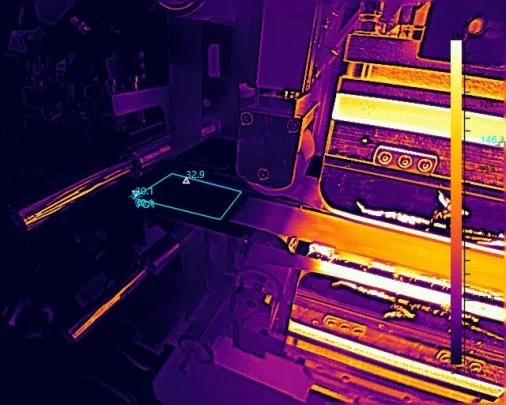
3) Signal Processing and Imaging: The converted electrical signals undergo amplification, processing, and digitization through complex circuitry. Finally, specialized image processing algorithms transform the temperature data corresponding to each pixel into a visible thermal image. Different colors in the image represent varying temperatures, enabling us to visualize an object’s thermal distribution.
In essence, a thermal imaging camera functions as a temperature-to-visual converter, precisely translating surface heat radiation into a visual image. This allows clear perception and identification of targets even in challenging conditions such as complete darkness, dense fog, or smoke.
3. Five Key Factors Affecting the Detection Range of Long-Range Thermal Cameras
1) Resolution
Resolution is the key parameter determining the clarity of thermal imaging. It is typically expressed in pixel counts (e.g., 640×512, 1280×1024). Higher resolution yields richer image detail and stronger target identification capabilities. At the same focal plane size, smaller pixel dimensions accommodate more pixels, thereby enhancing resolution.
For example, at the same focal length, a 12μm pixel size enables clearer target recognition at longer distances than a 17μm pixel size. This is because smaller pixels can be arranged more densely, enhancing image fineness and enabling target recognition at extended distances.

2) Lens Focal Length
Focal length determines the camera’s field of view and zoom capability. Long-focal-length zoom lenses can bring distant targets closer, making them suitable for long-range surveillance, though the field of view narrows accordingly.
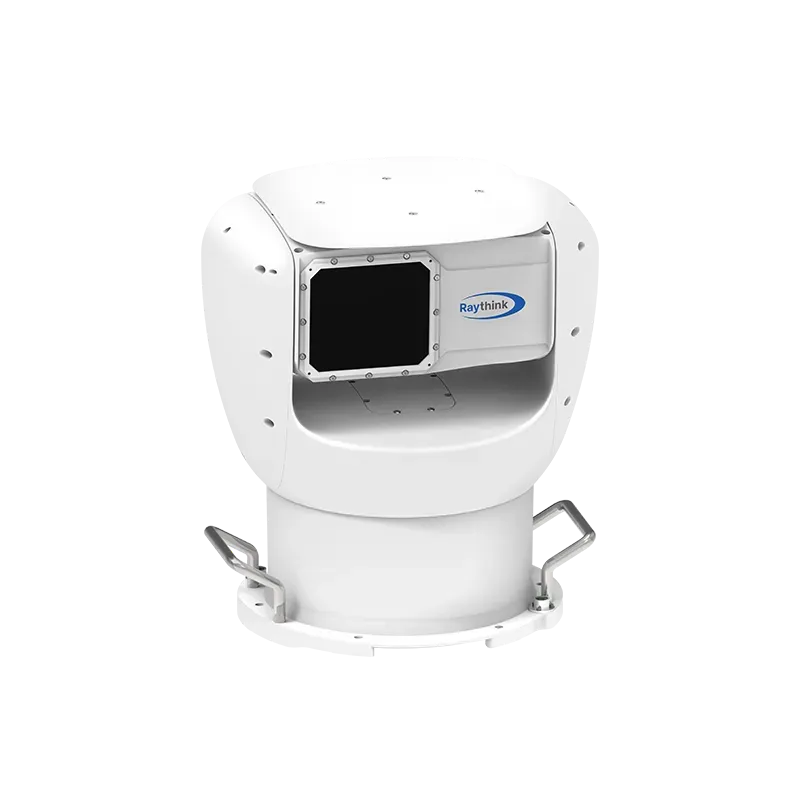
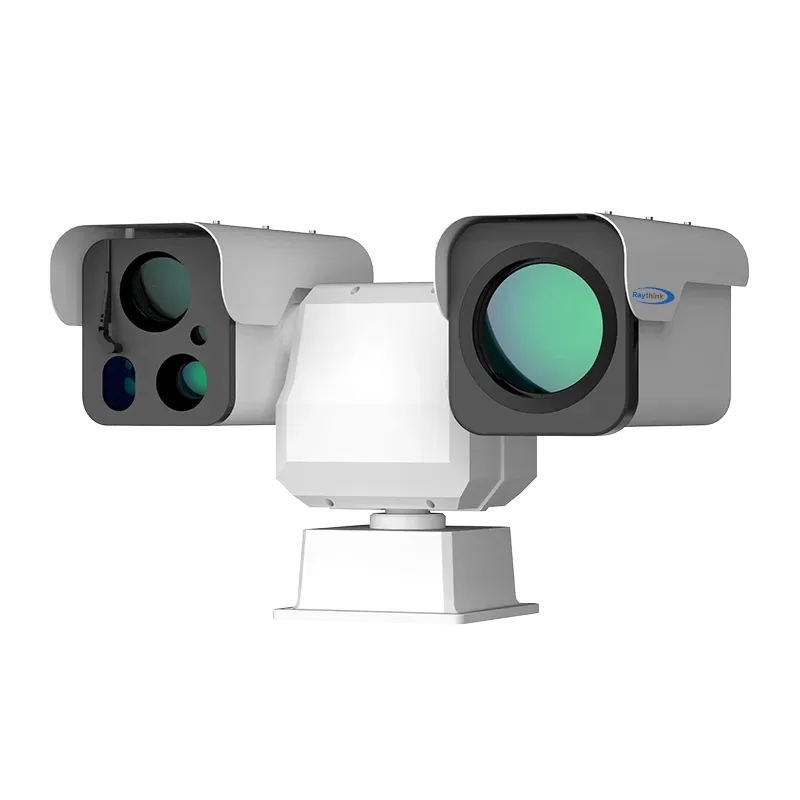
In practical applications, different focal lengths correspond to different detection ranges. For example, Raythink’s PC5 series multi-spectrum PTZ camera, equipped with a 150mm lens, achieves a detection range of 6.3 kilometers for humans and 19.2 kilometers for vehicles.
3) Thermal Sensitivity (NETD)
Thermal sensitivity, measured by Noise Equivalent Temperature Difference (NETD), indicates the smallest temperature variation a device can detect. A lower NETD value signifies greater sensitivity to temperature changes, enabling detection of faint thermal signals at greater distances.
High-sensitivity thermal imaging cameras are particularly suited for scenarios requiring detection of subtle temperature variations, such as nocturnal wildlife monitoring and search-and-rescue missions.
4) Environmental Conditions
Although thermal imaging technology operates in all weather conditions, extreme weather (such as heavy rain, dense fog, or snow) can attenuate infrared radiation propagation, thereby reducing detection range. Additionally, intense background heat sources (e.g., sunlit ground, industrial heat sources) may interfere with target identification.
5) Target Size & Temperature
A target’s dimensions and temperature directly influence its detectability. Large, high-temperature targets (e.g., vehicles, flames) can be detected at considerable distances, while small, low-temperature targets or those with minimal temperature contrast against the background (e.g., humans, small animals) require closer proximity for identification.
4. Core Advantages of Thermal Imaging Cameras
- All-Weather Operational Capability: Completely unaffected by ambient light conditions, delivering clear imaging in pitch darkness, intense glare, or backlit environments. Additionally, it possesses the ability to pass throughfog, smoke, and light haze to a certain extent, enabling true 24/7 uninterrupted surveillance. This makes infrared thermal imaging technology uniquely advantageous in security monitoring, forest fire prevention, and similar fields.

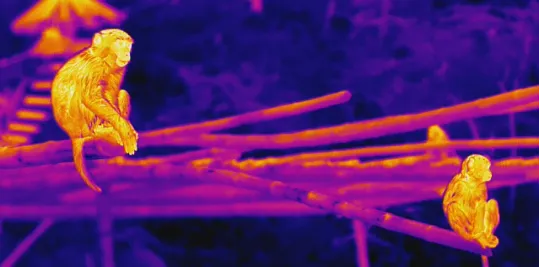
- Non-contact and Covert Operation: Requires no physical contact with targets and no additional lighting, enabling surveillance without disturbing subjects. This feature is crucial for wildlife observation, anti-poaching efforts, and applications involving high-temperature, high-pressure, or corrosive objects/environments, capturing the most natural and authentic states.
- Powerful Target Recognition and Camouflage Detection: Thermal imaging relies on temperature differences rather than color or texture. This means any target can be effectively detected and identified as long as its temperature differs from the surrounding environment—regardless of camouflage, such as animals concealed in grass.
- High Sensitivity and Early Warning Capabilities: Modern high-performance thermal imaging cameras can detect minute temperature differences as low as 0.025°C, enabling extremely early detection of potential thermal anomalies (such as distant personnel, vehicles, or fire hazards). This provides valuable time for early warning and rapid response.
5. Practical Visibility Range: Consumer-Grade vs. Industrial-Grade Thermal Imaging Cameras
| Device Type | Typical Detection Range | Applications |
| Consumer-Grade Thermal Camera | Tens to hundreds of meters | Home inspections, appliance diagnostics, outdoor exploration |
| Industrial-Grade Thermal Imaging Camera | Hundreds of meters to tens of kilometers | Perimeter security, forest fire prevention, wildlife research |
Practical Case References:
- Wildlife Monitoring: Remote thermal imaging cameras capture clear animal activity at night without disturbance, with detection ranges reaching several kilometers, suitable for anti-poaching and ecological research.
- Security Protection: Raythink’s PC4 dual-spectrum PTZ camera with a 100mm lens achieves 4.2km human detection and 12.8km vehicle detection, ideal for perimeter defense and long-range target tracking.
- Search and Rescue Operations: In mountainous or maritime SAR missions, thermal imaging equipment identifies human thermal signatures from kilometers away, significantly enhancing rescue efficiency.
6. Raythink Long-Range Thermal Imaging Cameras Recommendations
As a leader in infrared thermal imaging, Raythink offers multiple high-performance products for long-range monitoring:

- Thermal Resolution: 640×512 / 1280×1024
- Detection Range (150mm Lens): Human/6.3km, Vehicle/19.2km, Fire Point/10km
- Features: Integrates visible light and thermal imaging, supports AI analysis, suitable for wide-area security and forest fire prevention.

- Thermal Resolution: 640×512 / 1280×1024
- Detection Range (100mm Lens): Human/4.2km, Vehicle/12.8km, Fire Point/6km
- Features: Dual-spectrum fusion imaging, supports intelligent early warning and trajectory tracking, high cost-performance ratio.

- Resolution: 640×512 / 1280×1024
- Detection Range (75mm Lens): Human/2km, Vehicle/4km, UAV/1.5km
- Features: Panoramic scanning with precise positioning, suitable for multidimensional monitoring in complex environments.
4) VIS-4100 Platform Software

- Functionality: Integrates video management, device control, data storage, and intelligent algorithm analysis. Supports multi-device connectivity to build an all-weather, multi-dimensional smart surveillance network.
7. How to Enhance Thermal Imaging Camera Detection Range?
1) Select high-resolution and long-focal-length lenses: Choose appropriate device configurations based on actual needs, such as pairing 1280×1024 resolution with a 150mm+ telephoto lens.
2) Optimize installation location and angle: Avoid obstructions, expand the field of view, and prioritize elevated mounting to minimize terrain impact.
3) Avoid high-interference environments: Minimize exposure to intense heat source backgrounds and refrain from relying on maximum detection range during extreme weather conditions.
4) Integrate intelligent image processing: Leverage AI algorithms to enhance target recognition capabilities, enabling automatic detection and tracking of small distant objects.
5) Perform regular maintenance and calibration: Maintain lens cleanliness and conduct periodic device calibration to ensure stable imaging quality.
8. Summary
The visible range of long-range thermal imaging cameras is not a fixed value but results from the combined effects of device performance, environmental conditions, and target characteristics. With ongoing advancements in pixel size reduction, resolution enhancement, AI integration, and multispectral fusion technology, thermal imaging devices are continually pushing detection limits.
Leveraging its technical advantages—12μm small pixels, high resolution, and long-focal-length lenses—Raythink delivers remote thermal imaging solutions spanning hundreds of meters to tens of kilometers. These solutions find extensive application across security, environmental protection, forestry, wildlife conservation, and other fields. Looking ahead, we anticipate thermal imaging technology will provide even stronger support for safeguarding human safety and nature across greater distances and more complex environments.
For customized solutions, please contact Raythink’s technical team to receive professional consultation and project recommendations.

.webp)