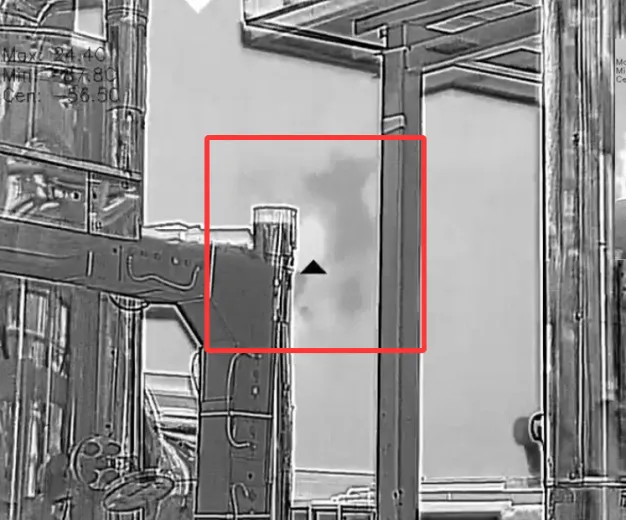
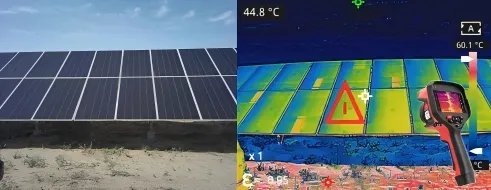
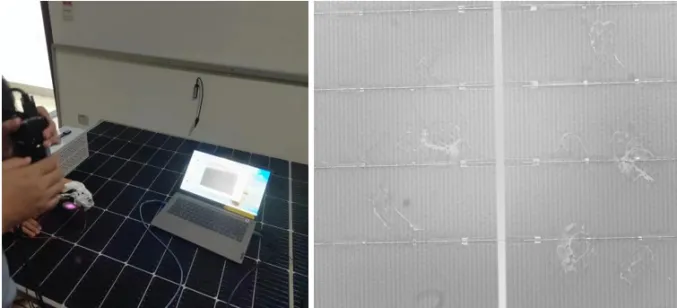
1. Why Are Thermal Images Displayed in Color or Pseudo-Color?
The core function of a thermal imaging camera is to convert invisible infrared radiation into visual images, and color or pseudo-color display is the key method for achieving this conversion. Since human vision has limited perception of temperature differences in a monochrome grayscale image, pseudo-color technology maps infrared signals of varying intensities (corresponding to different temperatures) to specific color ranges. Using preset color palettes, continuous temperature data is transformed into intuitive color gradients. This enables users to rapidly identify temperature levels, heat distribution patterns, and abnormal hotspots, significantly lowering the interpretation threshold.
This color mapping is not randomly assigned but designed based on human visual characteristics and practical application needs—high-contrast color combinations highlight temperature differences, while gradient colors facilitate distinguishing subtle thermal variations. Ultimately, this achieves the core objective of making heat visible, providing intuitive evidence for detection, diagnosis, and monitoring across various industries.
2. Common Thermal Imaging Camera Palette Types, Features, and Applications
1) Basic Grayscale Palette
White Hot
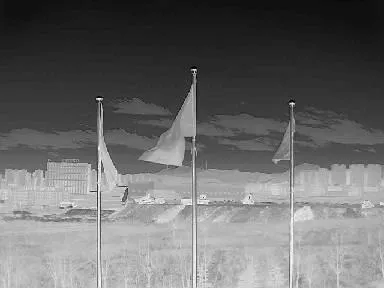
- Characteristics: The higher the temperature, the closer the color approaches white; the lower the temperature, the closer the color approaches black, with intermediate shades transitioning through varying grayscale levels.
- Applications: General scenarios, security monitoring, outdoor patrols. As the most widely used palette, its black-and-white contrast aligns with human visual perception, clearly revealing target outlines and overall thermal distribution. It is particularly suited for scenarios requiring rapid target identification, such as urban environments and wilderness search-and-rescue operations.
Black Hot

- Features: Completely opposite to white-hot imaging—blacker at higher temperatures and whiter at lower temperatures, with smooth grayscale transitions.
- Applications: Law enforcement evidence collection, hunting, night monitoring. The black high-temperature areas stand out more prominently against light backgrounds, clearly revealing the thermal outlines of living subjects like humans and animals. This mode minimizes visual interference in bright light environments, making it ideal for law enforcement evidence gathering and outdoor detection.
2) High-Contrast Color Palette
Rainbow
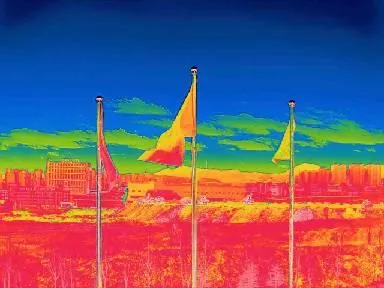
- Features: Utilizes a full-spectrum gradient transition from blue (cold) through green and yellow to red (hot), offering rich coloration and high distinguishability.
- Applications: Ideal for low-contrast environments and detecting minute temperature variations. Accurately displays subtle thermal gradient changes, making it suitable for scenarios requiring the capture of mild temperature differences, such as building insulation inspections, electronic device heat dissipation analysis, and photovoltaic panel defect detection.
HC Rainbow

- Features: Enhances color contrast based on the rainbow palette while optimizing mid-tone differentiation, making subtle temperature variations easier to identify.
- Applications: Precision electronic inspection, PCB circuit board fault diagnosis, medical auxiliary diagnosis.
Iron

- Features: Warm colors like brown, orange, and yellow indicate high temperatures, while cool colors like blue and purple represent low temperatures. The color transitions are natural, and the edges of hot zones are clearly defined.
- Applications: Electrical and mechanical inspections, industrial equipment maintenance. It effectively highlights abnormal hot zones in equipment (such as motor overloads or poor circuit connections) while preserving detailed contours of equipment, making it a common choice for industrial maintenance personnel.
Lava

- Features: High-temperature zones appear predominantly in red, orange, and yellow, while low-temperature areas display deep blue and purple hues. High color saturation creates a strong visual impact for thermal zones.
- Applications: Roof insulation inspection, solar panel assessment, and building leak detection. Its vivid color contrast enables rapid identification of heat leakage points or hot spots on photovoltaic panels, making it ideal for large-scale outdoor inspection tasks.
Sky

- Features: Low-temperature zones predominantly display light blue and sky blue hues, transitioning to white and light yellow in high-temperature areas. The fresh color palette minimizes visual fatigue.
- Applications: Ideal for extended monitoring and environmental temperature tracking. Suitable for scenarios requiring continuous thermal distribution observation, such as data center server rooms and cold storage facilities. The gentle color tones reduce eye discomfort during prolonged viewing.
Ash

- Features: Deep blue in low-temperature zones, bright red and orange-yellow in high-temperature zones, with rich image detail.
- Applications: Mechanical component inspection, pipeline heat loss analysis. Accurately displays thermal distribution on metal surfaces while mitigating the impact of strong light reflections on observation, making it suitable for precision inspection in complex environments such as industrial workshops.
Ashes Red

- Features: Incorporates a red gradient over an ash-gray base, with high-temperature zones predominantly reddish-brown and low-temperature zones deep gray, enabling more intuitive identification of hot spots.
- Applications: High-temperature equipment inspection and kiln maintenance. Suitable for monitoring defects in rotary kilns, inspecting boiler pipes, and other high-temperature environments, allowing rapid differentiation between normal operating temperatures and abnormally overheated areas.
Hot Iron

- Characteristics: Dominated by light brown and grayish purple tones, with light brown in high-temperature zones and grayish purple in low-temperature zones, presenting a subdued color palette.
- Applications: Metallurgical industry and welding quality inspection. Accurately visualizes heat diffusion paths in heated metals, aiding in assessing temperature uniformity at weld points and identifying thermal distribution anomalies during casting cooling processes.
Warning Red

- Features: High-temperature zones appear vivid red, while low-temperature zones display varying shades of gray. The red color provides strong visual warning, clearly highlighting hazardous hotspots.
- Applications: Fire prevention and electrical equipment overload detection. When device temperatures exceed safety thresholds, the vivid red color rapidly captures attention. Ideal for real-time monitoring of high-risk equipment like distribution cabinets and transformers. When paired with Raythink’s alarm function, it enables over-temperature alerts.
Ice Fire

- Features: Displays red above the high-temperature threshold and blue below the low-temperature threshold, with intermediate ranges shown in varying shades of gray. Features a stark contrast between warm and cool colors, ensuring clear temperature boundaries.
- Applications: Refrigeration equipment inspection and cold chain monitoring. Enables clear differentiation between low-temperature zones within cold storage and leaks of ambient air, or the distribution of cooling effects in HVAC systems, aiding in optimizing refrigeration efficiency.
Green Red

- Features: Primarily green and red gradients, with green indicating low temperatures and red indicating high temperatures, featuring smooth color transitions.
- Applications: Medical assistance and human body temperature screening. Suitable for detecting localized blood circulation abnormalities (such as high-temperature areas caused by inflammation). Red hot spots against a green background clearly highlight abnormal areas while minimizing visual stimulation.
Gradient Red

- Features: A gradient of colors ranging from light red to deep red, free from interference by other colors.
- Applications: Single-point temperature monitoring and heat flow direction analysis. Ideal for scenarios requiring close attention to high-temperature trends, such as electronic component heat testing and battery charge/discharge thermal distribution monitoring, providing an intuitive visualization of the temperature rise process.
Medical

- Features: Normal temperature zones are indicated in soft pink, red, and yellow hues, while abnormal high/low temperature zones are highlighted with high-contrast colors.
- Applications: Medical diagnostic assistance and health screening. Designed to meet visual requirements in medical settings, it accurately displays surface temperature distribution on the human body, providing reference for diagnosing inflammation, circulatory disorders, and other conditions.
Multicolor

- Features: Integrates multiple vivid colors, with each temperature range corresponding to a unique hue, offering exceptional color differentiation.
- Applications: Scientific research experiments and precision temperature analysis. Ideal for scenarios requiring segmentation across multiple temperature zones, such as material heat transfer experiments and electronic chip thermal distribution studies, enabling clear visualization of complex temperature gradients.
Warning Green

- Features: High-temperature zones appear bright green, while low-temperature zones are gray. The green color offers high visibility in industrial environments and is less susceptible to background interference.
- Applications: Industrial assembly line monitoring and equipment operational status monitoring. Ideal for real-time monitoring of critical equipment such as motors and pumps, where bright green hotspots provide rapid alerts for overload or malfunction.
Warning Blue

- Features: Low-temperature anomalies appear in bright blue, while high-temperature zones display red and yellow, specifically highlighting low-temperature fault points.
- Applications: Pipeline leak detection and refrigeration system maintenance. Rapidly identifies low-temperature anomalies caused by gas leaks or coolant loss, suitable for safety inspections in chemical and refrigeration industries.
3. Thermal Camera Color Meanings and Usage Tips
1) Selecting the Right Palette: Matching Scene Requirements
- For quickly identifying hotspots or overall thermal distribution (e.g., equipment failure detection, fire early warning), prioritize Iron, Rainbow, or HC Rainbow palettes. These palettes feature strong color contrast to rapidly highlight abnormal hot zones. Raythink’s intelligent palette recommendation function automatically matches the optimal option based on the scene.
- For detailed texture analysis or identifying specific target contours (e.g., personnel or equipment components in security applications), select White Hot or Black Hot modes. Grayscale displays preserve greater detail, and when combined with the camera’s digital zoom, enable precise recognition of target features.
2) Focus on Hardware Performance: Resolution and Color Rendering Impact Interpretation Accuracy
Screen resolution and color rendering capability directly determine the detail presentation of thermal images. The Raythink RT630 Expert Thermal Camera features a 5-inch 1280×720 touchscreen. Combined with super-resolution technology, it significantly enhances the detector’s native 640×512 resolution, making subtle temperature differences and target contours clearer.
Simultaneously, the camera’s thermal sensitivity (NETD) is critical—its high sensitivity of 35mK captures temperature changes as small as 0.035°C, ensuring accurate color mapping and preventing misjudgments caused by temperature detection errors. For industrial inspection, precision electronics, and similar applications, selecting a professional thermal imaging camera with high resolution and high color fidelity is recommended.
3) Leveraging Isotherm Functionality: Visualizing Temperature Threshold Alarms
In scenarios requiring temperature threshold settings—such as fire prevention and industrial monitoring—the isotherm feature plays a critical role. This function highlights specific temperature ranges with distinct colors, supporting three alarm modes: Above Threshold, Below Threshold, or Within Range.
For example, in electrical cabinet monitoring, setting 80°C as the safety threshold and enabling the above threshold alarm triggers the isotherm feature to highlight areas exceeding 80°C in red while simultaneously activating an audible alarm.
4) Incorporate environmental parameters: Ensure color interpretation accuracy
Thermal camera colors based on actual temperature data, but environmental parameters can affect temperature detection precision. When using the camera, note the following:
- Adjust Emissivity: Different materials exhibit varying emissivity (e.g., metals: 0.05–0.3; non-metals: 0.8–0.98). Select the corresponding value in Raythink thermal imaging cameras based on the target material to prevent reflected temperatures from interfering with color interpretation.
- Compensate for ambient temperature and distance: During long-range detection, input parameters like atmospheric temperature and target distance. The thermal imaging camera automatically compensates for environmental attenuation, ensuring accurate temperature data and maintaining the authenticity of color mapping.
- Avoid direct exposure to intense light: Pointing the thermal imaging camera at strong light sources (e.g., sunlight, laser equipment) can damage the detector and cause temperature detection distortion, affecting color display. Ensure proper shielding or adjust the detection angle.
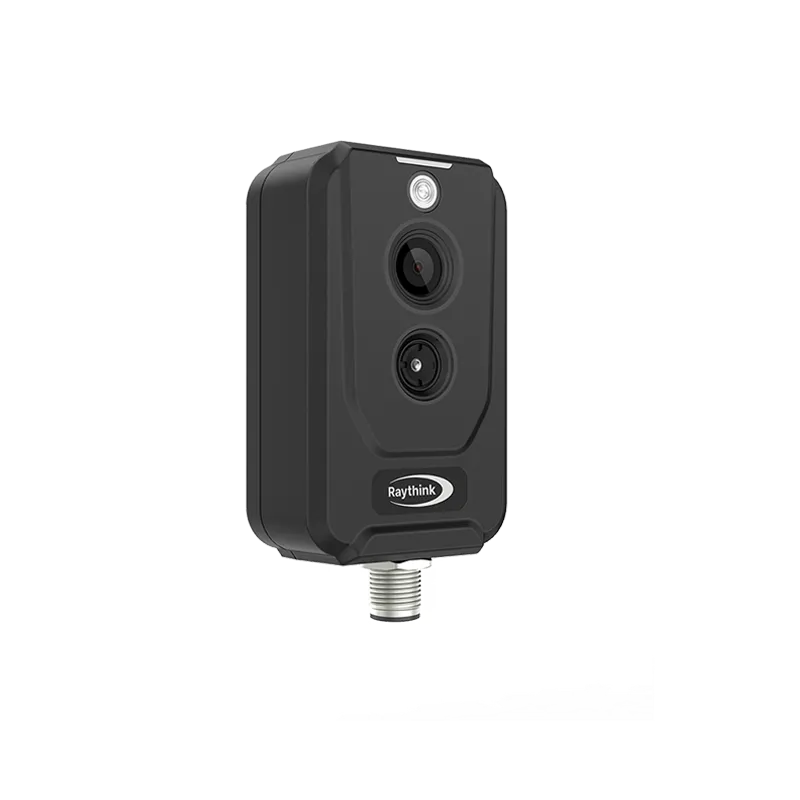
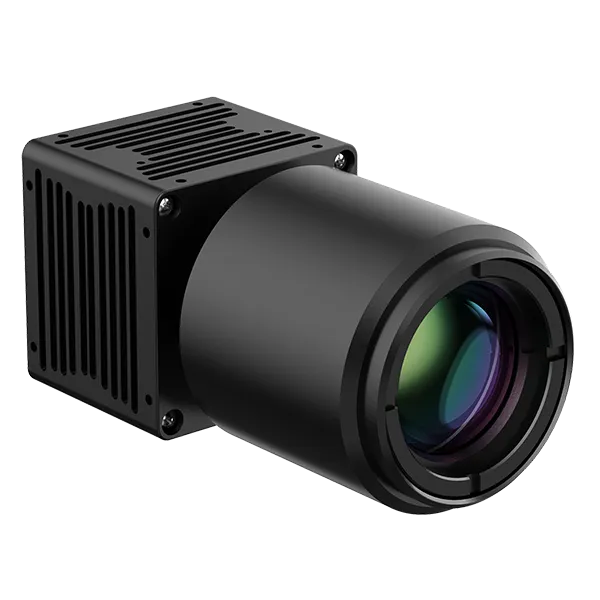
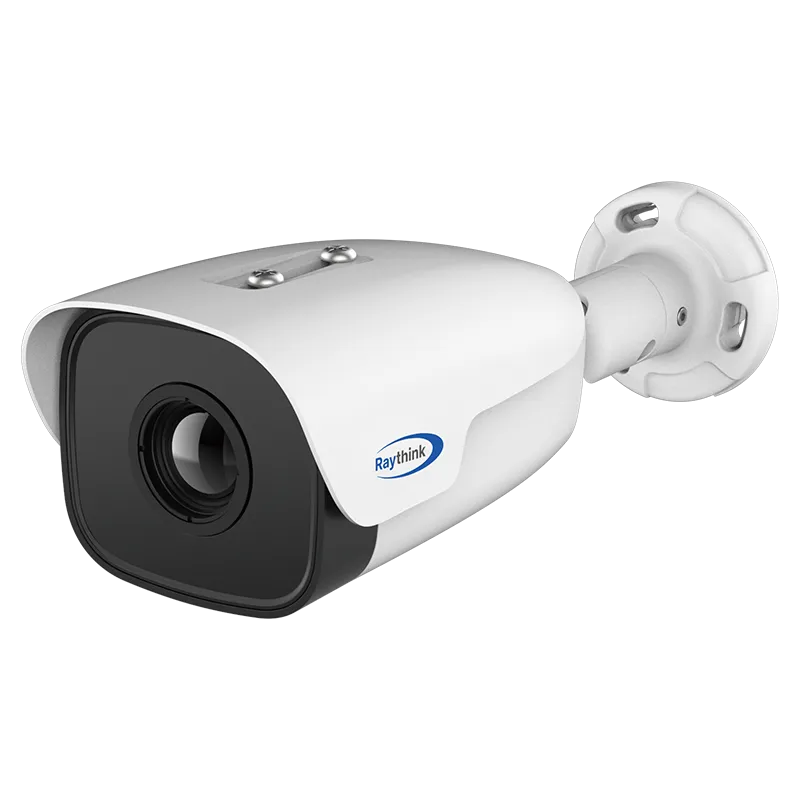
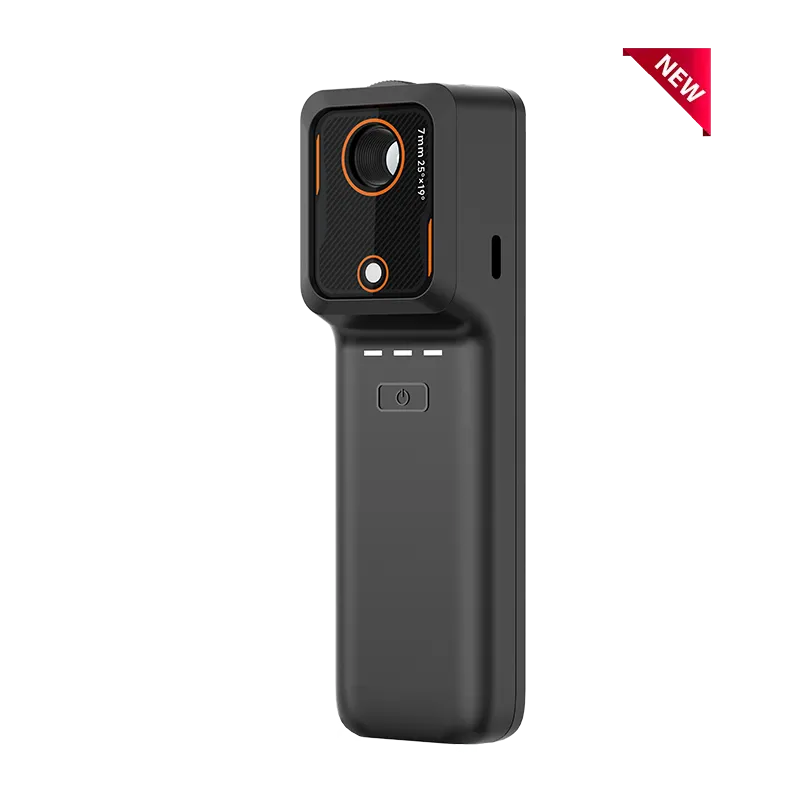
4. Raythink Product Recommendations


5. Conclusion
The essence of thermal camera color scale lies in the visual translation of temperature. Different palette designs are crafted to better accommodate the temperature interpretation needs of diverse scenarios. From industrial equipment fault diagnosis to target identification in security monitoring, to thermal loss detection in building energy efficiency, correctly understanding and applying the meaning of thermal imaging camera colors transforms heat data into valuable decision-making insights.
As a professional infrared thermal imaging camera manufacturer, Raythink delivers precise thermal imaging solutions across industries through high-sensitivity detectors, diverse palette options, and intelligent analysis capabilities. Whether for rapid anomaly detection in industrial inspections or clear target identification in security monitoring, optimized color mapping technology ensures more efficient and accurate thermal analysis.
Selecting the appropriate palette, combined with professional hardware and scientific usage techniques, maximizes the value of thermal imaging camera colors, providing robust support for production safety, efficiency enhancement, and innovative R&D.