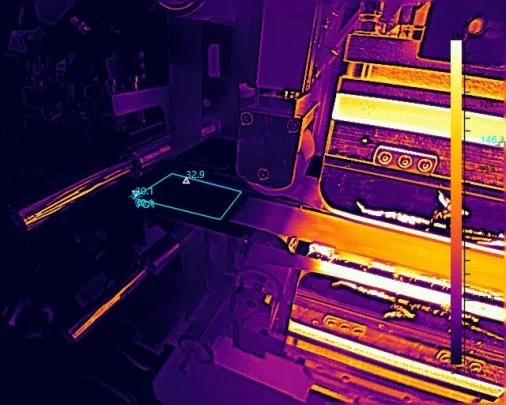
Abstract: Let’s take a look at the “temperature guardians” on the production lines of new energy vehicle enterprises.
As the market for new energy vehicles continues to expand and the pace of technological innovation accelerates, the standards for vehicle performance, safety, and reliability are gradually increasing. Infrared thermal imaging technology, known for its non-contact and high-response temperature measurement capabilities, has found widespread applications in the production lines of new energy vehicle enterprises.
The Importance of Infrared Thermal Camera
Raythink thermal cameras play an indispensable role as important detection tools in various key processes of new energy vehicle manufacturing. They are crucial in the battery production and assembly process, motor manufacturing process, and key manufacturing processes such as welding and glass production. With their precise and efficient testing capabilities, Raythink thermal cameras provide robust production line testing support for new energy vehicle enterprises, thereby promoting the healthy development of the new energy vehicle industry.
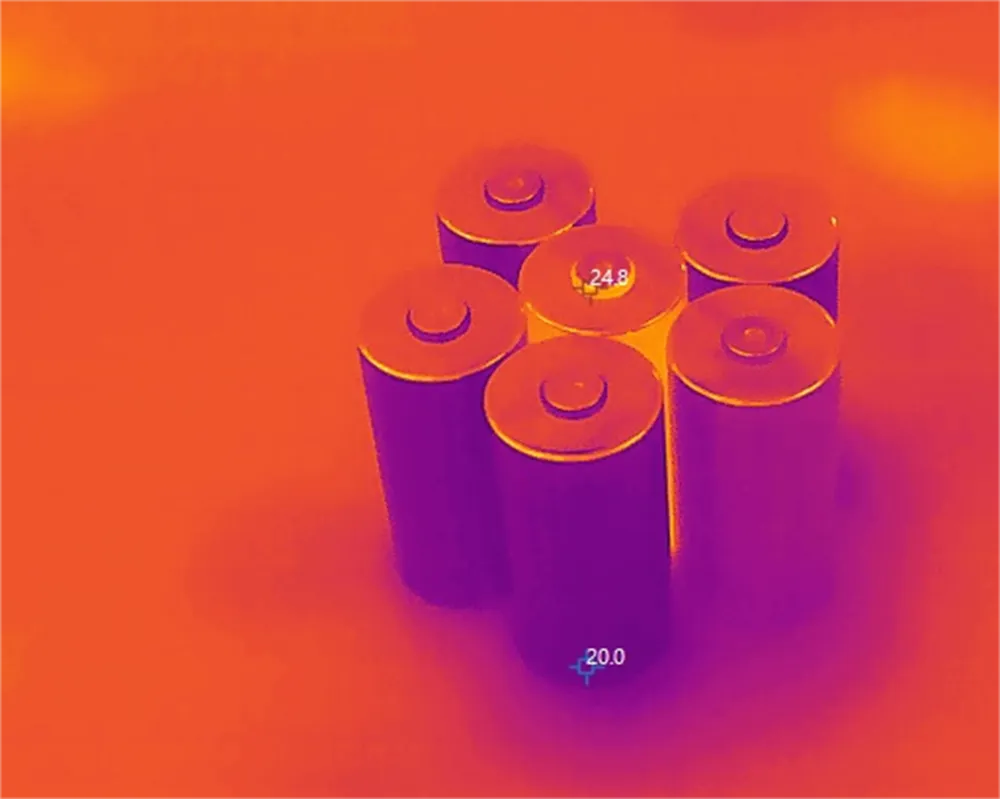
Raythink thermal cameras, as one of the important detection tools, play an indispensable role
Main Application of Raythink Thermal Imaging Detectors in New Energy Vehicle Production Lines
1. Battery Production and Assembly Monitoring
As the core component of new energy vehicles, temperature control during the production process of batteries is critical. During production and assembly, batteries may be exposed to mechanical forces such as collisions, punctures, vibrations, and extrusion. These can cause thermal runaway, leading to serious safety issues like fires and explosions.
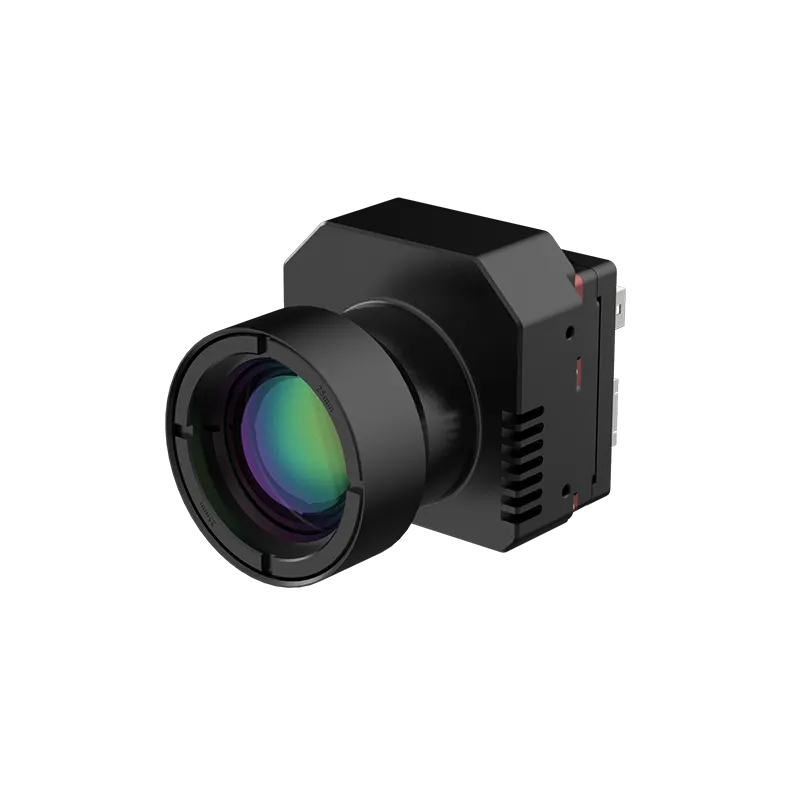
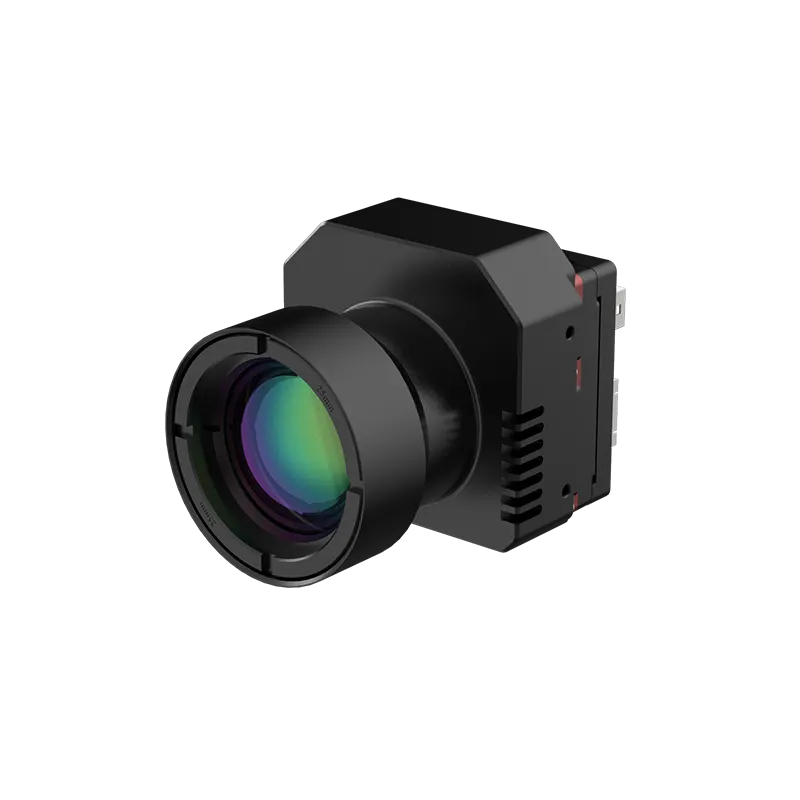
To ensure the quality and safe production of batteries, online temperature measurement thermal cameras TN430/TN460 are installed at production line workstations to monitor temperature changes in real-time during the manufacturing process. Additionally, with a multi-level alarm mechanism, thermal runaway between battery modules can be detected promptly, effectively preventing the risk of battery damage or explosion and ensuring the safety and stability of the production process.

To ensure the quality and safe production of batteries, online temperature measurement thermal cameras are installed at production line workstations
2. New Energy Vehicle Motor Production Process Monitoring
In the production process of new energy vehicle motors, temperature control of each component is crucial. Excessive temperatures can cause component damage and negatively impact the motor’s performance and service life. Through the temperature data captured by the online temperature measurement thermal camera TN430/TN460, production personnel can analyze the heat distribution and dissipation inside the motor. This allows them to determine whether the motor quality meets standards, promptly identify potential quality issues, prevent unqualified products from entering the market, and ensure the safety and reliability of new energy vehicles.
3. Welding Process Monitoring
In the welding process, temperature control largely depends on the experience of on-site operators, making timely and accurate adjustments difficult. Using the electric focus temperature measurement thermal camera AT31/AT61, operators can achieve electric focus and real-time acquisition of temperature changes at solder joints. This allows for timely adjustment of welding parameters and provides clear and accurate thermal images. This efficient and precise method for temperature monitoring and adjustment during the welding process helps to improve welding quality and efficiency. Meanwhile, professional analysis software records the temperature data of the welding process in real-time, providing scientific assistance for subsequent welding process optimization.

Electric focus temperature measurement thermal cameras with electric focus enable real-time acquisition of temperature changes at solder joints.
4. Detection for Automotive Glass Manufacturing Process
Thermal cameras play an important role in quality inspection and control during automotive glass production. By using the online temperature measurement thermal camera TN430/TN460, the temperature field distribution of the car windshield during the heating process can be intuitively obtained, and the temperature rise trend of the entire glass can be monitored. This is crucial to prevent issues such as excessive temperature rise, uneven heating of the glass, and potential glass cracking caused by excessive current in the resistance wire or resistance failure at a specific location. Through real-time monitoring by thermal cameras, production personnel can adjust process parameters promptly to ensure uniform heating of the glass and improve product quality.
Infrared Thermal Technology's Strengths
Non-contact and safer: Infrared thermal imaging technology is a passive, non-contact detection and identification technology. It features long-distance, non-contact, accurate, and rapid diagnostics of equipment status. This technology can monitor and diagnose the production and manufacturing process in real-time online without affecting the process flow.
Intuitive imaging and accurate fault location: Infrared thermal imaging technology is unaffected by electromagnetic interference and can accurately track thermal targets from a long distance. The temperature field is visible, automatically capturing and presenting high-temperature hidden danger points. This allows for qualitative and quantitative assessments of the manufacturing process and product quality in new energy vehicle companies.
Operation status trend analysis, hidden danger prediction, and warning: Temperature is collected regularly and intuitively presented in a temperature change trend chart. By analyzing process patterns and identifying abnormal high-temperature risk points, strong guarantees are provided for automobile companies to optimize production line processes, improve product quality, and ensure safe production.
The application of thermal cameras in the production lines of new energy vehicle companies not only improves production efficiency and product quality but also provides strong guarantees for the safety and reliability of new energy vehicles. With the continuous advancement of technology and the expansion of applications, the use of thermal cameras in these production lines will become increasingly extensive and in-depth.