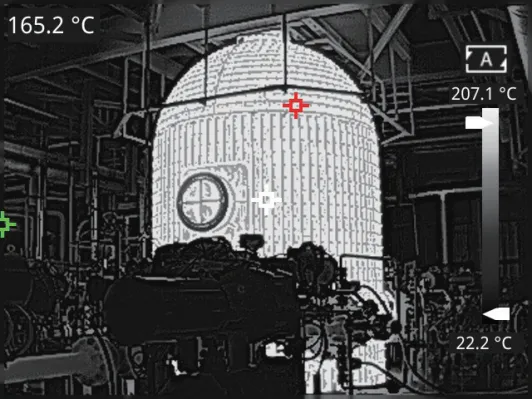
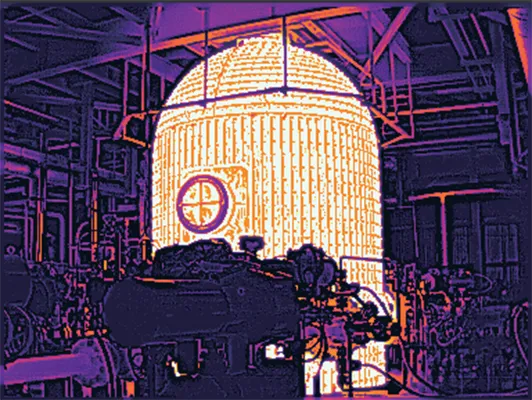
The gasifier is the most representative device of the coal chemical industry, and its normal temperature inside the furnace is usually above 1300°C, as a high-temperature and high-pressure reaction vessel. The gasifier lining is constantly being flushed by the high-temperature gas and molten slag; the lining will continue to thin and fall off, causing the heating of the gasifier wall surface as well as the reduction in the strength of the gasifier shell, thus leading to an unsafe device.
Therefore, monitoring the surface temperature of the gasifier wall is an essential part of the device’s safety precautions.
1.Pain Points in Gasifier Defect Diagnosis
The current gasifier mainly uses thermocouple detection cables for temperature monitoring, which have the following main disadvantages:
- High costs. The use of thermocouple detection cables for temperature monitoring requires the deployment of a large number of thermocouple detectors in the furnace, and one gasifier even requires the deployment of dozens of cables, with high device, construction, and maintenance costs.
- It is not intuitive. The thermocouple temperature measurement is a point temperature measurement. Only the temperature at the point is displayed. Moreover, the thermocouple is in contact with the furnace wall, which has heat conduction and reacts slowly to the temperature rise phenomenon.
2.Advantages of Thermal Cameras
1)Remote, Non-contact Temperature Measurement
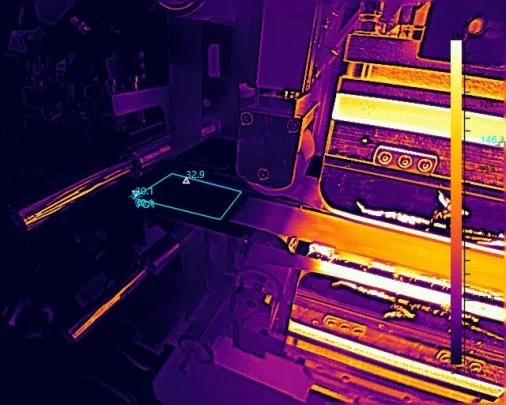
With non-contact temperature measurement, the temperature information of the gasifier can be obtained in all weather and in real time. It is easy to check and compare the heat characteristics of each gasifier and accurately visualize and locate problems without interrupting device operation.
2) More Intuitive and Agile for Temperature Measurement Information
The temperature information is visualized. Through the large screen of the monitoring room, the thermal imaging of the surface temperature of the gasifier wall can be seen in real time. The hottest spot on the screen or area is automatically captured to make problems directly visible and improve efficiency.
3)Support High and Low Temperature Alarms
All-weather monitoring of the highest temperature, lowest temperature, and average temperature; the automatic alarm threshold can be set as needed. If the temperature is abnormal, the thermal camera supports an automatic alarm and captures on-site images.
4)Secondary Development Support for Forming Customers' Unique Advantages in Collaboration
It provides a secondary development SDK to support users for secondary development, empowering them to form unique advantages. Alarm messages can be pushed through the IO port, serial port, or other various methods to assist customers in the action linkage and development of automation devices. With the 485 interface, support customers to customize the PTZ base
3.Application of Thermal Camera in Gasifier Fault Diagnosis
By analyzing the infrared thermal images and combining them with macroscopic inspection, the gasifier faults are roughly divided into several categories, and each defect has obvious characteristics on the thermal image.
1)Heating shape
①Lining Cracks
On the infrared thermal image, it may appear as a strip-shaped heating area or an irregular heating area with one side longer than the other.
②Lining Falling Off, Bulging, Gas Leaking, Etc.
A circular or square heating area on the infrared thermal image.
2)Temperature
The order of the different types of defects in terms of temperature values from highest to lowest is: Falling off > hollow > interlayer gas leaking > bulging > cracking and thinning.
3)Temperature Change Gradient
①Lining Falling Off
It appears on the infrared thermal images as: Falling off area: the temperature increases significantly, and the surrounding temperature decreases significantly. Thinning area: the temperature changes more uniformly without sudden temperature increase or decrease.
②Hollow Defects
It appears on the infrared thermal images as: moderate temperature, even variation, and not too large range, etc.
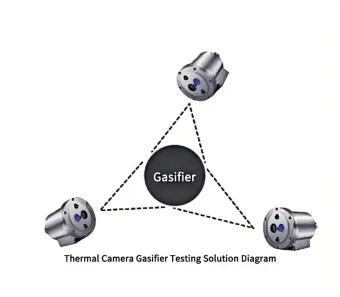
4.Deployment Mode Diagram
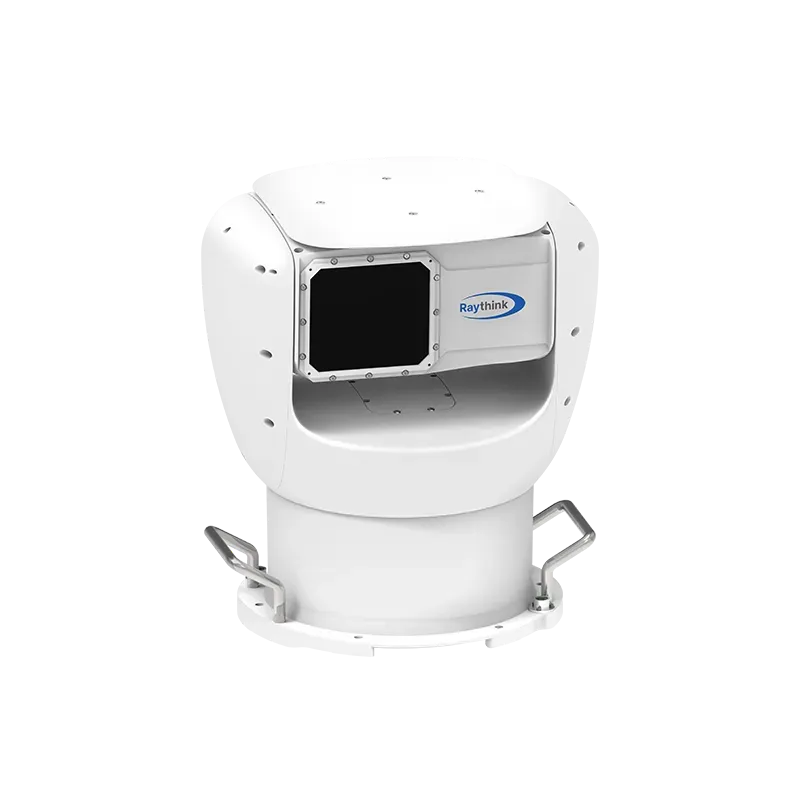
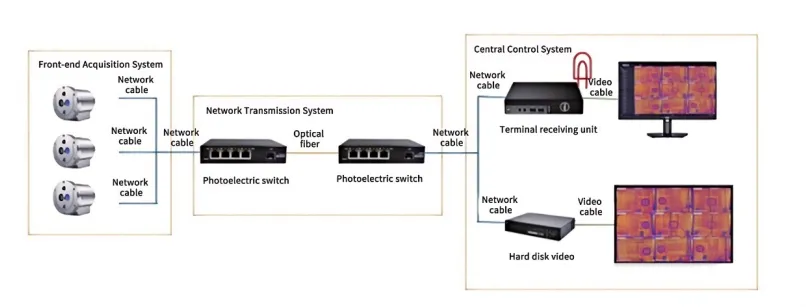
According to the pipeline situation around the gasifier, a total of 3-4 explosion-proof thermal cameras are deployed around the perimeter and installed in a wrap-around manner to ensure that there are no dead spots for monitoring.
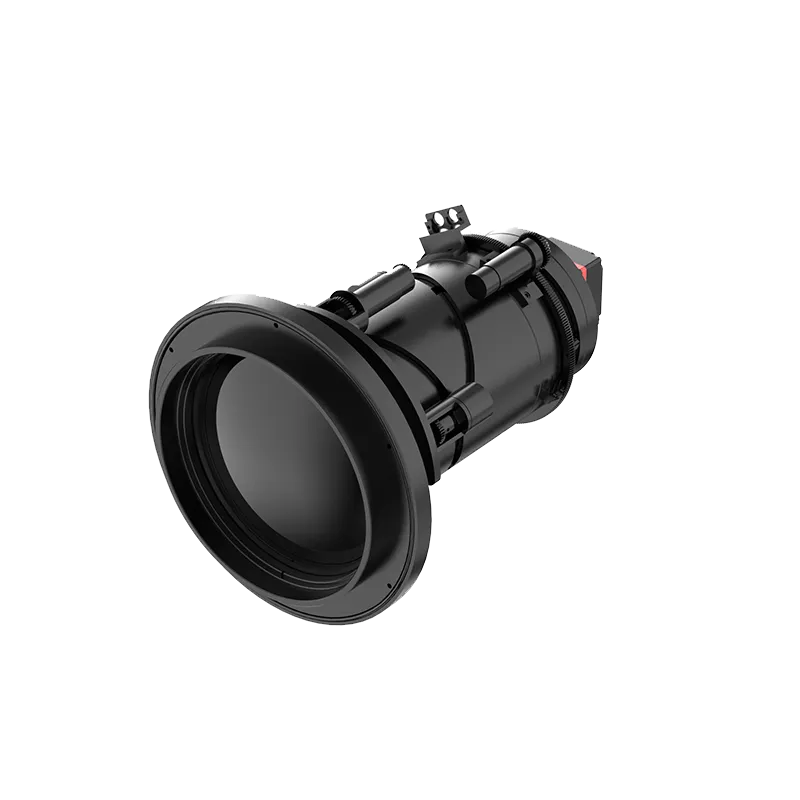
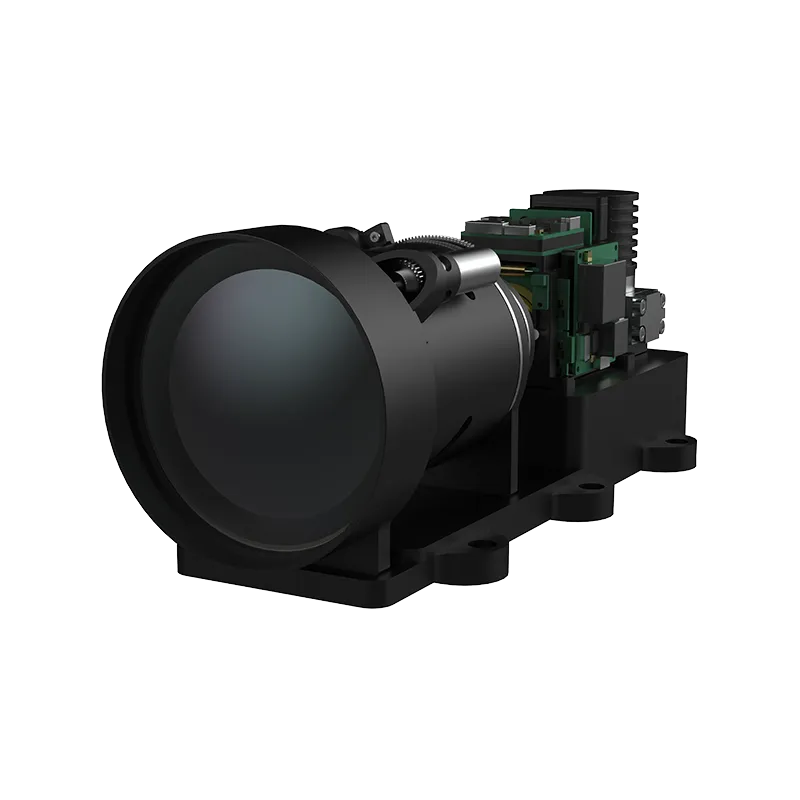
5.Recommended Thermal Camera Products by Raythink


6.Software Solution
It is recommended to use it with Raythink’s professional temperature measurement and monitoring software:
- It supports the networking of multiple devices to be connected to the software platform and enables the preview of up to 64 real-time pictures for responsible staff to check the monitoring pictures of the multiple devices deployed.
- Palette selection and configuration of measurement tools are supported, which can be flexibly and easily applied to provide a simple way for temperature data collection at the backend.
- Automatically generate temperature data curves and temperature reports for effective analysis of the monitored objects’ temperature change in the area.
- In case of temperature abnormality, the alarm can be triggered in time. The audible and visual alarm module sends an alarm, and the software background will take pictures of the incident in the process.
- Linkage with the firefighting module can automatically trigger the control of the firefighting system and automatically deal with the hidden disasters to prevent the occurrence of deflagration accidents
7.How to Take an Infrared Thermal Image of Premium Quality?
Please refer to the following suggestions for using a thermal camera to take an infrared thermal image of premium quality:
- The explosion-proof PTZ camera is recommended to adapt to the harsh environment on-site and ensure reliable operation of the device. Different focal lengths are selected according to the installation distance of the gasifier to ensure that the largest proportion of the gasifier is in the screen and no position is missing.
- As the temperature of the gasifier is generally high, it is more accurate to choose the temperature measurement level of 0-550°C. Also, the focal length is adjusted according to the temperature measurement distance to ensure clear imaging of the measured object.
- Use automatic measurement first, and then enable the temperature width stretch function. Manually set the temperature width to the minimum and include the previously measured temperature range to enrich the image details.