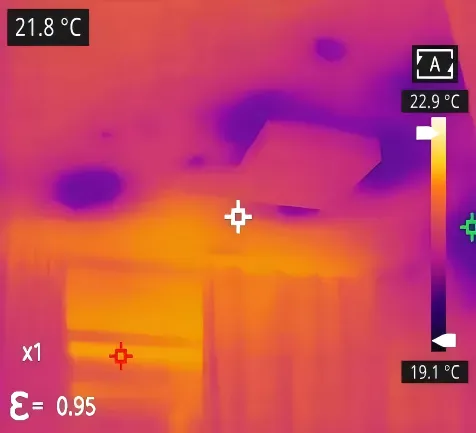
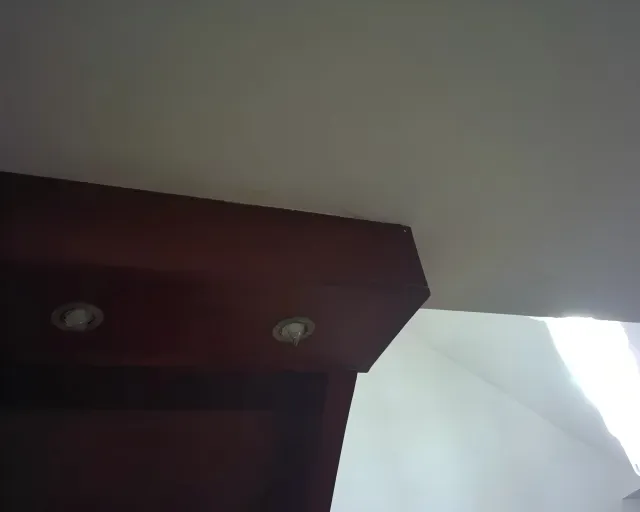
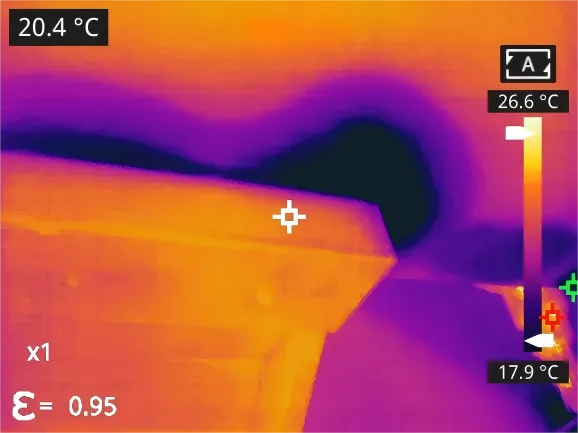
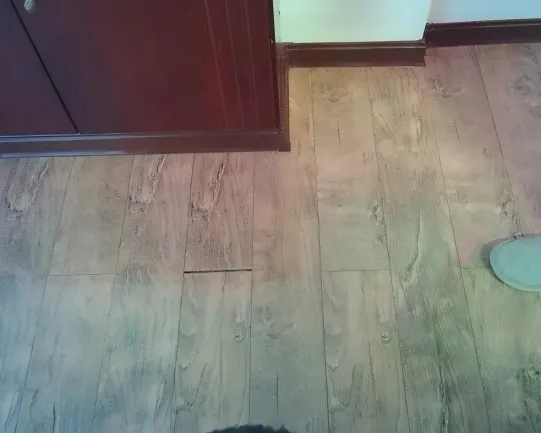
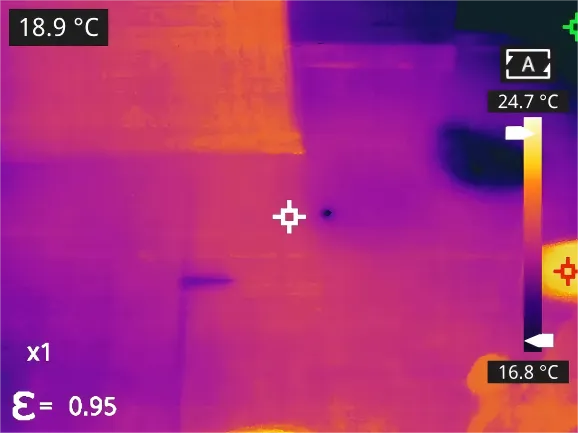
Invisible plumbing leaks, roof seepage, or water accumulation beneath floors do not merely result in exorbitant water bills; they can cause irreversible damage to your building’s structure before you even notice them. Traditional leak detection methods often involve destructive hammering or blind guesswork, which is both time-consuming and costly. Leveraging advanced infrared thermal imaging technology offers a non-contact, visualized, and efficient way to pinpoint hidden hazards. This article will guide you through mastering thermal imaging water leak detection and recommend professional solutions from Raythink.
1. Understanding Thermal Imaging Water Leak Detection
In building and plumbing systems, minor leaks often go undetected yet can gradually lead to structural hazards. Whether it is seepage in water supply and drainage pipes, roof waterproofing failure, air conditioning condensate overflow, or leaks in underfloor heating and HVAC systems, thermal imaging water leak detection serves as a highly efficient screening method.
When moisture penetrates floors, walls, or roof structures, it alters the local surface temperature through evaporative cooling (water evaporation absorbs heat, lowering the surface temperature) and heat capacity difference (water heats up and cools down more slowly than wood or concrete). The result is a temperature discrepancy between damp areas and dry materials. This difference is amplified by the thermal camera’s infrared detector and converted into a visible temperature map, allowing the thermal camera to identify issues at the early stage of a leak, preventing further structural damage.
Utilizing this temperature-difference imaging capability, thermal imaging for water leakage enables non-invasive detection of hidden leaks within floors, ceilings, or walls, precisely pinpointing the source of the problem.
2. Raythink Thermal Camera for Water Leaks: Product Recommendations
Raythink offers a range of high-performance thermal imaging cameras tailored to diverse professional needs and budgets. Below are four of our best water leak thermal cameras, each optimized to handle various scenarios in thermal imaging water leak detection:
1) IX2 AIR Pro Wireless Thermal Camera
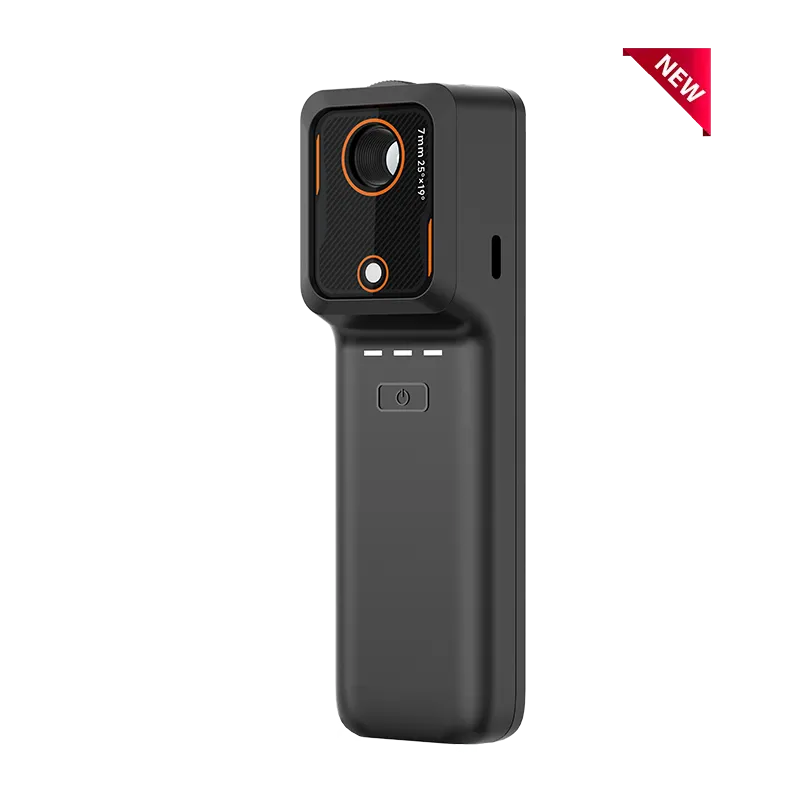
- Wireless smartphone connectivity with real-time transmission latency as low as 300ms
- Ultra-compact and portable, ideal for inspection in tight spaces
- 256×192 infrared resolution, supports AI super-resolution up to 512×384
- 40mK thermal sensitivity to capture minute temperature differences
- Fully non-contact detection for safe and efficient operation
- Perfect for remote thermography water leak detection scenarios
2) CX20 Ultra Handheld Thermal Camera
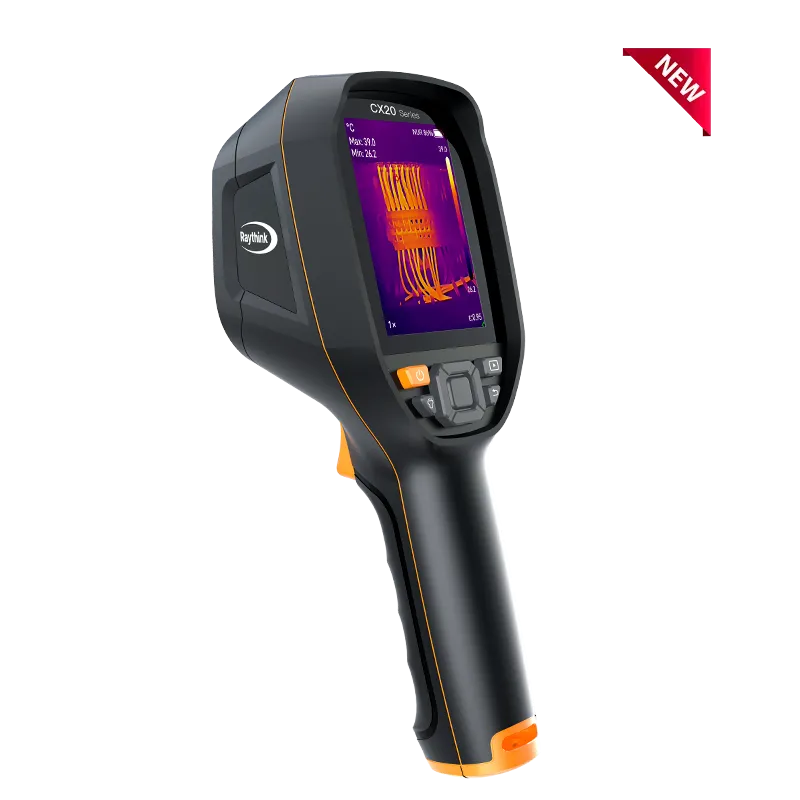
- Integrated laser rangefinder and laser pointer for precise fault location
- 256×192 infrared resolution with 40mK high thermal sensitivity
- AI-powered super-resolution technology for real-time enhancement to 512×384 clarity
- Large screen for clear display and high-efficiency rapid scanning
- Suitable for professional-grade thermal scanning for water leakage applications
- Laser pointing capability significantly accelerates field marking of fault locations
3) RM620 Handheld Thermal Camera

- True 640×512 physical resolution with a 12μm infrared detector
- Industry-leading thermal sensitivity, with a NETD <35mK
- Ideal for detailed inspection of underfloor heating systems and extensive pipe networks
- Clearly displays water flow patterns rather than blurred color blocks
- Premium choice as an infrared camera to find water leaks
- High-fidelity imaging facilitates subsequent analysis and report compilation
4) RT630 Expert Thermal Camera
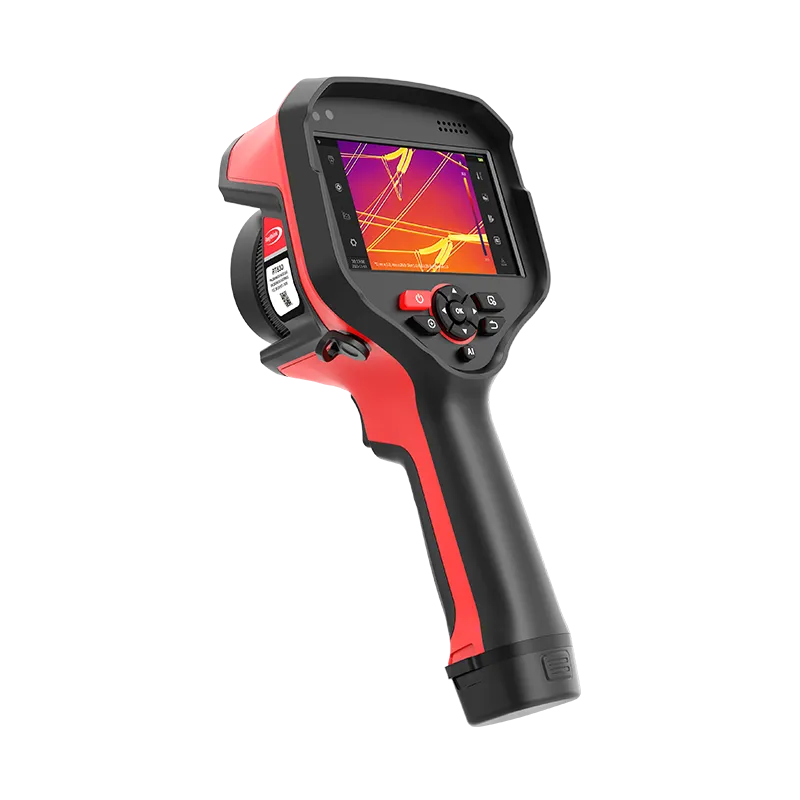
- 640×512 high resolution and 35mK ultra-high thermal sensitivity
- 5-inch large OLED screen real-time display with 1280×720 resolution for unmatched on-site observation experience
- Interchangeable lens design, allowing flexible switching between wide-angle and telephoto
- Dual-spectrum fusion technology simultaneously displays infrared and visible light information
- Multi-point analysis with support for up to 20 points/lines/areas to identify complex leak patterns
- The flagship choice as a thermal imaging camera for water leak detection
3. Key Factors for Selecting a Water Leak Thermal Camera
Purchasing a suitable infrared camera for water leak detection requires looking beyond the price tag to focus on core parameters that directly impact detection effectiveness. The following are several technical indicators that must be prioritized:
1) Thermal Sensitivity (NETD): The Deciding Factor for Capturing Faint Differences
Thermal sensitivity (NETD) is a critical metric for a thermal camera’s ability to perceive subtle temperature changes. A lower NETD value indicates higher sensitivity to temperature gradients. Wall temperature differences caused by water evaporation are often extremely minute, ranging from just 0.1°C to 0.5°C. A low-sensitivity thermal camera may fail to distinguish these faint cold spots from background noise, resulting in thermography water leak detection failures. Thermal cameras with sensitivity below 50mK (preferably below 40mK) can clearly separate subtle water stain outlines from the background, enabling early diagnosis of water leaks.
2) Infrared Resolution: The Ability to Identify Leak Sources
Infrared resolution determines the clarity and detail richness of thermal images. High resolutions (such as 512×384 or 640×512) provide sufficient pixel data to help inspectors accurately analyze the shape and texture of leaks. In complex pipe networks or cluttered environments, sharp image edges enable inspectors to trace water marks back to the actual leak source. When seeking a professional thermal imaging camera to detect water leaks, it is recommended to choose a device with higher resolution.
3) FOV & Lens: Balancing Efficiency and Detail
The field of view (FOV) determines the size of the area a thermal camera can observe at once. For indoor leak detection, it is necessary to scan large areas of walls and ceilings while maintaining sufficient detail clarity. A wider FOV (wide-angle lens) improves the efficiency of thermal imaging water leak detection, but an excessively wide angle may reduce the recognizability of local details. When selecting a thermal imaging camera for water leaks, consider models that support interchangeable lenses or those whose lens design balances wide-angle coverage with detailed observation requirements.
4) Temperature Range & Palette: Enhancing Minute Differences
Water leak detection often involves detecting minute temperature variations. The best thermal camera for water leakage should feature “high contrast” or “temperature stretching” capabilities. By manually locking a narrow temperature range based on the actual ambient temperature, users can make originally subtle temperature differences appear as strong color contrasts on the screen. Professional thermal cameras also feature multiple built-in color palettes (such as Iron, Rainbow, Grayscale, etc.) to suit different user needs, ensuring hidden water stains have nowhere to hide.
4. Humidity Meter vs. Thermal Imaging Camera for Water Leak Detection
In the field of water leak detection, while both humidity meters and thermal imaging cameras have their uses, thermal imaging water leak detection clearly wins in terms of efficiency, coverage, and cost-effectiveness. Here is the main comparison:
- Detection Coverage: A humidity meter measures only a specific spot at a time, requiring hundreds of repetitive measurements; thermal camera water leak detection can instantly scan an entire wall or ceiling, locking onto abnormal areas in moments.
- Work Efficiency: Checking a room with a humidity meter can take hours, while a thermal camera completes a preliminary sweep in minutes.
- Destructiveness: Humidity meters, especially pin-type ones, require piercing the wall surface and leave marks; thermal imaging for water leaks is completely non-contact with zero damage.
- Accessibility: Humidity meters struggle to detect high, deep, or concealed locations; thermal imaging can detect inaccessible areas like ceilings and attics from a distance.
- Visual Documentation: Humidity meters mainly show local moisture via numbers or simple indicators, giving little sense of overall scope or distribution of water leakage; a thermal camera for water leak detection generates colored thermal images that clearly mark the distribution of water stains, facilitating communication and reporting.
Summary: While a humidity meter can confirm suspected areas through spot checks, using thermal imaging to detect water leaks holds overwhelming advantages in identifying problems, locating sources, and assessing scope. It transforms inefficient blind searches into precise, scientific diagnostics.
5. Tips for Using a Thermal Camera to Detect Water Leaks
Mastering the right usage techniques allows your thermal imager for water leaks to perform at its peak. Here are several key suggestions for professional detection:
- Create and Maintain Temperature Difference: Turn on the heating or air conditioning 1–2 hours before detection to create a temperature difference between the room and the walls. Moist areas heat up or cool down more slowly than dry walls, creating a distinct contrast in thermal imaging.
- Clear Obstacles in the Inspection Area: Remove clutter from corners, furniture, and carpets to ensure the camera has a direct view of the surface being inspected. Infrared radiation cannot penetrate piled objects, which will severely compromise detection accuracy.
- Avoid Environmental Interference: Turn off air conditioners, fans, and heaters, and wait at least 30 minutes for the ambient temperature to stabilize. Airflow from these devices can cause local temperature fluctuations, leading to false positives.
- Choose the Optimal Observation Angle: Shoot sideways at a 30–45 degree angle to avoid infrared reflections from smooth surfaces like glass or tiles. Direct vertical alignment may cause the camera to capture its own thermal radiation, producing false readings.
- Scan Slowly and Systematically: Scan steadily from top to bottom, left to right, avoiding rapid movements or jumping around. Give the detector enough signal integration time to prevent missing minute temperature detail.
- Document Key Areas: When a suspected water leak point is found, mark the wall position through visible light imaging or with a marker pen. This facilitates accurate location or spot-check verification for repair personnel later.
- Combine Multiple Observation Modes: Utilize dual-spectrum (infrared + visible light) fusion or Picture-in-Picture functions to take visible light photos simultaneously, establishing a correspondence between the thermal map and the actual location to enhance the professionalism of your report.
6. Conclusion
Choosing the best thermal camera for water leaks is not only a wise investment for asset protection but also a professional choice to improve detection efficiency and reduce repair costs. Raythink can recommend the optimal thermal imaging water leak detection solution based on your specific application needs and desired features.
Our technical team can help you assess building characteristics, detection difficulty, and projected ROI to select the most suitable products and configurations. Don’t let hidden water leaks erode your building’s safety—contact Raythink immediately for a one-on-one professional consultation.