This article explores the application of high temperature thermal cameras in modern power plant monitoring. First, we explain why power plants need high temperature thermal cameras. Second, we introduce what high temperature thermal imaging cameras are and how they differ from standard thermal cameras. Third, we present Raythink’s advanced ultra-high temperature monitoring solution and its technical features. Then, we demonstrate the advantages of thermal cameras for high temperature applications across different scenarios in power plants. Finally, we outline key considerations for selecting the right high temperature thermal camera for power plant operations. Through this article, you’ll gain comprehensive insights into the performance and selection criteria for high temperature thermal imaging cameras.
1. Why Power Plants Need High Temperature Thermal Cameras
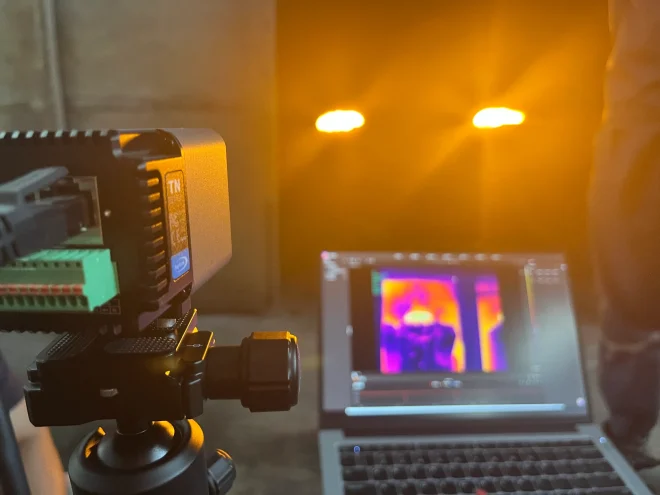
1) Monitoring Challenges in Power Plant High Temperature Environments
Power plants involve multiple ultra-high temperature processes. Boiler combustion chamber flame temperatures reach 1400°C to 1800°C, with water-wall tube surfaces exceeding 800°C; superheater and reheater tube walls operate at 520°C to 620°C, while localized flue gas temperatures reach 800°C to 1200°C; exterior walls of hot pipes in waste heat recovery systems can reach 800°C to 1200°C; rotary kilns and molten slag/salt systems operate at temperatures ranging from 1000°C to 1600°C.
The stable operation of the above equipment directly impacts power generation efficiency and safety. Under these high temperature conditions, traditional monitoring methods face fundamental limitations and cannot meet modern power plants’ demands for comprehensive, continuous, and precise monitoring.
2) Limitations of Traditional Monitoring Methods
Contact temperature sensors such as thermocouples deteriorate rapidly in ultra-high temperature environments, incurring high replacement and maintenance costs. Their installation positions are severely restricted, making comprehensive coverage of critical equipment areas difficult. Manual inspections not only pose personnel safety risks but also cannot provide continuous monitoring, making it highly likely to miss critical moments of temperature anomalies and thereby compromising the effectiveness of fault early warning. The upper measurement limit for standard thermal imagers is typically 550°C (not exceeding 650°C at most), which also fails to meet power plants’ ultra-high temperature monitoring requirements.
These limitations of traditional monitoring methods make it difficult for power plants to effectively conduct comprehensive monitoring of high temperature equipment. Therefore, power plants require high temperature thermal cameras specifically designed for ultra-high temperature industrial environments.
2. Understanding High Temperature Thermal Cameras
1) What Are "High Temperature" Thermal Cameras?

High temperature thermal cameras are infrared thermal imaging devices whose upper measurement limits far exceed those of conventional industrial thermal cameras, extending beyond 1,000°C. They typically feature heat-resistant housings, protective heat dissipation structures, high temperature compatible lenses, optimized emissivity correction, and optional air-cooled or water-cooled enclosures to adapt to ultra-high temperature working environments.
These characteristics enable high temperature thermal cameras to play crucial roles in high temperature scenarios where standard equipment cannot function, ensuring measurement accuracy even under extreme operating conditions.
2) Differences from Standard Thermal Cameras


Standard industrial thermal imaging cameras typically suit temperature measurement scenarios from -20°C to 550°C, primarily applied for low-to-medium temperature equipment inspection and electromechanical detection. By contrast, high temperature thermal cameras are specifically designed for ultra-high temperature industrial environments, exhibiting the following core differences:
- Significantly Higher Upper Measurement Limit: Optimized specifically for hightemperature ranges, ultra-high temperature thermal imaging cameras can measure up to 2000°C.
- More Precise Measurement Algorithms: Capable of processing intense radiation signals caused by high temperatures, as well as complex factors such as noise interference and multi-source radiation.
- Superior Environmental Tolerance: Support multiple heat-resistant structures including air-coolingand water-cooling options, enabling operation under extremely harsh high temperature conditions.
In summary, true high temperature thermal cameras represent the ideal choice for upgrading equipment monitoring in high temperature zones of power plants.
3. Raythink TN460U: Ultra-High Temperature Monitoring Solution

Raythink TN460U is a non-contact infrared thermal imaging camera specifically designed for ultra-high temperature industrial scenarios. It features a 12μm infrared FPA detector with 640×512 resolution, coupled with the ThermalS 2.0 precision temperature measurement algorithm, delivering clear real-time thermal images even in extreme high temperature and intense radiation environments.
Key Technical Features:
- Ultra-Wide Temperature Range with High Accuracy: 0°C to 2000°C covering most high temperature monitoring requirements, with measurement accuracy of ±2°C or ±2%
- High Frame Rate Real-Time Output: 25Hz frame rate synchronously outputting temperature and image data, capturing temperature changes in real time
- Compact and Lightweight Design: Measuring just 50×50×90mm and weighing approximately 260g, enabling flexible installation in confined spaces
- Optimized Heat Dissipation and HighTemperature Protection: Optional air-cooled or water-cooled housings withstanding ambient temperature up to 220°C (air-cooled) or 350°C (water-cooled)
- Multiple Lens Specifications: Three lens options—4.1mm (100°×82°), 6.9mm (62.9°×50.4°), and 19mm (22.9°×18.4°)—matching different field of view (FOV) requirements across various scenarios
- Open Network Integration: Supporting PoE power, Modbus TCP/RTU, ONVIF, GB28181, MQTT, and other protocols
- Professional Software Suite: TI Studio analysis software supporting real-time temperature monitoring, diverse temperature analysis, intelligent alarm linkage, and cloud-edge data connectivity
TN460U is particularly well-suited for power plant monitoring: With an exceptional temperature measurement range, flexible deployment feasibility, and strong integration capabilities, this high temperature thermal camera meets power plant applications’ demanding requirements for high temperature resistance, long-term operation, and trend monitoring.
4. Applications of High Temperature Thermal Cameras in Power Plant Monitoring
1) Boiler Combustion Chamber and Furnace Monitoring
Power plant boiler combustion chambers are zones of extremely high temperatures, with flame temperatures in some combustion areas reaching approximately 1400°C to 1600°C. High temperature thermal imaging cameras can penetrate flames and flue gas to monitor temperature distributions across furnace interiors, water-wall tubes, and furnace walls in real time, rapidly identifying anomalies such as slagging, ash accumulation, or localized overheating. Through continuous thermal imaging monitoring, operations personnel can optimize combustion control parameters, maintain stable flame patterns, improve combustion efficiency and boiler thermal utilization rates, while effectively reducing pollutant emissions from incomplete combustion.
2) Superheater, Reheater, and Steam Pipe Monitoring
Boiler superheaters, reheaters, and steam pipes are core heat-absorbing surfaces operating under sustained high thermal stress, with tube wall temperatures typically ranging from 500°C to 600°C and localized flue gas temperatures reaching 800°C to 1200°C. High temperature thermal cameras enable non-contact, continuous monitoring, identifying localized abnormal temperature rises caused by blockage, scaling, corrosion, or insulation layer failure. Through temperature analysis, potential leak risks can be detected in advance, steam quality and system thermal efficiency optimized, superheater overload or steam energy loss prevented, ensuring long-term stable equipment operation.
3) Waste Heat Recovery Systems and High Temperature Flue Monitoring
In power plant waste heat recovery and high temperature flue systems, certain pipe sections and hot pipe exterior walls can reach approximately 800°C to 1200°C. High temperature thermal imaging cameras can conduct comprehensive non-contact temperature monitoring of pipes, valves, flue gas distribution devices, and sections before and after baghouse dust collection systems, precisely identifying issues such as insulation failure, valve sticking, or refractory layer detachment. This significantly reduces equipment damage risks from high temperature corrosion while improving waste heat utilization efficiency and energy recovery rates, helping power plants achieve dual objectives of energy conservation and safe operation.
4) Rotary Kiln and High Temperature Industrial Equipment Monitoring
In power plants and metallurgical cogeneration facilities using biomass, waste, or industrial byproduct fuels, rotary kilns and molten slag/salt systems commonly operate in high temperature environments exceeding 1400°C. High temperature thermal imaging cameras detect early signs of refractory brick detachment, shell deformation, and slag solidification by continuously monitoring the exterior surface of kiln shells or molten containers. This not only provides data support for preventive maintenance but also assists operators in stabilizing kiln temperatures and optimizing combustion processes, thereby enhancing energy utilization and ensuring the long-term safe and reliable operation of the system.
5. How to Select the Right High Temperature Thermal Camera for Power Plants
1) Temperature Measurement Range and Accuracy

Power plant equipment operates across markedly different temperature ranges: steam pipes and superheaters operate at approximately 500–650°C, while combustion chambers or slag systems can exceed 1400°C. Such complex conditions demand high temperature thermal imaging cameras with sufficient temperature measurement ranges to meet diverse monitoring requirements. Models with a range spanning 0°C to 2000°C can flexibly handle multiple high temperature scenarios within the same system, making them especially suitable for ultra-high temperature monitoring tasks. Accuracy should reach ±2°C or ±2% to ensure reliable temperature assessment and precise operational decision-making.
2) Infrared Resolution and Imaging Quality

Infrared resolution directly affects thermal image clarity and temperature detail representation. Common resolutions include 320×256, 640×512, and 1280×1024. Among these, the 640×512 resolution has become the mainstream configuration for high temperature thermal cameras, striking a balance between coverage area and thermal image detail. Combined with high-sensitivity detectors and algorithm optimization, systems can achieve thermal sensitivity (NETD) with temperature difference resolution below 40 mK, accurately identifying localized overheating, slagging, and thermal efficiency anomalies even in environments with flue gas interference or complex backgrounds.
3) Environmental Adaptability and Equipment Protection

Power plant sites typically feature high temperatures, high dust levels, and high humidity, requiring equipment with excellent environmental tolerance. The thermal camera itself should support operation in environments ranging from -20°C to 60°C, and when necessary, withstand ambient temperatures above 200°C leveraging air-cooled or water-cooled housings. High temperature thermal camera housings are typically made of high-strength aluminum alloy, which facilitates heat dissipation while ensuring long-term operational stability. Equipment protection ratings should be no lower than IP66 to prevent dust and moisture ingress, guaranteeing imaging quality and temperature measurement accuracy.
4) Lens Configuration and Field of View

Lens field of view (FOV) determines monitoring coverage range and detail capture capability. Wide FOV lenses (typically 90°–100°) suit close-range, large-area temperature field observation; narrow FOV lenses (typically 10°–25°) focus on critical heating surfaces or long-distance temperature measurement. When selecting lenses, the FOV should be matched to the high temperature thermal camera installation position, target size, and observation distance to ensure the single-point monitoring fully meets operational requirements.
5) Data Interfaces and System Integration

High temperature thermal cameras must support standard network protocols such as Modbus TCP/RTU, ONVIF, GB28181, and MQTT for convenient integration with DCS, PLC, SCADA systems or cloud data platforms. Models supporting PoE power supply can simplify wiring by enabling both power delivery and data transmission through a single cable. Professional manufacturers like Raythink also provide original professional software to further enhance operational convenience and data management efficiency, helping users control production temperatures more effectively.
6. Conclusion
High temperature thermal imaging cameras have become critical equipment for modern power plant monitoring due to their non-contact temperature measurement, wide measurement ranges, and excellent environmental adaptability. Through real-time, precise temperature monitoring and thermal image analysis, these devices effectively identify potential faults in various high temperature equipment within power plants, significantly enhancing operational efficiency, safety, and intelligent maintenance.
Selecting appropriate high temperature thermal cameras for power plant applications requires comprehensive consideration of key factors including temperature measurement range, resolution, environmental adaptability, and system integration capabilities. Raythink provides complete ultra-high temperature monitoring solutions with the TN460U Ultra-high Temperature Thermal Camera. Contact us to receive customized technical support.