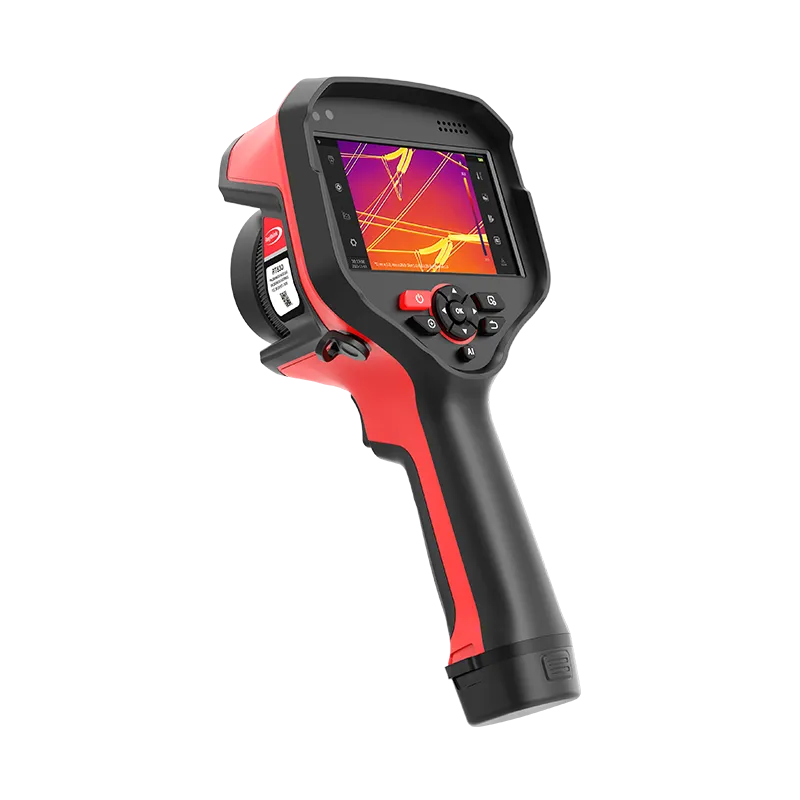
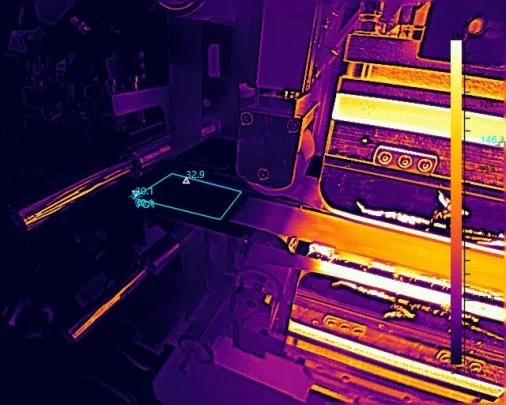
Handheld thermal cameras for inspections in industrial, commercial, or electrical facilities from a safe distance have been increasingly adopted by organizations and individuals. Inspecting facilities with a handheld thermal camera eliminates the need to shut down machinery or wear full personal protective equipment, which saves production time and reduces the risk of exposure to hazardous environments.
However, for certain applications, it can be challenging to capture images of targets without entering dangerous zones or climbing ladders. In such cases, standard lenses may fall short, making telephoto lenses a necessity.
What is a Telephoto Lens?
A telephoto lens generally refers to a fixed-focus lens with a longer focal length and a smaller field of view, capable of capturing detailed images of distant targets. Based on the application field and focal length, telephoto lenses can be divided into the following two categories:
- Standard Telephoto Lenses: These have a focal length slightly longer than standard lenses and are suitable for medium-distance photography.
- Super Telephoto Lenses: These have a focal length significantly greater than standard lenses and are designed for capturing targets at extremely long distances.
Standard lenses for infrared thermal imaging cameras usually range between 10mm and 35mm, while telephoto lenses offer higher magnification and narrower fields of view.
In certain application scenarios where users need to observe distant objects, telephoto lenses with smaller fields of view and the ability to capture clearer details are often required to meet the demands of long-distance detection, especially when the size of the observed object remains constant.
Infrared Telephoto Vs Standard Lens
|
RS Series Flagship Thermal Camera |
||
|
Feature |
Telephoto Infrared Lens |
Standard Infrared Lens |
|
Focal Length |
72.9mm vs 19.8mm |
|
|
FOV |
Narrow |
Wide |
|
Observation Distance |
Suitable for long-distance targets (e.g., within tens of meters) |
Suitable for medium to short-distance targets (e.g., within a few meters) |
|
Magnification Ability |
High magnification, capable of capturing details of distant targets |
Limited magnification, suitable for wide-area scanning |
|
Spatial Resolution |
Provides higher spatial resolution, capable of identifying small anomalies |
Lower resolution, difficult to clearly capture small distant targets |
|
Application Scenarios |
Suitable for remote detail detection, such as high-voltage power lines, substation equipment |
Suitable for close-range detection or a large-scale scan, such as monitoring surface temperatures of equipment |
Major Advantages of Handheld Thermal Cameras with Telephoto Lenses
1. Strong Capability for Long-Distance Target Detection
For many medium- and short-distance scanning applications where it is necessary to identify hot spots and cold spots without requiring high levels of detail, standard infrared lenses can provide the required spatial resolution and field of view.
However, in scenarios where the target may be hazardous, requires maintaining a safe distance, or is too high or difficult to access, telephoto lenses become essential. For example:
- Scanning switches, connectors, and transformers within substations.
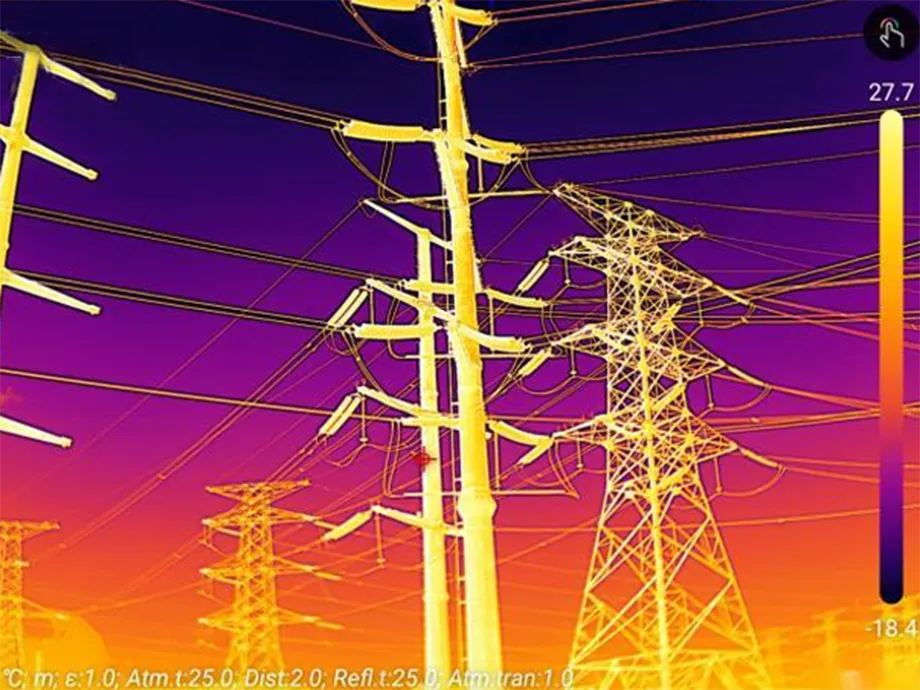
- Inspecting overhead high-voltage power lines or ventilation ducts, wires, and pipelines several stories high.
- Performing high-altitude inspections without the need for ladders or helicopters.
High-quality telephoto lenses not only bring distant images closer but also capture enhanced detailed images while improving spatial resolution. This allows users to detect and even measure anomalies that standard lenses cannot reveal. Simply standing at a safe location enables the evaluation of potential issues.

2. Improving Observation Precision
Telephoto lenses can significantly enhance the observation precision of handheld thermal cameras, which is closely related to their impact on the D:S ratio (Distance-to-Spot Ratio).
What is the D:S Ratio?
The D:S ratio is not only applicable to single-point radiometers (such as infrared thermometers) but can also be extended to the entire sensor array of a thermal imaging camera, where each pixel corresponds to an individual measurement point.
It’s a key performance metric for handheld thermal cameras or other infrared temperature measurement devices. It indicates the size of the target area that can be accurately measured at a given distance. For example:
- If the D:S ratio is 10:1, the device can measure a target area with a diameter of 1 meter at a distance of 10 meters.
- The higher the D:S ratio, the smaller the target area that can be accurately measured at long distances, thereby improving resolution and detection precision.
How Do Telephoto Lenses Affect the D:S Ratio?
Under identical conditions, telephoto lenses increase the focal length of the lens, significantly boosting the D:S ratio of thermal imaging cameras. For example:
- With a standard lens, the D:S ratio might be 764:1, meaning it can measure a 1-meter target at a distance of 764 meters.
- Switching to a 2x telephoto lens increases the D:S ratio to approximately 1530:1, allowing measurement of the same-sized target at 1530 meters.
- Using a 4x telephoto lens further raises the D:S ratio to about 3056:1, enabling clear detection of small targets at even greater distances.
This improvement allows telephoto lenses to capture finer details of smaller targets from farther away, achieving higher precision in observation and diagnostics.
How Do Telephoto Lenses Improve Long-Distance Observation Precision?
Reducing the Coverage Area of a Single Pixel:
When selecting a thermal imaging camera, the choice of resolution and focal length typically determines key parameters such as spatial resolution (IFOV), field of view (FOV), and detection range, which in turn affect the imaging performance of the infrared thermal camera.
Field of View (FOV): The field of view of a thermal imaging camera refers to the maximum spatial angular range observable when the device is in a fixed position. It is typically divided into horizontal FOV and vertical FOV and is often expressed as, for example, 20° × 15° (i.e., horizontal FOV × vertical FOV).
Field of View (FOV) = Spatial Resolution(IFOV) × Number of Pixels
The smaller the IFOV, the narrower the FOV, resulting in a smaller observable area.
Spatial Resolution (IFOV): Spatial resolution refers to the minimum distance between two adjacent targets that a thermal imaging camera can distinguish. It is usually expressed in milliradians (mrad).
Spatial Resolution(IFOV) = Pixel Size / Lens Focal Length
For a given detector distance, a smaller IFOV enables the detection of smaller targets with richer details. For a specific target, a smaller IFOV allows for a longer detection range.
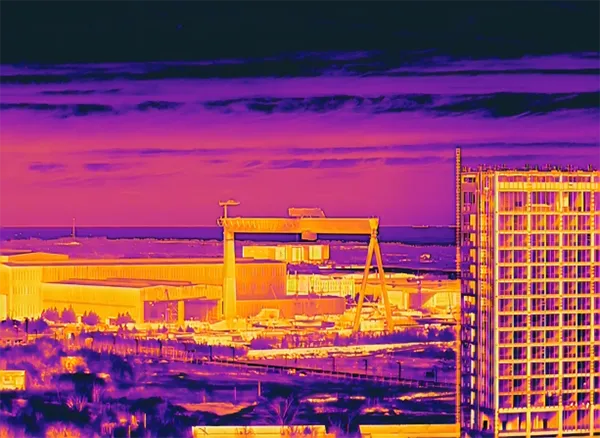
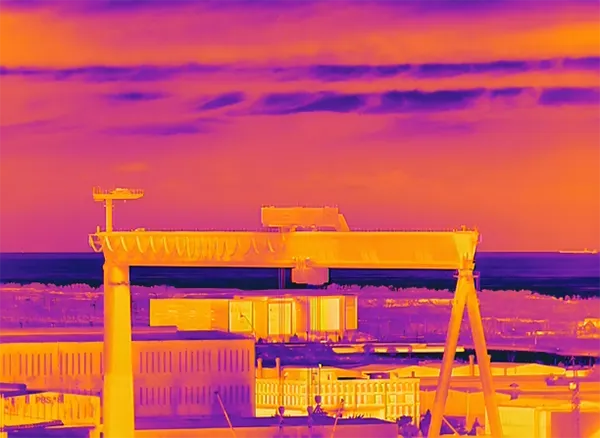
Each pixel of a handheld thermal camera corresponds to a specific field of view. By using a telephoto lens to narrow the field of view, the target area covered by a single pixel can be reduced. Taking Raythink RS1280 handheld thermal camera as an example:
- With a 19.8mm standard lens, FOV=45°×36°, IFOV=0.6mrad.
- With a 34.9mm lens, FOV=25°x20°, IFOV=0.34mrad is significantly reduced, allowing distant targets to occupy more pixels and thereby enhancing detail resolution.
- With a 72.9mm telephoto lens, FOV=12°×9.6°, IFOV=0.17mrad.
Minimizing Background Interference:
A telephoto lens focuses on a smaller area, effectively reducing the impact of background temperatures on observation results. This is especially important for detecting high-temperature equipment or identifying anomalies in hotspots.
3. More Suitable for Use in Complex Environments
In harsh environments (such as high temperatures, high pressure, high voltage, or areas covered by smoke), telephoto lenses allow users to obtain the necessary information from a safe distance without entering dangerous zones. For example:
- Detecting high-temperature pipeline leaks in chemical plants.
- Observing fire sources through smoke at fire scenes.

Avoiding entry into hazardous areas also means that operators do not need to apply for high-temperature work permits or special permissions to bring equipment into restricted zones, thereby simplifying workflows.
4. Enhancing Concealment and Safety
Since telephoto lenses can capture clear images from greater distances, there is no need to approach hazardous areas. This feature not only protects operators but also minimizes interference with the target environment. For example:
- Inspecting high-voltage transmission towers to detect overheating or potential faults without requiring close physical access.
- Monitoring high-temperature kiln surfaces in industrial facilities to identify structural issues or insulation failures while ensuring operator safety.
- Inspecting storage tanks in petrochemical plants for leaks or temperature anomalies without entering hazardous zones.
Conclusion
Handheld thermal cameras equipped with telephoto lenses demonstrate unparalleled value across various fields with their exceptional long-distance detection capabilities, high-precision imaging, adaptability to complex environments, and discreet operation. From electrical facility maintenance and industrial equipment inspection to security monitoring and environmental protection, handheld thermal imaging cameras with telephoto lenses not only enhance work efficiency but also significantly improve operational safety.
If you have ever encountered challenges with unclear imaging during long-distance inspections, struggled to safely and efficiently complete tasks in complex environments (such as high temperatures, high pressure, high voltage, or smoke), or wished for a single device to meet diverse application needs while reducing costs and increasing efficiency, handheld thermal imaging cameras with telephoto lens options would be an excellent choice.
Raythink handheld thermal imaging cameras (such as RS600, and RS1280) are equipped with optional telephoto lenses specifically designed to address these challenges. Whether it’s detecting distant targets or operating in harsh environments, our devices provide reliable and effective solutions. If you need such products, feel free to contact us for a free quote!