1. Why Can Cameras "See" in the Dark?
In the field of security surveillance, night vision capability is a key indicator of equipment performance. During low-light conditions at night or in the early morning, security incidents frequently occur—yet traditional surveillance devices often become “blind” due to insufficient illumination. The core reason modern security cameras overcome darkness lies in their specialized night vision technology. By either actively emitting infrared or visible light in specific wavelength bands to illuminate scenes or passively detecting heat and infrared signals, they convert physical information invisible to the human eye into clear images, enabling near-all-weather, gap-free surveillance.
Whether actively emitting specific wavelengths to illuminate scenes or passively capturing an object’s thermal radiation, these methods ultimately enable camera sensors to acquire sufficient imaging signals. This overcomes visual limitations in nighttime environments, providing reliable image support for security monitoring. This is the essence of night vision technology—addressing the core issue of “light deficiency.”
2. Comparison of Different Night Vision Technology Cameras
| Night Vision Technology Types | Core Principle | Nighttime Visibility Range | Imaging Effect | Applicable Scenarios |
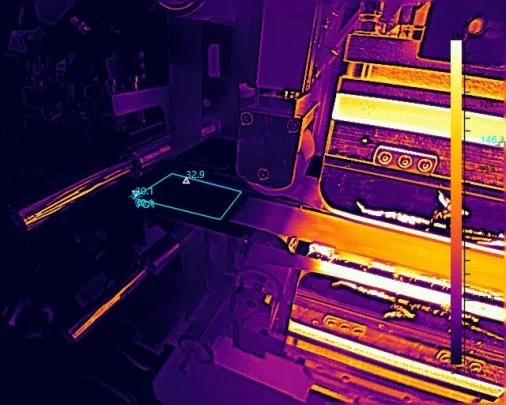
| Infrared Thermal Imaging | Captures thermal radiation from objects, converting it into temperature images | Unaffected by ambient light, with visibility extending up to several kilometers | Black-hot thermal, white-hot thermal, or pseudo-color thermal imaging; penetrates smoke, rain, snow, and other adverse conditions to identify camouflaged targets | Forest fire prevention, perimeter security |
| Visible Light Illumination | Emit visible light LEDs to actively illuminate scenes | 30-300 meters, dependent on illumination intensity | Clear color images with true-to-life color reproduction | Courtyards, storefronts, close-range indoor surveillance |
| Laser Illumination | High-power laser as illumination source with strong focusing capability | 300m–3km | Clear long-range imaging with low power consumption and strong penetration | Large campuses, airports, ports, ultra-long-range protection |
| Infrared Illumination | Emit infrared LEDs (850nm/940nm bands) | 10-200 meters | Black-and-white imaging with high concealment (no visible red light) | Residential complexes, parking lots, general outdoor surveillance |
| Blacklight Imaging | Combines infrared and low-light technology to enhance dim-light perception | 20-80 meters, requires minimal ambient light | Near-color HD or black-and-white HD images with rich detail | Urban roads, commercial districts, semi-open areas |
Comparisons show that infrared thermal imaging technology is the preferred choice for long-distance, nighttime surveillance in harsh environments, while laser illumination excels in scenarios requiring both distance and clarity.
3. Key Factors Affecting the Nighttime Visibility Range and Imaging Quality of Security Cameras
1) Imaging Technology
Imaging technology directly determines a camera’s nighttime perception limits. Current mainstream technologies fall into two categories:
- Infrared Illumination: Emits infrared light to illuminate targets, offering lower cost and suitability for medium-to-short-range surveillance. Standard models provide visibility between 10-50 meters, while the Raythink PD464T Dual-Spectrum Speed Dome Camera extends this range to 200 meters. It also features adaptive infrared intensity adjustment to prevent overexposure.
- Thermal Imaging Technology: Operates independently of ambient light by capturing an object’s inherent thermal radiation. It clearly identifies targets even in complete darkness, smoke, rain, snow, or other adverse conditions. Raythink thermal imaging cameras achieve detection ranges of several kilometers, making them ideal for extreme environment surveillance.
2) Environmental Conditions
The environment is a critical external factor affecting night vision performance, primarily encompassing two aspects:
- Lighting Conditions: In complete darkness, only thermal imaging or infrared-illuminated cameras function normally. When ambient light is present (e.g., streetlights, moonlight), blacklight imaging or visible-light-illuminated models capture clearer details.
- Installation Position: Camera height and angle directly affect the field of view. Elevated installation (e.g., 8-10 meters) expands the monitoring radius but requires a telephoto lens; low-position installation is prone to obstruction by obstacles and is suitable for short-range surveillance.
3) Focal Length
The longer the focal length, the narrower the camera’s field of view, but the stronger its ability to observe distant targets.
- Short focal length (4-12mm): Features a wide field of view, suitable for close-range, large-area surveillance (e.g., indoors, retail stores). Nighttime visibility typically ranges from 30 to 50 meters.
- Long focal length (100mm+): Narrower field of view, suitable for precise long-distance surveillance (e.g., perimeter security, oil fields).
4) Resolution
Higher resolution delivers richer image detail, enabling accurate identification of targets (such as faces or license plates) even at long distances.
- Standard Resolution (1080P): Suitable for medium-to-short-range surveillance, though details may appear blurred during nighttime long-range monitoring.
- High-Definition Resolution (4K/5MP): Featuring 4-5 million pixels, it maintains clear details even when images are enlarged at night, enabling precise identification.
5) Aperture
Aperture size is indicated by the F-number. A smaller F-number corresponds to a larger aperture, allowing more light to enter and resulting in brighter nighttime imaging.
- Large Aperture (F1.2–F1.5): Ideal for low-light conditions, capturing more light to enhance brightness and clarity in nighttime images.
- Small Aperture (F2.8 and above): Allows less light to enter, producing darker nighttime images. Suitable only for scenes with sufficient supplemental lighting.
6) Image Sensor
Larger sensor size increases the area per pixel, allowing more light intake and better low-light performance at night.
- Small-size sensor (1/2.8-inch): Common in entry-level models, produces more noise at night, suitable for scenarios with lower image quality requirements.
- Large-size sensors (1/1.8-inch and larger): Raythink thermal imaging cameras utilize 1/1.8-inch or 1/1.25-inch CMOS sensors, effectively reducing noise and enhancing image purity at night. They maintain reliable operation even under ultra-low illumination conditions as low as 0.0001Lux.
4. Raythink Night Vision Security Camera Recommendations
As a professional infrared thermal imaging camera manufacturer, Raythink’s security camera series stands out as the preferred solution for nighttime surveillance thanks to its advanced night vision technology and superior hardware configuration. Below are product recommendations tailored for different scenarios:

- Core Advantages: Utilizes panoramic stitching technology, enabling a single camera to cover a 360° scene without requiring multiple cameras for stitching; incorporates infrared thermal imaging technology to ensure continuous, stable nighttime monitoring; supports intelligent anomaly detection, automatically identifying risks such as intrusion and loitering.
- Suitable Scenarios: Provides comprehensive security solutions for perimeter security, oil and gas fields, nature reserves, mines, and similar environments.

- Core Advantages: Dual-spectrum design (thermal imaging + visible light) delivers high-definition color imaging during the day and thermal imaging that penetrates darkness at night. Infrared illumination provides effective coverage up to 30-40 meters. Supports IP66 waterproof and dustproof rating for harsh outdoor environments.
- Suitable Scenarios: Medium-to-short-range surveillance applications such as residential perimeter walls, factory boundaries, storefront entrances, gas stations, and similar settings.

- Core Advantages: Supports 360° horizontal rotation and -90° to +90° vertical rotation; laser-assisted models achieve effective ranges of 800 meters to 3 kilometers, while thermal imaging models detect targets several kilometers away; equipped with AI algorithms for automatic tracking and precise identification; select models feature gyro-stabilized electronic image stabilization for enhanced stability during nighttime mobile surveillance.
- Suitable Scenarios: Long-range, wide-area surveillance applications such as forest fire prevention, airports, ports, and large oil fields.

- Core Advantages: Equipped with infrared thermal imaging technology, it operates independently of ambient lighting conditions, enabling uninterrupted 24/7 surveillance at night. The PD4 model’s infrared illumination system supports long-range coverage up to 200 meters, featuring adaptive infrared intensity adjustment to prevent overexposure at close range or insufficient illumination at long distances.
- Suitable Scenarios: Surveillance environments requiring rapid response and flexible tracking, such as urban roads, large venues, transportation hubs, and campus entrances or exits.

- Core Advantages: Compliant with explosion-proof standards, suitable for flammable and explosive environments (e.g., chemical industrial parks, oil depots); dual-spectrum imaging with nighttime visibility ranging from 50 to 300 meters; corrosion-resistant and impact-resistant, capable of operating in harsh conditions such as high temperatures and humidity.
- Suitable Scenarios: Chemical plants, oil depots, coal mines, gas stations, and other environments with specialized safety requirements.
5. Conclusion
The core of nighttime security lies in “seeing far, seeing clearly, and eliminating blind spots.” Achieving this goal hinges on selecting night vision technology and hardware configurations tailored to specific scenarios. Infrared thermal imaging technology, with its advantage of operating independently of ambient light, becomes the preferred choice for extreme environments and long-range surveillance. Meanwhile, laser illumination, LED illumination, and infrared illumination technologies offer outstanding cost-effectiveness for medium-to-short-range scenarios.
As a specialist in infrared thermal imaging, Raythink consistently prioritizes technological innovation. Its security camera series addresses comprehensive nighttime surveillance needs—from close-range monitoring to ultra-long-distance perimeter security, and from standard outdoor environments to hazardous explosive scenarios—delivering stable, reliable solutions.
When selecting night vision security cameras, it is advisable to comprehensively consider factors such as monitoring distance, environmental conditions, and image quality requirements. When necessary, consult Raythink’s professional technical team to obtain customized monitoring solutions. Let advanced night vision technology fortify your 24-hour security perimeter, safeguarding both property and personnel.