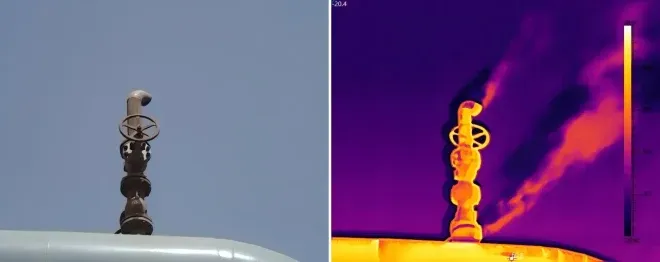
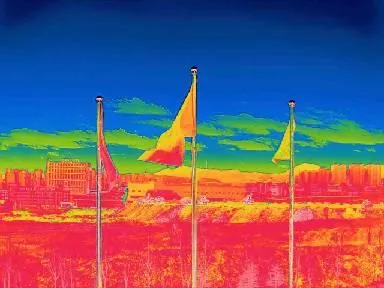
When traditional detectors capture smoke or high temperatures, the fire may already be spreading, causing irreversible loss of life and property. The advent of thermal imaging fire detection technology has completely transformed this situation: by capturing infrared radiation emitted by objects, it can identify temperature anomalies in the “ultra-early” stage—before visible flames or smoke appear—getting critical time for fire prevention and control. As a professional infrared technology solutions provider, Raythink‘s thermal imaging cameras have become the preferred equipment for early fire detection across industries. This is due to their high sensitivity, all-weather adaptability, and intelligent integration capabilities.
1. What Is Thermal Imaging Fire Detection?
Thermal imaging fire detection is a passive monitoring technology based on the principle of infrared thermal radiation. According to physical laws, any object with a temperature above absolute zero (-273.15°C) continuously emits infrared radiation, with higher temperatures producing stronger radiation intensity. Thermal imaging fire detection equipment (such as thermal camera for fire detection) focuses the infrared radiation emitted by objects through lenses. Detectors convert this thermal radiation into electrical signals, which are then amplified and digitized by signal processing circuits. Finally, intelligent algorithms reconstruct these signals into clear thermal imaging pictures, enabling visual monitoring of targets.
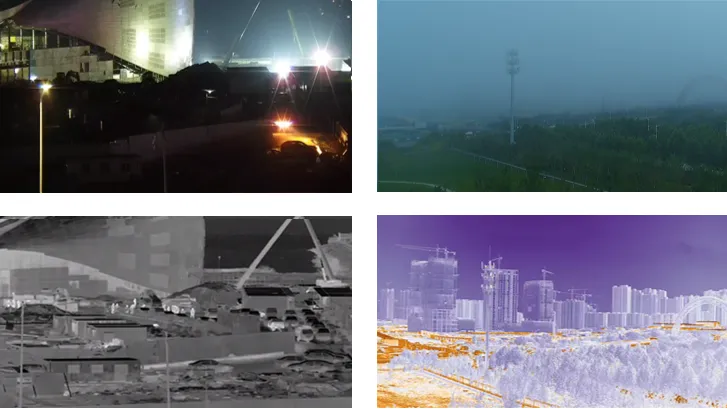
Unlike traditional detection technologies, thermal imaging fire detection does not rely on visible light or smoke. It operates reliably even in adverse conditions such as darkness, dense fog, or heavy smoke, making it particularly suitable for all-weather monitoring of large-scale, high-risk scenarios.
2. How Do Thermal Imaging Cameras Achieve Early Fire Detection?
- Infrared Radiation Capture: The camera lens detects infrared radiation emitted by objects within the monitored area. Regardless of visible light presence, any temperature difference in an object can be captured.
- Signal Conversion: The built-in uncooled focal plane detector converts infrared radiation into weak electrical signals, performing the physical transformation from “temperature → electrical signal”.
- Intelligent Analysis: Utilizing Raythink’s proprietary image algorithms and fire recognition models, the thermal image generated from electrical signals undergoes real-time analysis—identifying fire characteristics such as “localized hotspots”, “rapid temperature rise rates”, and “hotspot spread trends” while filtering out interference signals like sunlight reflections and animal heat sources.
- Early Warning & Interlocking: Upon detecting temperature anomalies matching fire characteristics, the device immediately triggers an early warning, simultaneously pushing alerts to the backend platform. It can also interlock with audible/visual alarms and fire suppression systems, achieving “detection-triggered early warning”.
3. Core Features of Raythink Thermal Cameras for Fire Detection
1) High Thermal Sensitivity and HD Resolution: Capturing Minute Temperature Differences
Thermal sensitivity (NETD) is a key metric for measuring a device’s ability to detect temperature changes. Raythink series products typically achieve NETD ≤40mK (@25°C, F#1.0, 25 Hz), meaning they can distinguish temperature fluctuations as small as 0.04°C.
2) Integrated Dual-Spectrum Infrared + Visible Light: All-Weather, No-Blind-Spot Coverage
Raythink dual-spectrum thermal imaging cameras support “infrared + visible light” output:
- Infrared Mode: Penetrates interference in darkness, dense fog, or heavy smoke to focus on temperature anomalies.
- Visible Light Mode: Provides scene details during daylight or clear conditions, aiding manual verification.
Automatic dual-spectrum switching ensures uninterrupted 24-hour monitoring, eliminating “single-spectrum blind spots”.
3) Intelligent Fire Detection Algorithm: Reduces False Alarms, Enhances Accuracy
Raythink employs proprietary AI fire recognition algorithms with three core capabilities:
- Hotspot Classification: Distinguishes “fire hotspots” (e.g., smoldering points, open flames) from “normal heat sources” (e.g., equipment dissipation, sunlight).
- Trend Analysis: Tracks hotspot temperature change rates and spread range to exclude transient temperature fluctuations.
- Multi-scenario Adaptation: Presets algorithm parameters for diverse environments (e.g., reducing “cargo pile heat dissipation” false alarms in warehouses) tailored to forests, storage facilities, petrochemical plants, etc.
4. Thermal Imaging vs. Traditional Detectors
Traditional fire detection equipment (smoke detectors, heat detectors) is widely used but has significant limitations in terms of “early detection capability, adaptability, and accuracy”. The table below compares the core differences between Raythink thermal imaging cameras and traditional devices:
| Dimensions | Smoke Detector | Thermal Detector (e.g., Thermocouple) | Raythink Thermal Imaging Camera |
| Detection Phase | Requires smoke generation | Requires temperature to reach threshold | Detects temperature anomalies |
| Environmental Adaptability | Susceptible to interference from water vapor and dust (high false alarm rate) | Affected by ambient temperature (reduced sensitivity in low-temperature environments) | All-weather operation (effective in darkness, dense fog, and heavy smoke) |
| Localization Capability | Can only identify general areas, cannot pinpoint specific hotspots | Single-point temperature measurement, no spatial distribution data | Thermal images precisely pinpoint hotspots (coordinates + temperature) |
| Coverage Area | Single-point coverage (requires extensive deployment) | Single-point contact temperature measurement (limited coverage) | Single unit covers hundreds of square meters |
| False Alarm Rate | High (triggered by kitchen steam, dust, etc.)) | Moderately high (misinterpretation of equipment heat dissipation) | Low (AI algorithms filter interference) |
Clearly, the core advantages of thermal imaging cameras lie in their ability to provide ultra-early detection, all-weather operation, and precise localization. They are particularly well-suited for industries with extremely high fire prevention requirements, such as hazardous waste management and the petrochemical sector.
5. Industry Use Cases of Raythink Thermal Cameras for Fire Detection
1) Forest Fire Prevention: Early Detection, Accurate Location, Minimal False Alarms
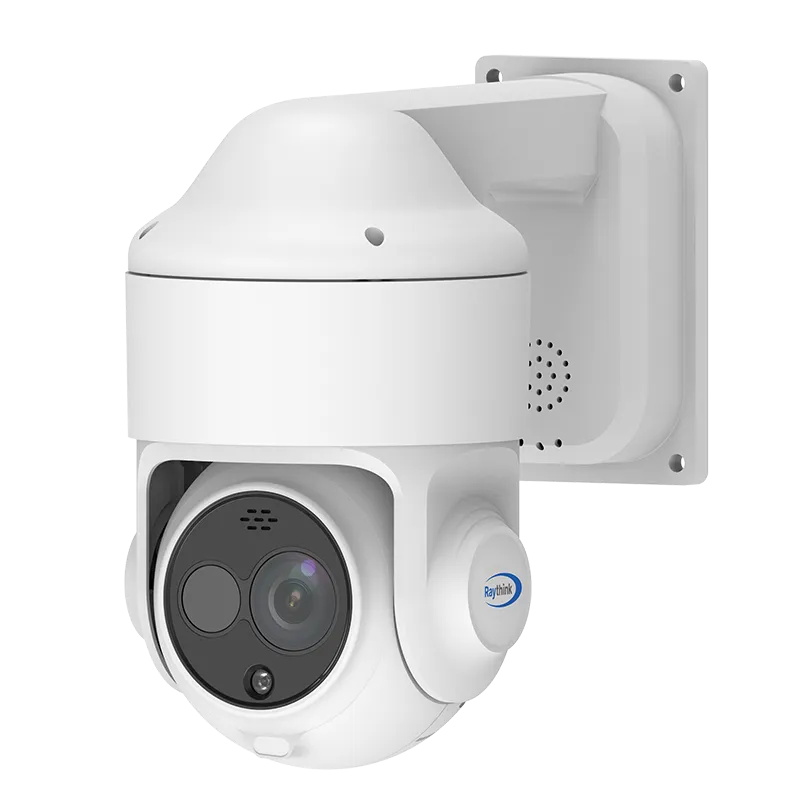
The core challenges of forest fires are small, hard-to-detect early-stage fires and complex terrain complicating location. Raythink recommends the PC Series thermal PTZ camera + PD Series dual-spectrum dome cameras:
- 360° automatic patrol with 5-kilometer monitoring radius.
- Integrated with GIS for precise fire point localization and real-time alerts to forest fire command platforms.
- Intelligent algorithms filter sunlight reflections and animal heat sources, reducing false alarms and preventing unnecessary deployments.

2) Warehouse Management: Comprehensive Coverage to Prevent Stacked Heat Runaway
Warehouse fires often originate from smoldering goods (e.g., cardboard boxes, lithium batteries) or equipment overheating. Raythink recommends the TN220 thermographic cube camera + FC series thermal fixed camera:
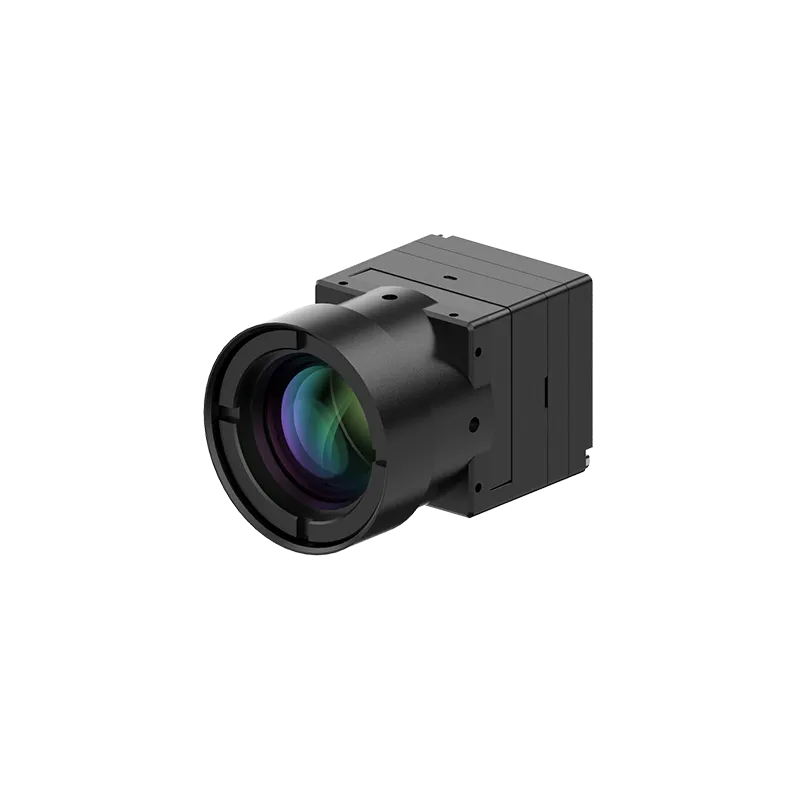
- The compact TN220 (cigarette pack size) moves with stackers to monitor pile temperatures in real time, featuring POE power for easy deployment.
- The FC series is fixed in aisleways to cover storage zones.
- Integrated with warehouse management systems, it automatically halts stacker operations during high temperatures to prevent fire escalation.

3) Hazardous Waste Industry: Explosion-Proof + Precise Temperature Monitoring for Complex Risk Management
Hazardous waste storage facilities face risks of flammability, explosiveness, and exothermic chemical reactions, requiring dual safeguards of explosion-proof design and precise monitoring. Raythink recommends the TE Series explosion-proof thermal cameras + TN460 fixed-mount thermal camera:
- The TE series holds explosion-proof certification, enabling safe operation in hazardous waste storage areas and transfer corridors. It continuously monitors the outer wall temperatures of waste containers to prevent overheating from chemical reactions.
- The TN460 supports 12-point/12-line/12-zone temperature measurement. Users can configure monitoring zones based on waste pile contours. High temperatures trigger audible/visual alarms and activate fire suppression systems.

4) Coal Industry: Preventing Conveyor Belt Overheating and Coal Pile Spontaneous Combustion
Fire risks in the coal industry primarily stem from conveyor belt friction-induced heating and smoldering coal piles. Raythink recommends the TN220 thermographic cube camera + FC series thermal fixed camera + TE Series explosion-proof thermal cameras:
- Install TN220 cube cameras beneath conveyor belts to continuously monitor heat-prone areas like idlers/rollers, providing early warnings of equipment thermal hazards.
- Above coal conveyors, deploy FC series fixed cameras to detect abnormal temperature zones during early wear stages, preventing severe belt tears.
- Inside coal silos, install TE series explosion-proof cameras to identify high-temperature zones during smoldering phases (without smoke), coordinating with ventilation systems to mitigate spontaneous combustion risks.

5) Petroleum and Petrochemical Industry: Explosion-Proof + Multi-Scenario Monitoring for Full-Chain Security
From extraction and transportation to refining and processing, the petroleum and petrochemical sector must address risks such as gas leaks, tank overheating, and pipeline corrosion. Raythink recommends the TE Series explosion-proof thermal cameras + PC Series thermal PTZ camera:
- Refinery sites use the TE Series to monitor tank liquid levels and equipment temperatures, triggering ventilation systems during gas leaks.
- PC Series along long-distance pipelines: 3-kilometer monitoring radius covers pipeline zones, identifying temperature anomalies caused by insulation layer damage to prevent fire hazards from leaks.

6) New Energy Vehicle Industry: Focusing on Charging Pile Safety to Prevent Battery Thermal Runaway and Vehicle Spontaneous Combustion
During the charging process of new energy vehicles, battery thermal runaway poses a core safety hazard (e.g., overcharging or poor charging interface contact causing localized overheating). Raythink recommends the PC Series thermal PTZ cameras + FC Series fixed cameras:
- Deploy devices around charging stations and parking bays to continuously monitor battery pack and charging port temperatures in real time, triggering immediate alerts during “micro-short circuits” or localized overheating phases.
- Dual-spectrum design provides 24/7 coverage for both daytime high-frequency usage and nighttime idle scenarios, preventing spontaneous combustion risks in vehicles during charging or after brief post-charging periods.

6. Recommended Raythink Thermal Imaging Camera Series


From forest fire prevention to new energy safety, from hazardous waste management to petroleum and petrochemical protection, Raythink thermal imaging cameras establish a fire prevention defense line across industries with their core capabilities of ultra-early detection, all-weather reliability, and full-scenario adaptability. For specific product specifications or customized solutions, contact Raythink’s professional team for further details.