Infrared thermal imaging, known for its advantages such as independence from visible light and all-weather sensing capabilities, has been widely used in security, industrial inspection, and emergency rescue. As infrared technology continues to evolve and the demand for marine exploration and underwater rescue operations grows, the question “Can thermal imaging cameras work underwater?” has attracted increasing attention from users.
This article explores the technical limitations of thermal imaging in underwater environments by examining the principles of thermal imaging and the impact of water on infrared transmission. It also discusses the practical value of thermal imaging in aquatic scenarios through typical water-related use cases, offering users reliable infrared sensing strategies for handling complex aquatic tasks.
1. Basic Principles of Thermal Imaging
Infrared thermal imaging is a technology based on the thermal radiation characteristics of objects. Its core principle lies in the fact that any object with a temperature above absolute zero (-273.15°C) continuously emits infrared energy. A thermal imaging camera detects this infrared radiation and converts it into electrical signals. These signals are then processed through image algorithms to visualize temperature data and generate a “thermal image,” providing an intuitive representation of the object’s thermal distribution.
Unlike conventional imaging devices that rely on visible light, thermal imaging cameras do not require external illumination and are unaffected by surface color or brightness contrast. This enables them to operate reliably in complete darkness or under harsh lighting conditions such as strong backlight. These capabilities make thermal imaging widely applicable in scenarios requiring all-weather sensing, including nighttime surveillance, emergency rescue, and industrial inspections.
2. The Impact of Water on Infrared Radiation: Why Is Underwater Thermal Imaging Difficult?
The stable performance of infrared thermal imaging in air is largely due to the good transmissivity of infrared radiation within specific “atmospheric window” wavelengths—namely, 1–3 μm, 3–5 μm, and 8–14 μm. In these spectral ranges, atmospheric absorption is minimal, allowing infrared radiation emitted by ground or aerial targets to pass through the atmosphere and reach the imaging device.
In contrast, the transmission of infrared radiation in water is significantly reduced. Particularly in the long-wave and much of the mid-wave infrared bands, infrared energy is almost entirely absorbed by water, severely limiting its propagation.
Moreover, heat from objects dissipates quickly in water due to its high thermal conductivity, which reduces the temperature contrast between the target and its surroundings—making it even harder for thermal imaging systems to distinguish objects.
As a result, conventional infrared thermal imaging devices are not suitable for fully submerged underwater imaging. Instead, they are better suited for surface-level, shallow water, or shoreline scenarios where the sensor remains above water or in partial contact with it.
3.Typical Water Environment Application Scenarios: The Practical Value of Thermal Imaging
1)Maritime Target Surveillance and Identification
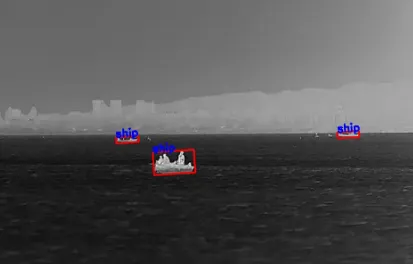
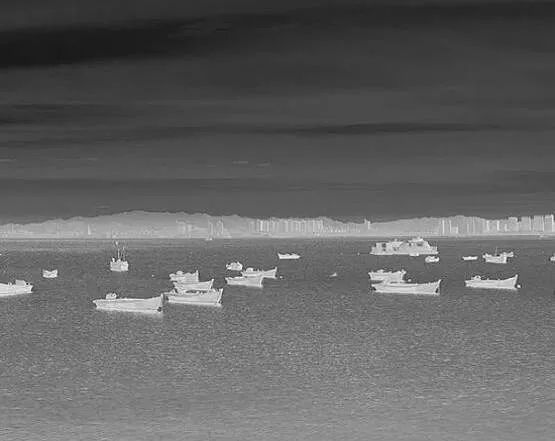
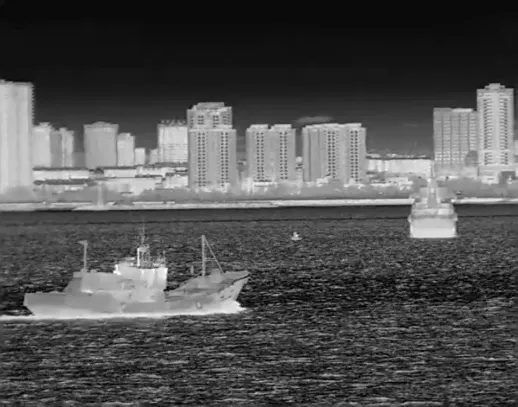
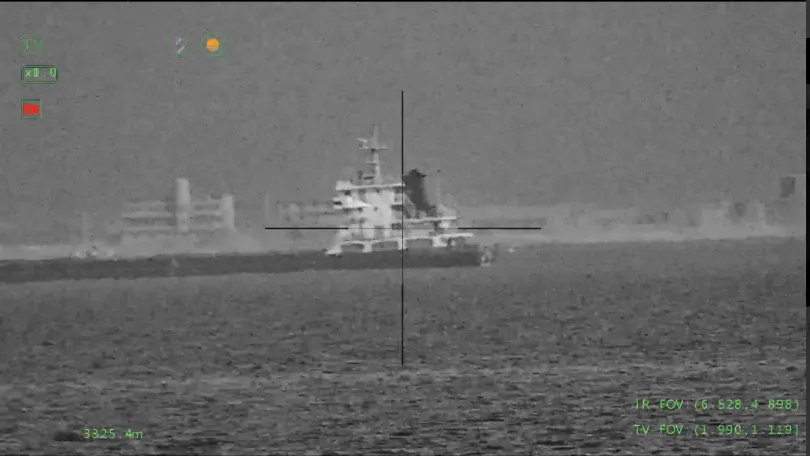
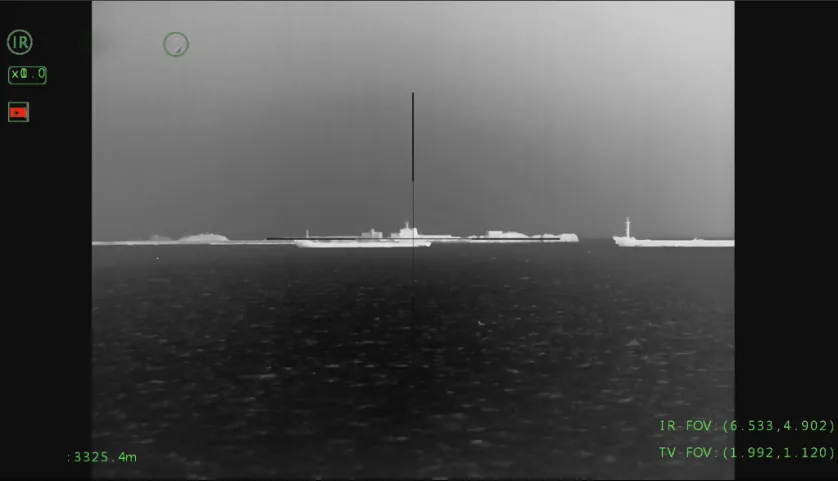
Infrared thermal imaging cameras offer exceptional all-weather imaging capabilities without relying on visible light. They can operate reliably even in low-visibility conditions such as nighttime, overcast skies, rain, or fog. These devices can sensitively detect heat signatures from ship engines, deck activities, and human body temperatures, enabling long-range, high-precision target identification and dynamic tracking. When combined with automatic cruise modes, they allow for continuous and high-frequency image capture and monitoring of key maritime areas, significantly improving patrol efficiency. This technology is widely used in combating illegal fishing, smuggling, and other unlawful maritime activities.
2)Maritime Emergency Search and Rescue
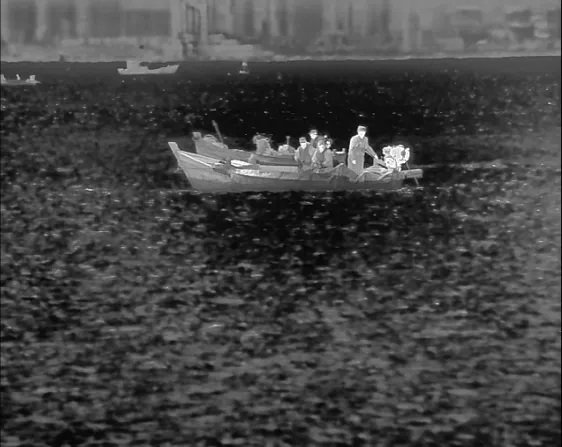
Infrared thermal imaging devices possess excellent temperature difference detection capabilities, clearly highlighting the heat contrast between the water surface and human bodies. Even in extremely low-visibility sea conditions such as darkness, dense fog, and rough waves, they can quickly locate persons overboard, significantly improving response efficiency within the critical “golden rescue time.” During sudden incidents like ship fires, infrared thermal imaging can also identify overheated areas of the vessel in real time, assisting in assessing fire development. This provides crucial visual support for formulating scientific rescue plans and coordinating resources, thereby effectively enhancing the accuracy and timeliness of overall rescue operations.
3)Port Fire Safety and Security Monitoring
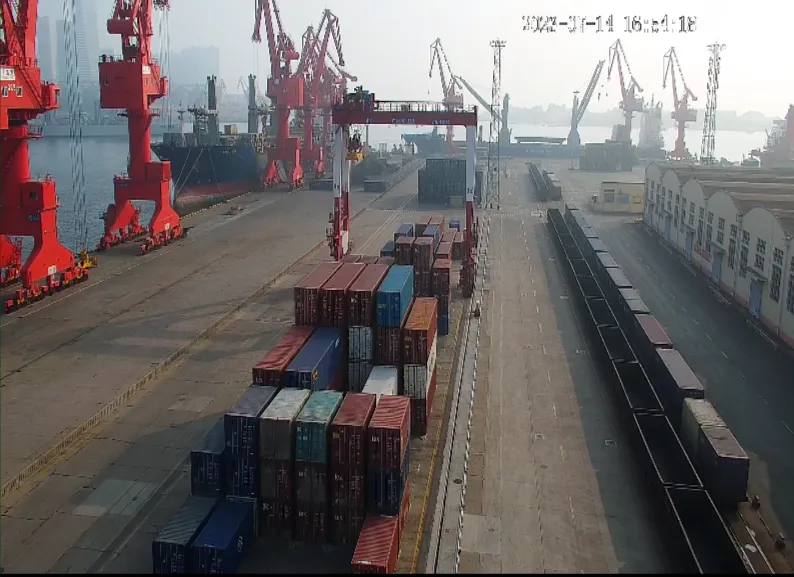
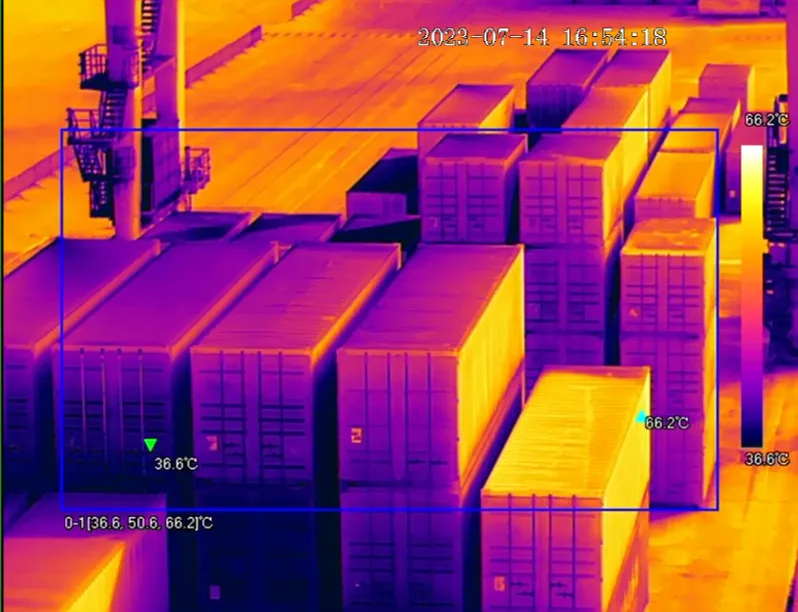
In critical areas such as dock operation zones, container yards, warehouses, oil storage areas, and port power systems, infrared thermal imaging cameras provide 24/7 continuous temperature monitoring. They can detect potential hazards like machinery overheating, electrical faults, and abnormal temperature rises in storage yards in real time, issuing early fire warnings that significantly enhance the timeliness and accuracy of fire response.
Furthermore, combined with intelligent analytics algorithms, these systems can automatically identify and track abnormal behaviors such as unauthorized personnel intrusion, loitering, and boundary crossing. Alarm information is instantly pushed to the security center through an integrated platform, enabling intelligent and refined security management of key areas. This technology effectively reduces labor costs for patrols and false alarm rates, improving overall operational safety, and serves as a critical core device in building a “smart port” fire safety system.
4)Ship Navigation Assistance and Obstacle Avoidance
Infrared thermal imaging cameras can reliably deliver clear thermal images even in extremely low-visibility conditions such as nighttime, heavy fog, rain, or snow, effectively overcoming visual limitations caused by insufficient lighting and harsh weather. They provide all-weather identification of key targets in navigation routes, including other vessels, buoys, shorelines, and floating debris. This assists crew members in real time during docking, navigating narrow channels, or traversing complex waters by maintaining situational awareness of the surroundings, enabling early obstacle avoidance and reducing the risk of collisions and groundings. It serves as a reliable safeguard to enhance navigation safety and efficiency for various types of vessels such as commercial ships and fishing boats.
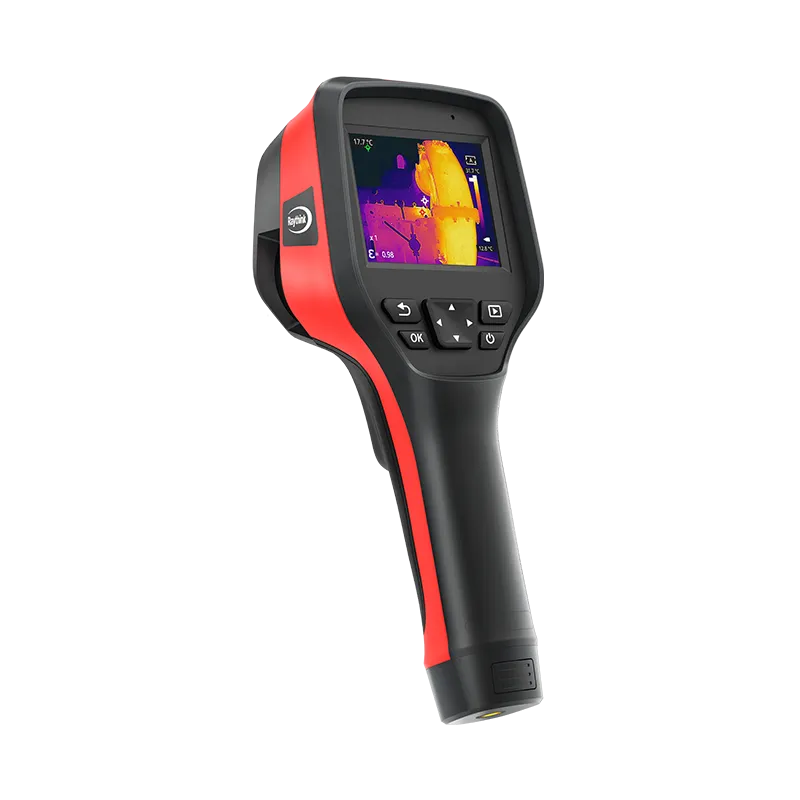
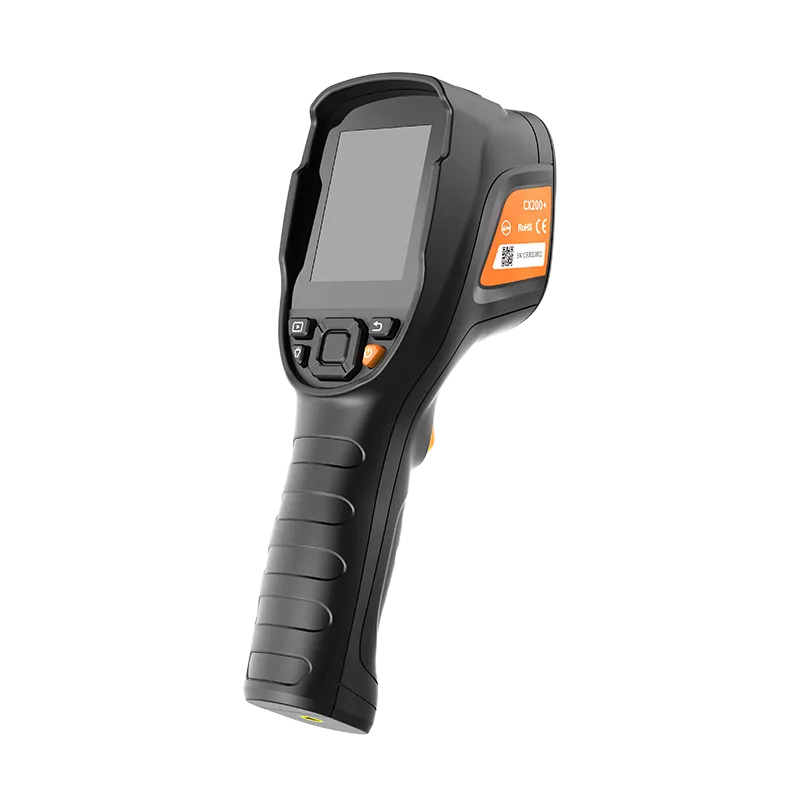
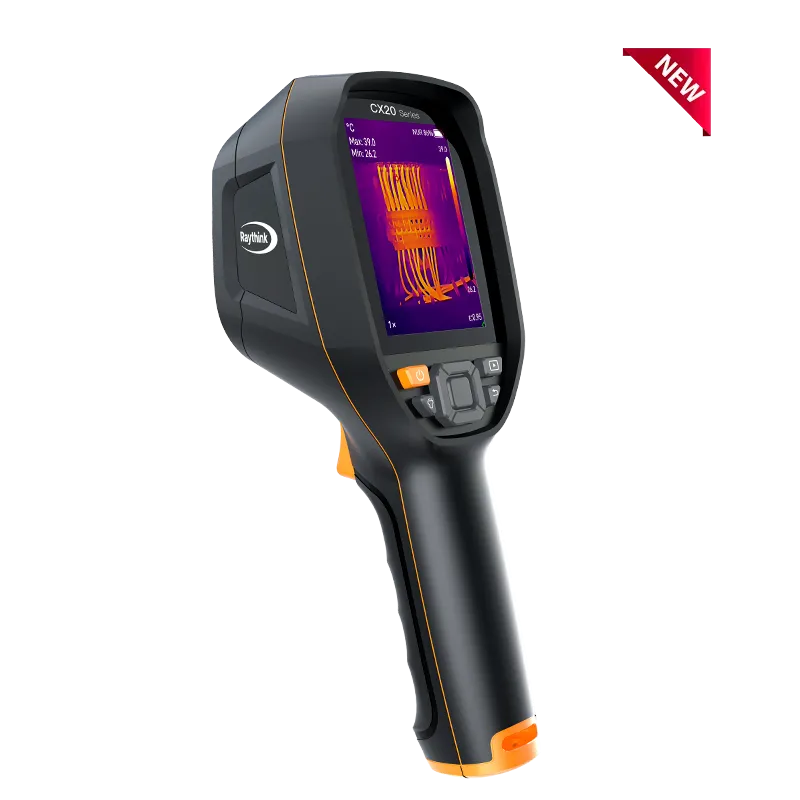
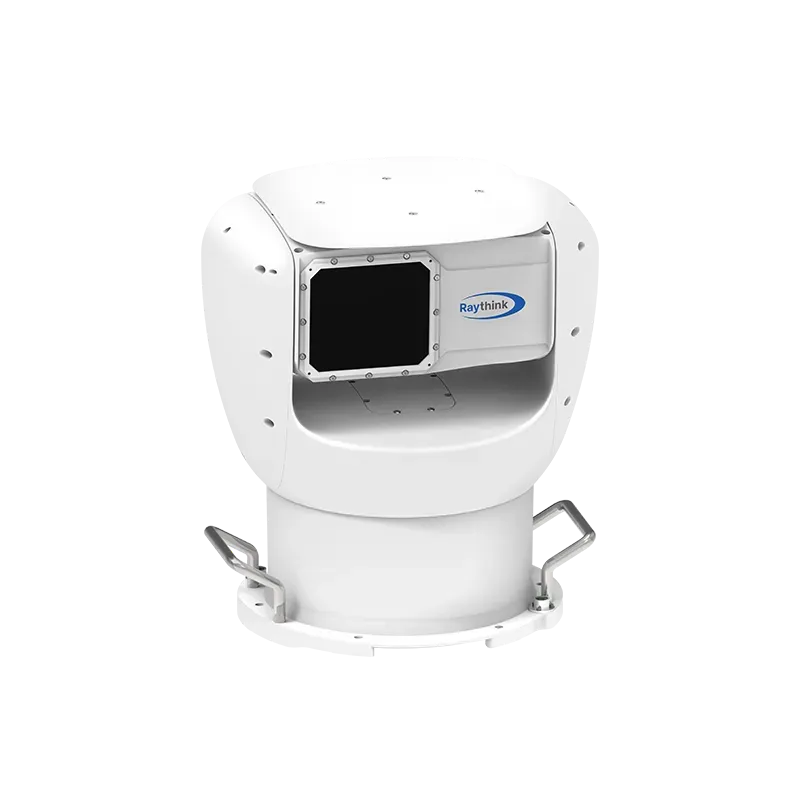
4.Recommended Products by Raythink

Featuring an industry-leading infrared detector, 360° panoramic monitoring, multi-target detection, intelligent AI algorithms, low power consumption, and seamless integration with PTZ cameras, this system ensures comprehensive, efficient, and intelligent surveillance.

Equipped with an industry-leading infrared detector, dual-spectrum imaging, and long-range detection capabilities, the system also features intelligent fire detection algorithms, advanced video analysis, and seamless platform integration for comprehensive and automated surveillance.

Powered by a 12μm uncooled infrared detector, the system offers dual-spectrum imaging, long-range detection, intelligent fire detection algorithms, advanced video analysis, and seamless platform integration—delivering reliable, automated monitoring across complex environments.

Featuring a 12μm uncooled infrared detector and dual-spectrum imaging, the system enables accurate temperature measurement, intelligent fire detection, advanced video analysis, and seamless platform integration for precise and intelligent monitoring solutions.

With a 12μm uncooled infrared detector, dual-spectrum imaging, and long-range detection, the system combines intelligent fire detection algorithms, advanced video analysis, and platform integration to deliver comprehensive and automated monitoring capabilities.

Equipped with a 12μm uncooled infrared detector and dual-spectrum imaging, the system supports accurate temperature measurement, long-range observation, AI-powered target recognition, and seamless platform integration—delivering intelligent, reliable, and wide-area monitoring.
5.Conclusion: Beyond Limitations, Expanding Applications Across Wider Water Domains
Although traditional thermal imaging technology faces challenges in direct underwater imaging, it still demonstrates irreplaceable core value in water surface monitoring, coastal security, and other water-related scenarios. It has become an essential sensing method for water operation and safety assurance.
With continuous improvements in infrared detector performance, ongoing advancements in intelligent image algorithms, and deeper integration of multimodal sensing technologies, the application boundaries of thermal imaging systems in complex aquatic environments are steadily expanding. Suishi Technology will continue to focus deeply on the infrared sensing field, targeting key scenarios such as water area supervision, port security, and emergency response, persistently developing stable, accurate, and intelligent thermal imaging solutions to help users achieve efficient decision-making and safe operations.
For more technical information or application solutions regarding Raythink thermal imaging cameras, please feel free to contact our technical consulting team at any time.